


Man Wei Wu (鰻味屋) is a no-frills Japanese-style eel house with a new location in Zhongshan (中山) District’s Japan quarter, where it hopes to compete with the star eel house Fei Chien Wu (肥前屋).
Around midnight, the alleys here host some of the liveliest nightlife in Taipei, but by day it is ho-hum and you can see legislators walking around, getting a coffee on lunch break.
Don’t expect too much from the ambience at Man Wei Wu. It shares Fei Chien Wu’s mission to offer economical eel and rice. Both succeed, at NT$250 per entree, and both have economical furnishings to match. Man Wei Wu is un-excitingly situated on the second floor, next to a shuttered optometrist’s office. Walk up and enter a simple dining room outfitted with utility tables and bright, good-for-your-eyes lighting — it could be a version of your mama’s kitchen, if your mother served eel in a laquer ware box.
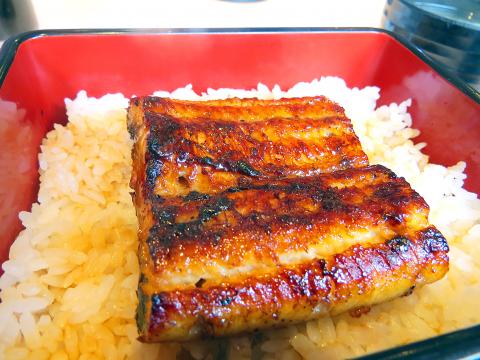
Photo: Enru Lin, Taipei Times
The eel here is deboned by hand, glazed with soy sauce and sundry secret ingredients and then grilled over coals in a time-intensive and expensive process. At the table, you can sprinkle the eel with sansho, a limey and peppery spice powder.
This is a great eel, especially for NT$250, or NT$480 for two portions. There are bones, but they are little and soft and not bothersome. The meat is smoky, with a sweet creaminess to offset it. The top is crisp, the center, fluffy.
With orders of eel over rice, Fei Chien Wu adds a bowl of miso soup and a side of pickles free of charge. At Man Wei Wu, you don’t get any sides, but there are attractive upgrade options. For an extra NT$40, the eel comes with miso soup, three sides and a salad drizzled in wafu, an aromatic vinaigrette-based Japanese dressing. For NT$120 extra, you can trade the salad for sushi (NT$140 a la carte) or sea urchin served in a majestic smear over fingers of rice (NT$100 a la carte).
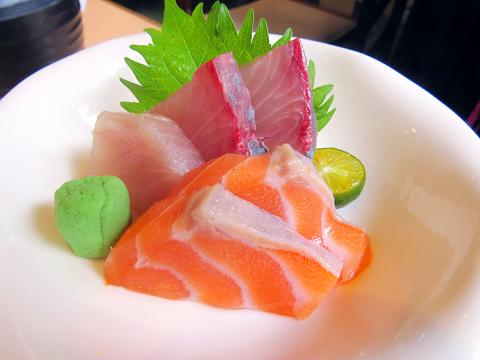
Photo: Enru Lin, Taipei Times
Besides eel, Man Wei Wu has a few other entrees like Japanese-style hotpots (beef tendon, NT$140) and ramen bowls. Hsing Fu Ramen (幸福拉麵, NT$120), a new addition, seems prepared with less care than the eel. The ramen stars grilled pork medallions with excess fat seared off and a molasses-colored broth, a new recipe that blends chicken and pork bone. This soup is tasty and surprisingly light, leavened with fruit, but the noodles in it are slightly overcooked.
The rest of Man Wei Wu’s menu is a showcase of Japanese-style delicacies, such as salmon roe served with nagaimo (山藥, NT$180), a white yam eaten cold. There is a colorful selection of grilled hor d’oeuvres: sea bream chins (NT$100), eel liver (NT$30), bacon-wrapped scallops (NT$50) imported from Japan, a skewer of wrinkled mushrooms topped with sesame (NT$30).
Man Wei Wu also does don — rice bowl dishes artfully topped with sushi slices. The popular Seven Color Gems (七彩寶石, NT$180) is salmon, tuna, marlin, squid and roe, a little of everything layered over rice, so pretty it makes you feel suddenly rich. The beverage list is limited at three brews: Taiwan Beer Gold Medal (NT$60); Asahi (NT$70), a beer from Tokyo and Gekkeikan, a sake served hot or cold (NT$130). Most patrons drink only the hot oolong, which is free.
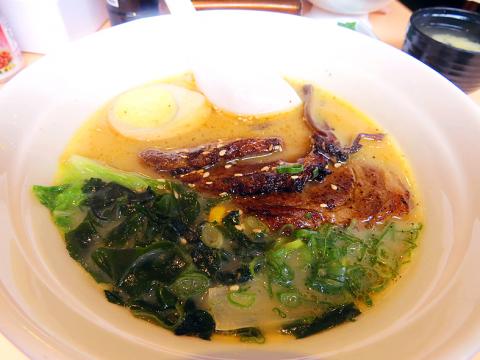
Photo: Enru Lin, Taipei Times
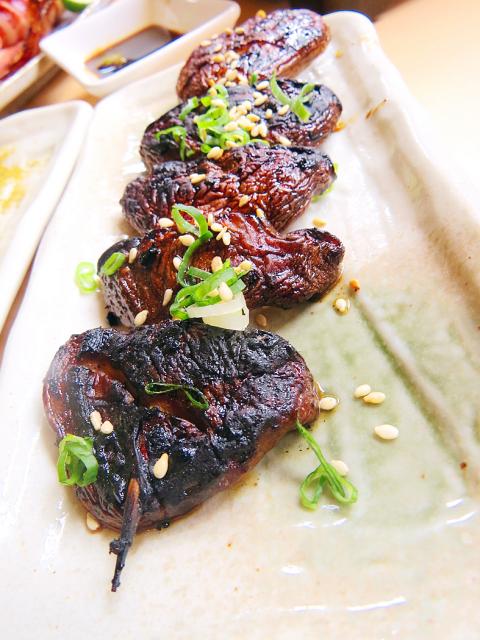
Photo: Enru Lin, Taipei Times
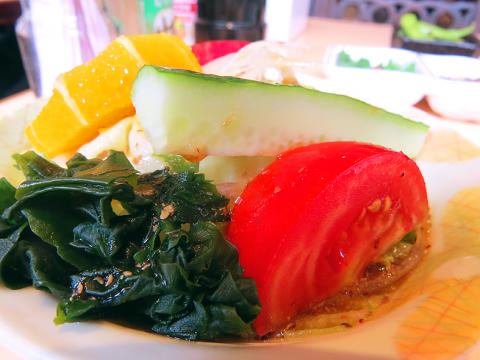
Photo: Enru Lin, Taipei Times
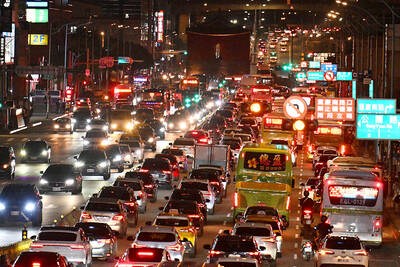
By global standards, the traffic congestion that afflicts Taiwan’s urban areas isn’t horrific. But nor is it something the country can be proud of. According to TomTom, a Dutch developer of location and navigation technologies, last year Taiwan was the sixth most congested country in Asia. Of the 492 towns and cities included in its rankings last year, Taipei was the 74th most congested. Taoyuan ranked 105th, while Hsinchu County (121st), Taichung (142nd), Tainan (173rd), New Taipei City (227th), Kaohsiung (241st) and Keelung (302nd) also featured on the list. Four Japanese cities have slower traffic than Taipei. (Seoul, which has some

In our discussions of tourism in Taiwan we often criticize the government’s addiction to promoting food and shopping, while ignoring Taiwan’s underdeveloped trekking and adventure travel opportunities. This discussion, however, is decidedly land-focused. When was the last time a port entered into it? Last week I encountered journalist and travel writer Cameron Dueck, who had sailed to Taiwan in 2023-24, and was full of tales. Like everyone who visits, he and his partner Fiona Ching loved our island nation and had nothing but wonderful experiences on land. But he had little positive to say about the way Taiwan has organized its

Michael slides a sequin glove over the pop star’s tarnished legacy, shrouding Michael Jackson’s complications with a conventional biopic that, if you cover your ears, sounds great. Antoine Fuqua’s movie is sanctioned by Jackson’s estate and its producers include the estate’s executors. So it is, by its nature, a narrow, authorized perspective on Jackson. The film ends before the flood of allegations of sexual abuse of children, or Jackson’s own acknowledgment of sleeping alongside kids. Jackson and his estate have long maintained his innocence. In his only criminal trial, in 2005, Jackson was acquitted. Michael doesn’t even subtly nod to these facts.
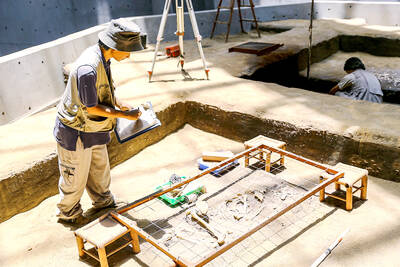
Writing of the finds at the ancient iron-working site of Shihsanhang (十 三行) in New Taipei City’s Bali District (八里), archaeologist Tsang Cheng-hwa (臧振華) of the Academia Sinica’s Institute of History and Philology observes: “One bronze bowl gilded with gold, together with copper coins and fragments of Tang and Song ceramics, were also found. These provide evidence for early contact between Taiwan aborigines and Chinese.” The Shihsanhang Web site from the Ministry of Culture says of the finds: “They were evidence that the residents of the area had a close trading relation with Chinese civilians, as the coins can be


 RSS
RSS