


Chocoholics may have tried Black As Chocolate’s (BAC) cakes or confections from any of its stores in Taipei, Greater Taichung and Greater Kaohsiung. Now it has ventured into related but new territory with BAC Chocolate World (BAC巧克力世界), which serves a range of Asian and Western-style dishes with a cocoa twist.
Located opposite the Living Mall (京華城) on Bade Road (八德路), BAC Chocolate World has dining space on the ground and B1 floors, a retail area selling all things chocolate and a station where diners can customize chocolate bars with their choice of topping and wrapper.
Everything on the menu has cocoa as its base — whether a piece of bread or a variety of pasta made with cocoa powder, or a dipping sauce made with cocoa salt and cocoa liquor. BAC Chocolate World clearly wants to promote cocoa as haute cuisine.
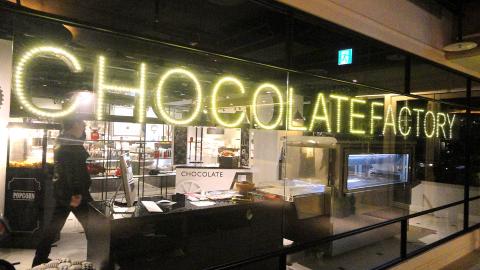
Photo: Tang Hsiang-yi, Taipei Times
The cocoa oxtail soup (NT$190) started the meal off on a pleasant note. Tender morsels of beef attached to the bone came in a robust broth. The dish came served with two pieces of cocoa bread that went well with the soup.
Chicken skewers (NT$300 for four) came next with purple onion dices, cucumbers and a thick peanut dipping sauce. The dish, also known as satay, is a common snack in Southeast Asian countries like Singapore, Malaysia and Indonesia, with variations including mutton, beef, pork and fish. In this case, the diced chicken thigh was somewhat chewy and dry, but the gravy-like sauce complemented the meat well, emitting scents of ginger, turmeric and red shallots.
The warm spinach salad with fresh figs and pan-seared duck (NT$380) looks appealing and healthy, but the figs were not fresh as they tasted overly sugary for natural fruit. The sliced duck breast, although well-seasoned, was somewhat leathery, giving the jaw an unnecessary and unwanted workout.
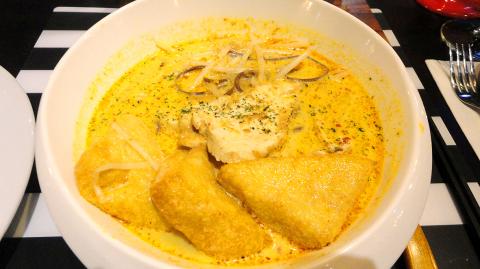
Photo: Tang Hsiang-yi, Taipei Times
The spicy coconut soup with cocoa noodles (NT$320) turned around the disappointment over the salad with its rich aroma that can convert diners who, like this reviewer, usually avoid spicy food.
Each mouthful of the creamy and spicy broth was an explosion of flavor. The dish combines Chinese and Malay culinary traditions and is known as laksa. Sliced chicken breast, soybean sprouts and bean curd were cooked in a soup that delivered an appealingly robust shrimp taste.
We finished the meal with a dark chocolate tart (NT$160) and dark chocolate shot (NT$200). The former came topped with mixed berries while the latter, a vodka-based chocolaty drink, was served in a shot glass with milk foam and a sprinkle of spice.
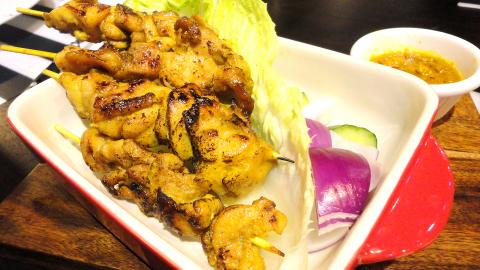
Photo: Tang Hsiang-yi, Taipei Times
The restaurant serves a brunch menu every day from 10:30am to 3:30pm, providing dishes such as eggs Benedict (NT$360) and Portobello mushroom sandwich (NT$280), which are not available for dinner. There are a number of choices for afternoon tea, including banana fritters (NT$150) and chocolate chip pancakes (NT$260).
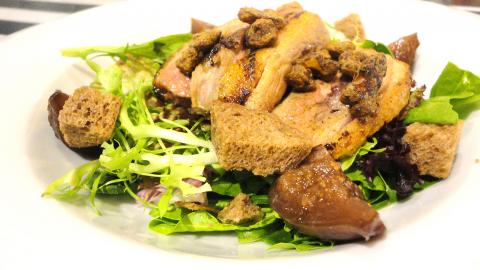
Photo: Tang Hsiang-yi, Taipei Times
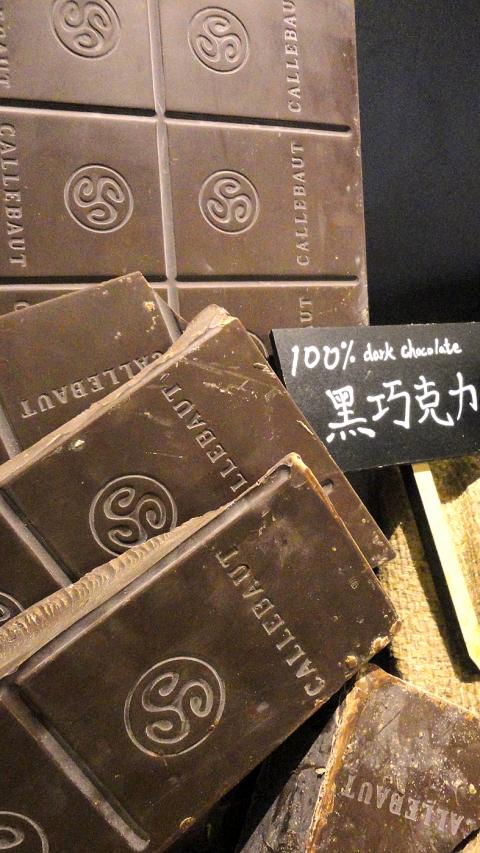
Photo: Tang Hsiang-yi, Taipei Times
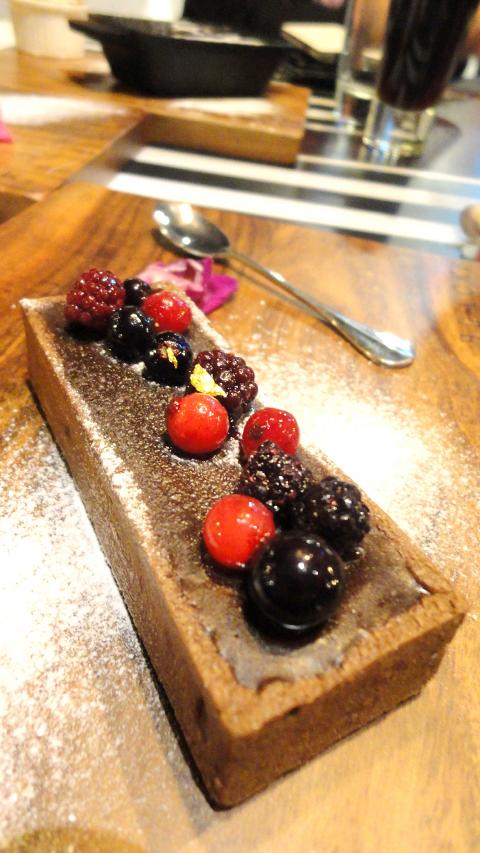
Photo: Tang Hsiang-yi, Taipei Times

Taiwan’s English education system is being pulled apart by three opposing forces. Bilingual Nation 2030 pulls students toward English and global communication. Artificial Intelligence (AI) readiness pulls them toward digital judgment, verification and AI-mediated work. But Taiwan’s old exam culture pulls them back toward memorization, grammar drills, timed reading and correct answers. If the education system keeps using old exams to define success, it risks producing graduates who are neither genuinely bilingual nor genuinely AI-ready, but trained for tasks machines can already perform. The first force is Bilingual Nation 2030. Launched in 2018, the policy aimed to “help Taiwan’s workforce connect

It seems every few days one bumps into one of those “real man” comments in which Taiwan is urged to “face reality” or similar, and “make a deal,” with the speaker implying that soon it will be too late. “Deal” advocates always present themselves as having a superior grip on reality, and the manly ability to make the “hard choice.” Their testosterone-laden language often echoes that of Taiwan sellout advocates. Note that such commentary always specifies a process (“make a deal, work with, make progress”), never the end state of what occupation by a violent authoritarian colonialist state will entail. In
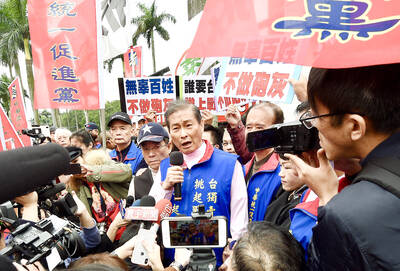
There are shadowy cabals plotting to sell out Taiwan to be annexed by China, by invasion if necessary. Fortunately, they are buffoons. In 2019, former Bamboo Union gangster and founder of the China Unification Promotion Party (CUPP), Chang An-le (張安樂, colorfully known as “White Wolf”), led a protest at the Legislative Yuan against comments made by then-premier Su Tseng-chang (蘇貞昌) that in the event of an attack by China, he would never surrender, but would protect the nation by fighting to the end, even if he only had a broom. Chang had party members bring a wooden casket that they
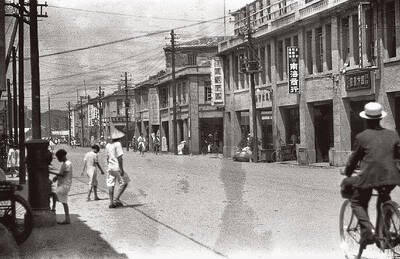
June 1 to June 7 "If all Taiwanese were as afraid of dying as you, then what would happen?” Physician Shih Chiang-nan (施江南) reportedly said this to his wife Chen Chiao-tung (陳焦桐) after she urged him to stop intervening on behalf of Taiwanese soldiers stranded overseas after serving in the Japanese Army during World War II. Shih had clashed with high-ranking officials over the issue, engaged in several heated arguments with Taiwan governor-general Chen Yi (陳儀) and allegedly shouted at general Ko Yuan-fen (柯遠芬), chief of staff of the Taiwan Garrison Command, over


 RSS
RSS