


After his feature debut Night Market Hero (雞排英雄), which grossed NT$140 million in 2011, blockbuster maker Yeh Tien-lun (葉天倫) returns with Twa Tiu Tiann (大稻埕), a film that aims to be grander and much larger in scope. The movie mixes fantasy and history to tell the story of a young man travelling back in time to 1920s Taiwan which was then under Japanese colonial rule. It is a melodramatic comedy punctuated with big emotions, and through its well-rendered time-travel conceit, the film delivers a rare portrait of Taipei as a city with a long history, affording its residents time travel into the past when one could bump into Chiang Wei-shui (蔣渭水), an important figure in Taiwan’s resistance to Japanese colonial rule, while walking down a Dadaocheng (大稻埕) street.
The film opens in present-day Taipei, where college student Jack, played by television show host-turned-actor Chris Wang (宥勝), whiles away his days chasing girls and hanging out with friends. To the gang of young lads, the history lessons taught by Professor P (Chu Ko Liang, 豬哥亮) couldn’t be more different from their easygoing lifestyle.
One day, during a field trip to a museum in western Taipei’s Dadaocheng area, Jack notices a painting on display. It is Festival on South Street (南街殷賑), a painting of iconic Dihua Street (迪化街)) by Kuo Hsueh-hu (郭雪湖), a pioneer of modern art in Taiwan. Encouraged by Professor P, Jack takes a photograph of the work. Suddenly, everything in the painting comes to life, and Jack finds himself transported back to 1920s Dadaocheng, which at the time was a major trading hub for tea, textiles, herbal medicines and many other goods.
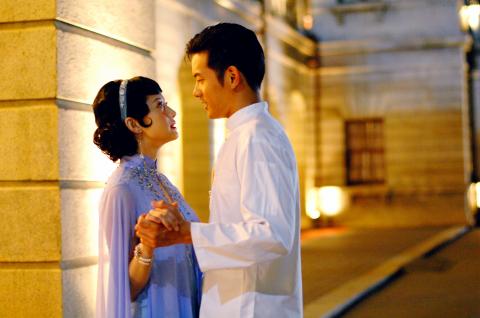
Photo Courtesy of Swallow Wings
Bewildered, Jack is taken in by Ginger (Sonia Sui, 隋棠), a sassy Manchu woman who fled to Taiwan after the Qing Dynasty crumbled and has since run a textile shop in the area. To his surprise, Jack finds among Ginger’s helpers his history professor, who discovered the painting’s portal back in time and has been returning to the past constantly to court Ginger.
Jack’s eagerness to return to the 21st century dissipates when he meets young Taiwanese geisha Rose (Jian Man-shu, 簡嫚書). While love blossoms between Jack and Rose, they befriend Chiang Wei-shui (Lee Li-jen, 李李仁) and are drawn into the campaign for democracy led by Chiang and other Taiwanese civil rights activists. Soon Jack, Professor P and their friends become involved in Chiang’s effort to petition the colonial government for the creation of an elected representative body in front of the Japanese Crown Prince Hirohito, who visited Taiwan in 1923.
Over the two-hour screening time, Yeh delicately weaves Taiwanese history into a work of holiday entertainment packed with romance and humor. The plot involving the lead character coming to terms with the present through his reconciliation with the past serves as an eloquent metaphor and is passably carried out by rising actor Wang. The star of the show, however, is Taiwanese comedian Chu Ko Liang, who appears genuinely funny with his offbeat humor and makes a surprisingly lively pair with model-turned-actress Sui.
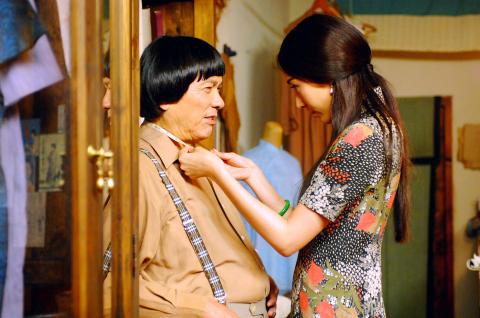
Photo Courtesy of Swallow Wings
Unfortunately, the movie is largely let down by sloppy and lazy scriptwriting. Sufficient details, motivation and narrative coherence are often absent. Embarrassingly cliched characters abound; a speech by Chiang is lifeless in its excessive sentimentality. The absence of a film studio in Taiwan, along with the needed infrastructure and talent to produce period films, is also apparent in this movie as portraits of historical grandeur are sometimes reduced to the scale of a television drama.
An aspect of Twa Tiu Tiann worth mentioning is the playful rendition Moving Forward (向前行). Though the uplifting mood of the song, recorded in 1990, is hardly in tune with the sentiments of present-day Taiwan, it makes a fitting accompaniment to the movie’s sanguine, if not overly saccharine, vision.
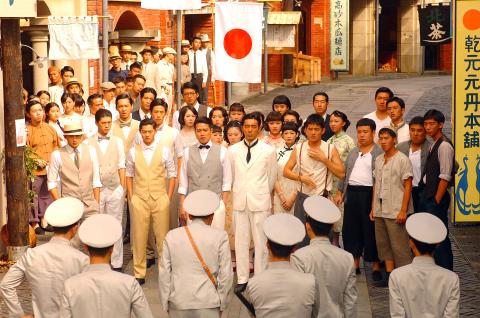
Photo Courtesy of Swallow Wings
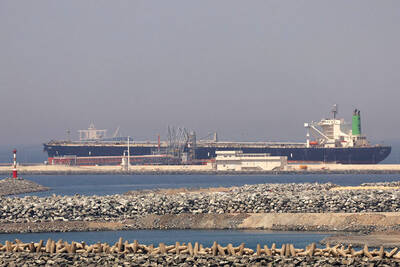
The breakwater stretches out to sea from the sprawling Kaohsiung port in southern Taiwan. Normally, it’s crowded with massive tankers ferrying liquefied natural gas from Qatar to be stored in the bulbous white tanks that dot the shoreline. These are not normal times, though, and not a single shipment from Qatar has docked at the Yongan terminal since early March after the Strait of Hormuz was shuttered. The suspension has provided a realistic preview of a potential Chinese blockade, a move that would throttle an economy anchored by the world’s most advanced and power-hungry semiconductor industry. It is a stark reminder of
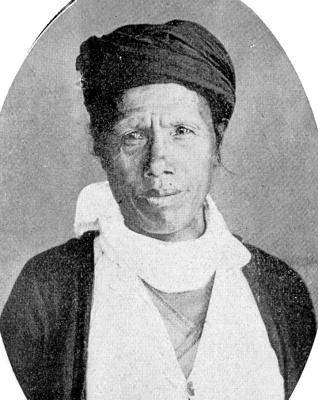
May 11 to May 17 Traversing the southern slopes of the Yushan Range in 1931, Japanese naturalist Tadao Kano knew he was approaching the last swath of Taiwan still beyond colonial control. The “vast, unknown territory,” protected by the “fierce” Bunun headman Dahu Ali, was “filled with an utterly endless jungle that choked the mountains and valleys,” Kano wrote. He noted how the group had “refused to submit to the measures of our authorities and entrenched themselves deep in these mountains … living a free existence spent chasing deer in the morning and seeking serow in the evening,” even describing them as
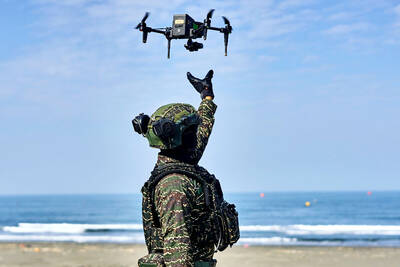
The last couple of weeks spectators in Taiwan and abroad have been treated to a remarkable display of infighting in the Chinese Nationalist Party (KMT) over the supplementary defense budget. The party has split into two camps, one supporting an NT$800 billion special defense budget and one supporting an NT$380 billion budget with additional funding contingent on receiving letters of acceptance (LOA) from the US. Recent media reports have said that the Taiwan People’s Party (TPP) is leaning toward the latter position. President William Lai (賴清德) has proposed NT$1.25 trillion for purchases of US arms and for development of domestic weapons
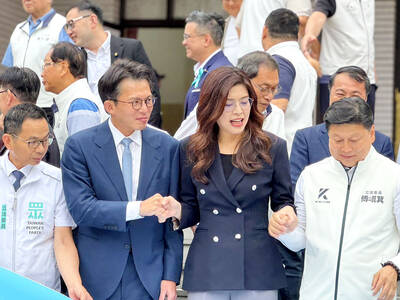
As a different column was being written, the big news dropped that Chinese Nationalist Party (KMT) caucus whip Fu Kun-chi (傅?萁) announced that negotiations within his caucus, with legislative speaker Han Kuo-yu (韓國瑜) of the KMT, party Chair Cheng Li-wun (鄭麗文), Taichung Mayor Lu Shiow-yen (盧秀燕) and Taiwan People’s Party (TPP) Chair Huang Kuo-chang (黃國昌) had produced a compromise special military budget proposal. On Thursday morning, prior to meeting with Cheng over a lunch of beef noodles, Lu reiterated her support for a budget of NT$800 or NT$900 billion — but refused to comment after the meeting. Right after Fu’s


 RSS
RSS