


Since its deportation from Taiwan in 2012, the three-member British rock outfit Transition has undergone some changes.
One member of the band — guitarist Niall Dunne — has left the group, said 29-year-old Josh Edbrooke, who told the Taipei Times that he will keep the music going with his brother Jess.
“We don’t plan to give up, and we’ll find a way to morph into a new shape and continue creating music that we believe in,” Edbrooke said.

Photo courtesy of Transition
In 2012, the band had been caught in a legal bind for violating its work visa, according to local media. Transition was reportedly banned from entering Taiwan for five years after deportation.
But Edbrooke said they had not been blacklisted from entry because they did not resist the order to leave or attempt to fight their case in the courts.
“We weren’t given any black marks after the deportation, and were simply barred from working again in Taiwan,” he said.
This means that Transition cannot travel to Taiwan to do any shows or promotions, Edbrooke continued.
Nevertheless, in a bid to connect with their solid Taiwanese market, Edbrooke and his brother last month released an online-only album sung mostly in Mandarin Chinese.
The digital album, titled Kua Yue (“stepping over,” 跨越), features 11 songs sung in Mandarin Chinese. One track, Olympic Dream, was the official theme song for Taiwan’s team at the 2012 London Olympics.
Rather than wait to land a new deal with a music label in Taipei or London, the two brothers are hoping that the Internet can serve as a marketing lifeline.
So far, Transition has been using iTunes and social media platforms to publicize tracks and to cultivate the fan base. One song, Sorry My Chinese Isn’t So Good (對不起我的中文不好), has reached over a million hits on Youtube.
Problematic gig
Transition was deported for playing illegally at a church function in Taipei in 2012.
Founded in 1997 by the Edbrookes and Dunne, the band made a splash in Taiwan during Spring Scream in 2005. In 2009, the trio moved to Taipei where they lived for over three years before their work permit troubles began.
After a lengthy legal investigation, they were fined about NT$90,000 and sent back to Britain.
Edbrooke told the Taipei Times in an earlier interview that he recognizes that the group violated some work-related laws in Taiwan and accepts the legal outcome.
“At the time this all happened, we were between record companies [and work permits] and gladly accepted a local church gig thinking that it would be fine, as it wasn’t commercial,” Edbrooke explained. ‘’The church people gave us a gift of money after our performance, but wanting to be upright about it, they paid taxes on the money they gave us.”
“Months later, after we’d linked up with a new record company, we applied for fresh work permits,” Edbrooke said, “but through the process, this old tax record from the church came up. We thought it was just helping the church and wouldn’t be much of an issue, but in the government’s eyes it was illegal work.”
Taiwanese fans have not forgotten Transition, judging from comments at the duo’s YouTube and Facebook pages. While the band cannot work here again or do promotions, the brothers can visit as tourists anytime they wish.
“We would love to visit Taiwan again someday, and in fact I made a very brief two-week trip in July this past summer to visit friends and my original host family there,” Edbrooke said.
“The time we spent in Taiwan was some of the best of our lives, largely because of the great people there.”

Taiwan’s English education system is being pulled apart by three opposing forces. Bilingual Nation 2030 pulls students toward English and global communication. Artificial Intelligence (AI) readiness pulls them toward digital judgment, verification and AI-mediated work. But Taiwan’s old exam culture pulls them back toward memorization, grammar drills, timed reading and correct answers. If the education system keeps using old exams to define success, it risks producing graduates who are neither genuinely bilingual nor genuinely AI-ready, but trained for tasks machines can already perform. The first force is Bilingual Nation 2030. Launched in 2018, the policy aimed to “help Taiwan’s workforce connect
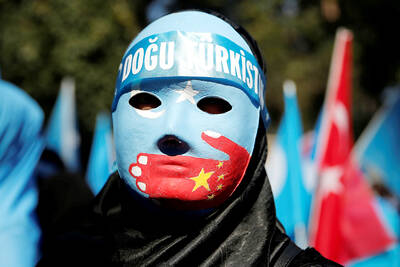
It seems every few days one bumps into one of those “real man” comments in which Taiwan is urged to “face reality” or similar, and “make a deal,” with the speaker implying that soon it will be too late. “Deal” advocates always present themselves as having a superior grip on reality, and the manly ability to make the “hard choice.” Their testosterone-laden language often echoes that of Taiwan sellout advocates. Note that such commentary always specifies a process (“make a deal, work with, make progress”), never the end state of what occupation by a violent authoritarian colonialist state will entail. In

There are shadowy cabals plotting to sell out Taiwan to be annexed by China, by invasion if necessary. Fortunately, they are buffoons. In 2019, former Bamboo Union gangster and founder of the China Unification Promotion Party (CUPP), Chang An-le (張安樂, colorfully known as “White Wolf”), led a protest at the Legislative Yuan against comments made by then-premier Su Tseng-chang (蘇貞昌) that in the event of an attack by China, he would never surrender, but would protect the nation by fighting to the end, even if he only had a broom. Chang had party members bring a wooden casket that they
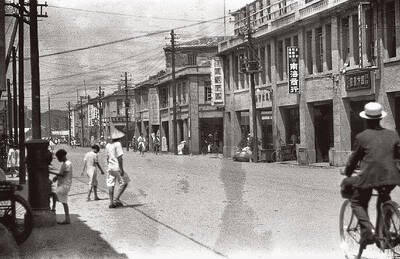
June 1 to June 7 "If all Taiwanese were as afraid of dying as you, then what would happen?” Physician Shih Chiang-nan (施江南) reportedly said this to his wife Chen Chiao-tung (陳焦桐) after she urged him to stop intervening on behalf of Taiwanese soldiers stranded overseas after serving in the Japanese Army during World War II. Shih had clashed with high-ranking officials over the issue, engaged in several heated arguments with Taiwan governor-general Chen Yi (陳儀) and allegedly shouted at general Ko Yuan-fen (柯遠芬), chief of staff of the Taiwan Garrison Command, over


 RSS
RSS