


Diner food in Taipei is typically ambitious, promising a transportive experience that sends the expatriate back to New York on the wings of BeeGees hits and retro furnishings. ATA serves diner food, too, but it’s more interested in catering to local office workers.
The decor is thoughtful, seemingly conceived with the professional in mind. There’s a glass-partitioned private space furnished with leather couches and fancy end tables, obviously inspired by an executive boardroom. There’s light pop music to relax your client, and ample lighting so you can close that big business deal and see what you’re doing. Or maybe not — when I was there, I was surrounded by twenty-something office workers who weren’t talking business at all, but working tirelessly with shirtsleeves rolled up over heaping plates of spaghetti.
Pastas, visibly the most popular item during my visit, use imported spaghetti and fresh sauces made daily from scratch. They are economical for a business lunch set — NT$149 for any pasta (clam in wine pasta, seafood club pasta, tomato beef sauce pasta and vegetarian pasta) plus a small salad and a drink.
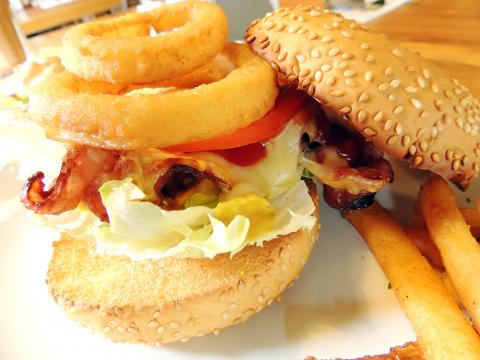
Photo: Enru Lin, Taipei Times
Still in its soft opening, ATA offers just a handful of other items — mostly burgers — all at prices one notch below standard American-style menus in Taiwan. At many other restaurants, the cheapest burger is NT$250. Here the codfish burger will set you back NT$130, while the steak burger is the priciest at NT$200.
Toasted buns and all, ATA burgers stand at about the height of a vertical fist. The ATA Double Bacon Cheese Burger (NT$130 a la carte) is disappointing on arrival, because it’s missing a beef patty, which in other burgers is a beautiful hand-formed mound of USDA choice ground beef. That aside, the burger has everything else you would probably want: a fat flavorful slice of tomato, onion rings, ream of lettuce, mozzarella cheese and literally two layers of bacon fried to order and then baked to a crisp.
ATA offers a main course menu during dinner hours, and that has some of the best deals. There’s the straightforwardly named Juicy Steak (NT$280) — a 10 ounce New Zealand shoulder tender — and the Pork Knuckle with Sauerkraut and Sausage (NT$250), which usually costs upwards of NT$300, even at a street stand. Here, the trotter is cheap and decent: the red meat falls right off under the blade, and the crust is hard after being fried, then baked, just like the bacon burger. It’s no-complaints unadulterated flavor for at least the first 10 bites.
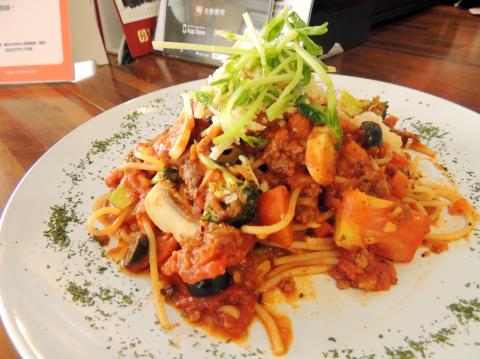
Photo: Enru Lin, Taipei Times
After that? It’s greasy, and some yellow oil pools on to the plate. But even then, maybe you won’t complain, because that’s what you came for. This is affordable and satisfying fried meat and potatoes for locals, which probably makes it more diner-like in spirit than a lot of Taipei Americana.

Taiwan’s English education system is being pulled apart by three opposing forces. Bilingual Nation 2030 pulls students toward English and global communication. Artificial Intelligence (AI) readiness pulls them toward digital judgment, verification and AI-mediated work. But Taiwan’s old exam culture pulls them back toward memorization, grammar drills, timed reading and correct answers. If the education system keeps using old exams to define success, it risks producing graduates who are neither genuinely bilingual nor genuinely AI-ready, but trained for tasks machines can already perform. The first force is Bilingual Nation 2030. Launched in 2018, the policy aimed to “help Taiwan’s workforce connect
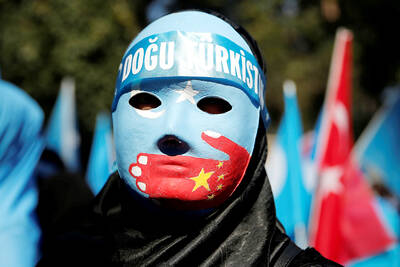
It seems every few days one bumps into one of those “real man” comments in which Taiwan is urged to “face reality” or similar, and “make a deal,” with the speaker implying that soon it will be too late. “Deal” advocates always present themselves as having a superior grip on reality, and the manly ability to make the “hard choice.” Their testosterone-laden language often echoes that of Taiwan sellout advocates. Note that such commentary always specifies a process (“make a deal, work with, make progress”), never the end state of what occupation by a violent authoritarian colonialist state will entail. In
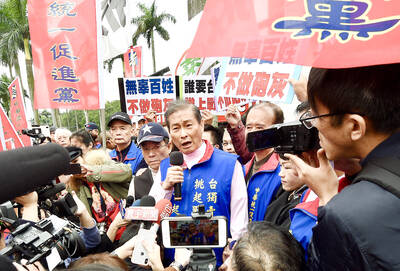
There are shadowy cabals plotting to sell out Taiwan to be annexed by China, by invasion if necessary. Fortunately, they are buffoons. In 2019, former Bamboo Union gangster and founder of the China Unification Promotion Party (CUPP), Chang An-le (張安樂, colorfully known as “White Wolf”), led a protest at the Legislative Yuan against comments made by then-premier Su Tseng-chang (蘇貞昌) that in the event of an attack by China, he would never surrender, but would protect the nation by fighting to the end, even if he only had a broom. Chang had party members bring a wooden casket that they
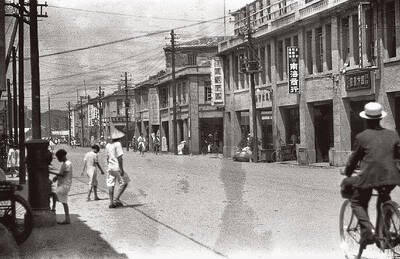
June 1 to June 7 "If all Taiwanese were as afraid of dying as you, then what would happen?” Physician Shih Chiang-nan (施江南) reportedly said this to his wife Chen Chiao-tung (陳焦桐) after she urged him to stop intervening on behalf of Taiwanese soldiers stranded overseas after serving in the Japanese Army during World War II. Shih had clashed with high-ranking officials over the issue, engaged in several heated arguments with Taiwan governor-general Chen Yi (陳儀) and allegedly shouted at general Ko Yuan-fen (柯遠芬), chief of staff of the Taiwan Garrison Command, over


 RSS
RSS