


Artificial Shoal (人造沙洲), Goosander (川秋沙), White Wabbit Records (小白兔唱片行)
With its first full-length album, indie pop band Goosander (川秋沙) has made some notable strides since the release of its debut EP from last year, Drift Along in a Lingered Spring (春日遲遲).
Whereas Drift Along offered a quick introduction to the band’s dreamy, melancholic sound (think the Cocteau Twins, but not quite as trippy), Artificial Shoal (人造沙洲) has a musical theme that is more focused and coherent.
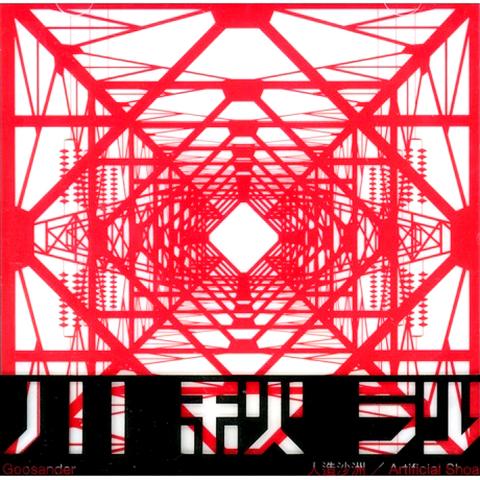
Goosander, a four-piece group, sounds more refined and mature as an ensemble. The album’s improved production values help, too. A well-chosen palette of stark and wintery guitar and synth tones threads the songs together. Vocalist Yvonne Ong (翁宜襄), who has a pristine, siren-like soprano voice, imparts a sense of fragility that is the heart of the band’s allure. Ong keeps your attention through the noisy storms of electric guitars and cymbal crashes laced throughout the album’s nine tracks.
The songs aspire for ethereal heights, and most follow a post-rock formula, employing metronome-steady tempos and oscillating between quiet and loud sections.
Laden with deep-hued organ tones, 24 Solar Terms (二十四節氣) ascends into a psychedelic-flavored jam with tasteful guitar work by Vincent Lin (林村宜), also a key songwriter in the band. Pigeon Racing (賽鴿), which has a disco pulse, also aims for the stratosphere, with cooling guitar tones and synth loops that swirl into a fiery, searing jam.

The album as a whole feels a bit monotonous and flat, as the band clings a bit too tightly to post-rock structure (slow tempos to exploding jams). By the time I got to the third track, Silvergrass (管芒), the mood starts to feel stale and numb in spite of Ong’s icy sweet voice and the beautiful guitar reverbs. The funky march of the following song, Fong Wei (風尾), and the urgent rock beat of Buds (少年花) provide much-needed changes in groove.
The lyrics, written by Lin and Ong, read like the solitary musings one might expect in indie-pop. But that they’re written and sung in Hoklo (commonly known as Taiwanese) makes the band’s music something of a novelty in Taiwan’s indie rock scene. Along with beautifully spacey and weird synth and guitar soundscapes, the band’s use of the language will likely boost Artificial Shoal’s cachet among young Taiwanese indie fans.
But it’s really the all-too-rare bursts of emotional energy in songs like Son (愛哭欸囝仔) that show the band has the potential to make interesting and compelling rock.
— David Chen, Staff Reporter
Popular Wasteland, Roxymoron, Self-released
Roxymoron, a trio of UK and US expats in Taipei who play indie rock, have let off a few sparks with their EP Popular Wasteland, released in May.

What’s nice about this small collection of tracks is how the songs are balanced: the grooves are peppy and propulsive and the emotions bittersweet and dark.
The catchy opener Shapes is an exhilarating ride when the volume is turned up. The tune, which launches with fizzy cymbal crashes, cruises on a driving 1980s post-punk groove. Guitarist Daniel Semo’s clean and chiming tones and bassist/vocalist Ben Smith’s high-register voice brings to mind the sound of early U2, but with a funkier lilt.
The gloomy rocker Crawl aims for the sinister, with lyrics involving a gun and a refrain that goes “leave you to crawl, crawl back to me/as you fall apart I’ll stitch you back together.” The psychological melodrama offers a setting for the band to let loose with a jam that rages with Semo firing off rapidly strummed chords.
Roxymoron has a sparse, almost Math-rock sound, with calculated pauses sprinkled throughout the songs that create surprise and tension. Smith likes pulsing one-note bass lines, and drummer John Stephenson keeps the band tight with steadily syncopated beats. But the ensemble still sounds fluid and organic. There is a nice moment on Cats where Semo plays a repetitive one note riff as if he were playing a synth instead of a guitar.
That song features a duet with female singer vocalist Pia Hsieh (謝詩平), who sings in Mandarin while Smith sings in English. Her backing “heys” add spunk to Didn’t Mean, another rousing track that represents the band’s spirited music.
— David Chen, Staff Reporter
Tai-pak thia sa pian (台北聽三遍), Yannick Dauby, Kalerne Editions/Atelier Hui Kan (回看工作室)
If anyone can convince a layman of the merits of sound art, it might be Yannick Dauby. The French expat has lived and worked in Taiwan since 2004, working on projects ranging from field recordings of frogs (see page 13 of the Feb. 8, 2010 edition of the Taipei Times) to an audio documentary of sorts on an Atayal Aboriginal tribal village (see page 14, Jan. 23, 2011).
For Dauby, these CD recordings were about “the pleasure of listening.” Songs of the Frogs of Taiwan, Volume 1 (蛙蛙哇, 2009) was both an educational and artful presentation of 16 of the country’s frog species.
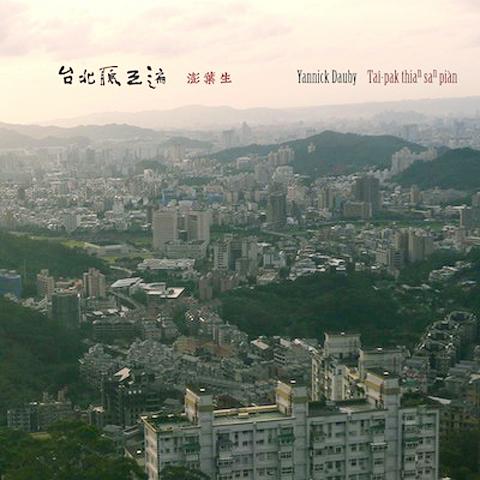
The same could certainly be said about this latest work. Tai-pak thia sa pian (台北聽三遍), the Hoklo (commonly known as Taiwanese) translation of “Listening across Taipei,” is three pieces full of recorded sounds that will sound familiar to denizens of the capital: buses, MRT turnstiles, cicadas, temple drums and bells, chatter on a crowded street, the roar of air conditioners.
But what makes this CD worth listening to is how Dauby puts everything together. His approach to “sound compositions” is indeed musical and also somewhat akin to the work of a film editor. Nous, les defunts (鬼月), a set of field recordings made during ghost month in 2008, is full of scenes that fade from day to night; sunshine to thunderstorm; cicadas to frogs; temple bells to howling dogs in the distance.
Firecrackers in the distance hint at the arrival of ghost month. Later Dauby puts listeners right in the middle of a temple festival, with drums and gongs clanging and a chorus of suona horns blaring. But this track is not pure documentary – he gently mixes in the eerie siren of a cicada, looping the sound in the background.
Taipei 2030 is a trip through Taipei’s streets and underground shopping malls. What catches the ear is the roar of air conditioning systems that grow to sound like the plum rains in summertime. The noise eventually becomes TV static and then fades into traffic.
Ketagalan is the most abstract piece on the CD, envisioned as a tribute to this Aboriginal tribe of northern Taiwan. Dauby gets more playful, adding manipulated electronic sounds and an ominous low-hummed drone at the beginning and using looped recordings throughout. In the liner notes, he writes that the composition is inspired by “encounters with aborigine groups and the sleepy public transport.”
While this might be a crude way to put it to those who work in sound art, these recordings feel like cinema without the visual element. And they succeed in making us do what sound artists likely want us to do: to listen, to react, to wonder.
— David Chen, Staff Reporter
Fiction (大小說家), Yoga Lin (林宥嘉), HIM
Among the One Million Star (超級星光大道) alumni, Yoga Lin (林宥嘉) has emerged as the most fascinating crooner with the most sophisticated tastes by specializing in concept albums.
With his fourth album Fiction (大小說家), Lin delivers the most ambitious and musically rich album in his career by seeking to turn fictional narratives into songs in this high-concept album.
The narrative natures of these songs include sci-fi, romance, realism, fable, thriller and autobiography. With these songs, Lin reasserts that he is a soulful crooner who is capable of using his emotionally charged vocals to tell stories.
The lead single Si Fan (思凡), a song that blends the influences of rock, electronica, 1980s new wave and 1970s disco, is a thematically whimsical track about aliens visiting earth. In less capable hands, such an eccentric theme and eclectic style might end up as a misguided patchwork. Lin’s atmospheric vocals have the ability to ground disparate musical styles and ambitious narrative onto his layered emotions.
Lin has been dubbed “psychedelic prince” (迷幻王子) because of his dreamy vocals since the beginning of his career. Thus, it’s a delight to see him plunge into blues and jazz. With Seduction (誘), Lin pays homage to the grandeur of the swing age in a song about temptation. The third single The album breaks new ground by blending romance and horror in tracks such as Saturday Night in a Panicked State (周末夜驚魂) and On The 4th Ward (4號病房). Musically, the album runs the gamut of rock, folk, pop, blues and jazz. Lin is arguably the male singer with the most poignant and atmospheric vocals on the Mando-pop scene right now. He may have lost out in this year’s Golden Melody Awards, but for many fans, he stands proud as the best Mandarin male singer of his generation. — Andrew C.C. Huang, Contributing reporter

Taiwan’s English education system is being pulled apart by three opposing forces. Bilingual Nation 2030 pulls students toward English and global communication. Artificial Intelligence (AI) readiness pulls them toward digital judgment, verification and AI-mediated work. But Taiwan’s old exam culture pulls them back toward memorization, grammar drills, timed reading and correct answers. If the education system keeps using old exams to define success, it risks producing graduates who are neither genuinely bilingual nor genuinely AI-ready, but trained for tasks machines can already perform. The first force is Bilingual Nation 2030. Launched in 2018, the policy aimed to “help Taiwan’s workforce connect

It seems every few days one bumps into one of those “real man” comments in which Taiwan is urged to “face reality” or similar, and “make a deal,” with the speaker implying that soon it will be too late. “Deal” advocates always present themselves as having a superior grip on reality, and the manly ability to make the “hard choice.” Their testosterone-laden language often echoes that of Taiwan sellout advocates. Note that such commentary always specifies a process (“make a deal, work with, make progress”), never the end state of what occupation by a violent authoritarian colonialist state will entail. In

June 1 to June 7 "If all Taiwanese were as afraid of dying as you, then what would happen?” Physician Shih Chiang-nan (施江南) reportedly said this to his wife Chen Chiao-tung (陳焦桐) after she urged him to stop intervening on behalf of Taiwanese soldiers stranded overseas after serving in the Japanese Army during World War II. Shih had clashed with high-ranking officials over the issue, engaged in several heated arguments with Taiwan governor-general Chen Yi (陳儀) and allegedly shouted at general Ko Yuan-fen (柯遠芬), chief of staff of the Taiwan Garrison Command, over

“Taiwan’s Opposition Leader Comes to US With a Message Straight Out of Beijing” read a May 31 headline in the Wall Street Journal. Top US administration officials and members of Congress almost certainly read the WSJ, and if there was a bullet point takeaway that people in Washington should absorb ahead of Chinese Nationalist Party (KMT) Chair Cheng Li-wun’s (鄭麗文) arrival in DC on June 9, that headline is it. The last few columns have discussed this very topic, and the timing is not coincidental. While those top officials likely do not read the Taipei Times, judging by the number


 RSS
RSS