


Freya Lim (林凡)
Accidentally in Love (愛情很突然)
Rock Records

Hot on the heels of her breakthrough hit Wounded (重傷), the theme song to the hit TV drama The Fierce Wife (犀利人妻) last year, Mando-pop songstress Freya Lim (林凡) has released a musically rich and mature new album, Accidentally in Love (愛情很突然).
The pop siren’s latest outing firmly establishes her as a so-called “romantically therapeutic diva” (療愛歌姬). While Lim has already put her name on the map as a creator of love songs, on Accidentally she broadens her musical horizons to include rock and electronica, and raises the bar for all future “therapeutic singers” (療傷係歌手).
The opening track Intimate Friends (睡在一起的知己), which was produced by pop maestro Jim Lee, kicks off with hypnotic guitar chords and builds into a rock ballad. In a ground-breaking move, at least for Mando-pop, the chanteuse has parlayed indie rock into a pop song. The lyrics, about the complications of sleeping with your good friend, were written by master lyricist Lin Xi (林夕), and deliver meaty, nuanced emotions.

The literarily titled track Farewell Resembling a Whispered Ode (告別像低迴溫婉的小調) reteams Lim with Adrien Fu (符致逸), composer of Wounded fame, but this time for a folksy number. On this track, Lim lets her hair down with her bell-like, tingling vocals.
On Maybe (不一定), Lim revisits the electronica of Wounded to deliver yet another love anthem that is at once dance-driven, romantic and inspirational. Lim flirts with Brit-style layered rock in My Neurosis (我的病) and pays homage to indie rock in the forlorn track Rift (缺口).
With Accidentally, the pop songstress plunges into a musical adventure with abandon because, unlike the usual understated vocals of other therapeutic divas, her crystalline voice is capable of piercing through heavier sounds, such as electronica and rock. Love may well be accidental, but Lim’s career breakthrough is not. Now all eyes are on her to see what she comes up with next.
Kimberley Chen (陳芳語)
Kimberley (首張同名專輯)
Sony Music
After the success of its jazz/bossa nova performer Joanna Wang (王若琳), Sony Music is further pushing the envelope by introducing yet another mostly English-speaking act, Kimberley Chen (陳芳語). At merely 18 and yet with an explosive Christina Augilera-esque voice, the Australia-born Chen proves that she might be a genre-defining act with her polished, confident debut album.
Chen’s album is composed of six tracks in Mandarin and another five in English.
The lead single, In Love With You (愛你), was written by red-hot producer Skot Suyam (陶山) (who was responsible for Mando-pop heartthrob Anthony Neely’s (倪安東) Sorry That I Loved You). Also the theme song to the TV romance drama Fondant Garden (翻糖花園), the track is a catchy piano-driven ballad that has accrued 1.4 million hits on YouTube. Putting her own twist on the Mando-pop format, Chen kicks off the song with a pensive crooning and then soars into explosive vocals in the finale.
Up-and-coming Singaporean hip-hop/dance producer Terrtye Lee (梁永泰) provides the album’s most fascinating and ground-breaking tracks.
In the Brit-rock-style anthem Satellite, Chen’s vocals soar through an atmospheric song about floating above romance like a satellite. In Wonderland, her voice glides through a hypnotic mixture of gyrating dance beats and hip-hop defiance. The mood changes on GPS, with Chen delivering a heartfelt and understated love ode against an acoustic piano.
Under the tutelage of Lee, Chen’s hip-hop and electronica tracks upstage any effort by Mando-pop heavyweight Elva Hsiao (蕭亞軒) and possibly place her just behind Jolin Tsai (蔡依林). Fans and critics would be well-advised to kepp an eye on Chen. If she masters Mandarin, she could become the next Coco Lee (李玟).

Taiwan’s English education system is being pulled apart by three opposing forces. Bilingual Nation 2030 pulls students toward English and global communication. Artificial Intelligence (AI) readiness pulls them toward digital judgment, verification and AI-mediated work. But Taiwan’s old exam culture pulls them back toward memorization, grammar drills, timed reading and correct answers. If the education system keeps using old exams to define success, it risks producing graduates who are neither genuinely bilingual nor genuinely AI-ready, but trained for tasks machines can already perform. The first force is Bilingual Nation 2030. Launched in 2018, the policy aimed to “help Taiwan’s workforce connect
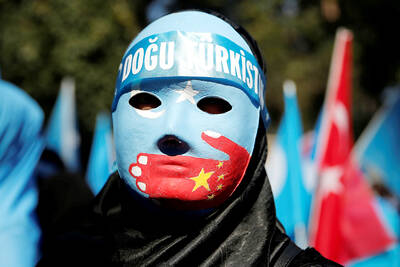
It seems every few days one bumps into one of those “real man” comments in which Taiwan is urged to “face reality” or similar, and “make a deal,” with the speaker implying that soon it will be too late. “Deal” advocates always present themselves as having a superior grip on reality, and the manly ability to make the “hard choice.” Their testosterone-laden language often echoes that of Taiwan sellout advocates. Note that such commentary always specifies a process (“make a deal, work with, make progress”), never the end state of what occupation by a violent authoritarian colonialist state will entail. In

There are shadowy cabals plotting to sell out Taiwan to be annexed by China, by invasion if necessary. Fortunately, they are buffoons. In 2019, former Bamboo Union gangster and founder of the China Unification Promotion Party (CUPP), Chang An-le (張安樂, colorfully known as “White Wolf”), led a protest at the Legislative Yuan against comments made by then-premier Su Tseng-chang (蘇貞昌) that in the event of an attack by China, he would never surrender, but would protect the nation by fighting to the end, even if he only had a broom. Chang had party members bring a wooden casket that they
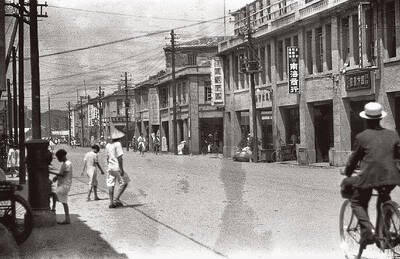
June 1 to June 7 "If all Taiwanese were as afraid of dying as you, then what would happen?” Physician Shih Chiang-nan (施江南) reportedly said this to his wife Chen Chiao-tung (陳焦桐) after she urged him to stop intervening on behalf of Taiwanese soldiers stranded overseas after serving in the Japanese Army during World War II. Shih had clashed with high-ranking officials over the issue, engaged in several heated arguments with Taiwan governor-general Chen Yi (陳儀) and allegedly shouted at general Ko Yuan-fen (柯遠芬), chief of staff of the Taiwan Garrison Command, over


 RSS
RSS