


Beyond Superflat (超扁平之外) features the colorful, cartoon-inspired work of Anirban Mitra from India, Hsu Yin-ling (許尹齡) from Taiwan, and Yuree Kensaku from Thailand.
■ Sakshi Gallery (夏可喜當代藝術), 33 Yitong St, Taipei City (台北市伊通街33號). Open Tuesdays to Saturdays from 1:30pm to 9:30pm, Sundays from 1:30pm to 7:30pm. Tel: (02) 2516-5386
■ Opening reception on Saturday at 7pm. Until Aug. 21
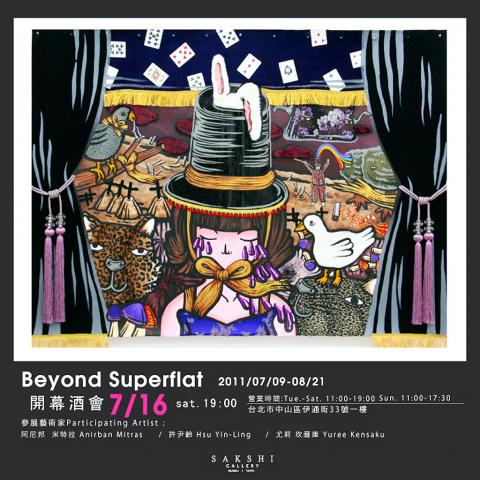
Photo Courtesy of Sakshi Gallery
Oriental Aesthetics — The Lyricism of Chinese Characters (寫意東方) is a group exhibition featuring the paintings of George Chann (陳蔭羆) and Cheung Yee (張義), sculptures by Ju Jun (朱雋), mixed media art by Xue Song (薛松) and new media work by Yao Chung-han (姚仲涵).
■ Kalos Gallery (真善美畫廊), 269, Dunhua S Rd Sec 1, Taipei City (台北市敦化南路一段269號). Open daily from 10am to 6:30pm, closed Sundays. Tel: (02) 2836-3452
■ Opening reception on Friday at 3pm. Until Aug. 14
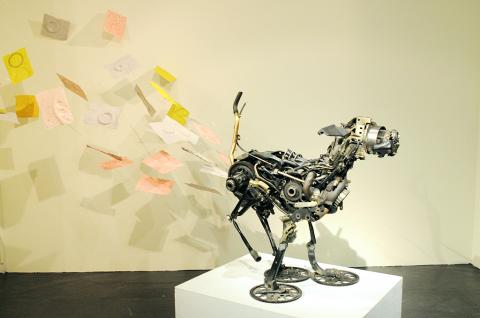
Photo Courtesy of MOCA
For Trash as Treasure (中山印象:招材晉寶展期), artists made inquiries at local businesses for leftover or discarded materials and processed the materials with contemporary art concepts. The items were then transformed and bestowed with a new sense of value. The group exhibition includes work by Lin Ming-hsiu (林明修), Onion Hsu (徐揚聰), and Lin Ren-hsin (林仁信).
■ MOCA Studio — Underground (台北當代藝術館地下實驗‧創意秀場), Zhongshan MRT Station (中山捷運站)
■ Until Aug. 14
The Struggle between Space and Sentiment: Read Lee (空間與情意的纏鬥:李德) is the first comprehensive show in Taiwan of Lee’s career and his progression from superficial realism to “the truth of essence.” Showcasing some 200 drawings, oil paintings and watercolors, it will also include the screening of a documentary on Lee’s life and art education. The exhibition promises to “give viewers a deep understanding of the subtle and poetic expression of Read Lee’s works and his artistic passion and original ideas.”
■ Taipei Fine Arts Museum (台北市立美術館), 181, Zhongshan N Rd Sec 3, Taipei City (台北市中山北路三段181號). Open daily from 9:30am to 5:30pm, closes at 9:30pm on Saturdays. Tel: (02) 2595-7656
■ Until Nov. 25
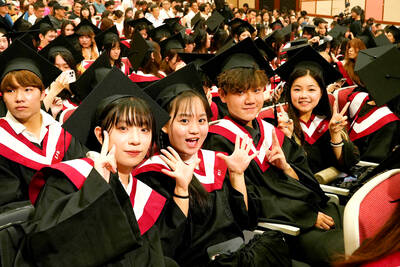
Taiwan’s English education system is being pulled apart by three opposing forces. Bilingual Nation 2030 pulls students toward English and global communication. Artificial Intelligence (AI) readiness pulls them toward digital judgment, verification and AI-mediated work. But Taiwan’s old exam culture pulls them back toward memorization, grammar drills, timed reading and correct answers. If the education system keeps using old exams to define success, it risks producing graduates who are neither genuinely bilingual nor genuinely AI-ready, but trained for tasks machines can already perform. The first force is Bilingual Nation 2030. Launched in 2018, the policy aimed to “help Taiwan’s workforce connect
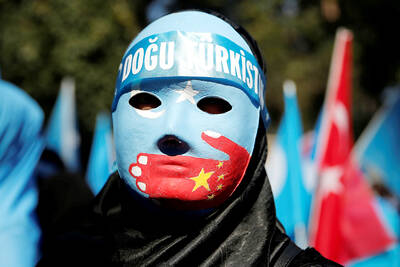
It seems every few days one bumps into one of those “real man” comments in which Taiwan is urged to “face reality” or similar, and “make a deal,” with the speaker implying that soon it will be too late. “Deal” advocates always present themselves as having a superior grip on reality, and the manly ability to make the “hard choice.” Their testosterone-laden language often echoes that of Taiwan sellout advocates. Note that such commentary always specifies a process (“make a deal, work with, make progress”), never the end state of what occupation by a violent authoritarian colonialist state will entail. In
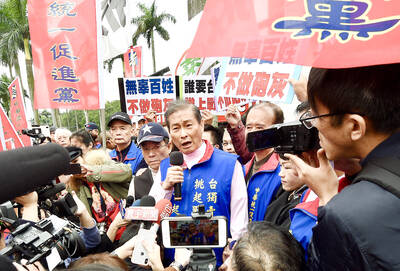
There are shadowy cabals plotting to sell out Taiwan to be annexed by China, by invasion if necessary. Fortunately, they are buffoons. In 2019, former Bamboo Union gangster and founder of the China Unification Promotion Party (CUPP), Chang An-le (張安樂, colorfully known as “White Wolf”), led a protest at the Legislative Yuan against comments made by then-premier Su Tseng-chang (蘇貞昌) that in the event of an attack by China, he would never surrender, but would protect the nation by fighting to the end, even if he only had a broom. Chang had party members bring a wooden casket that they
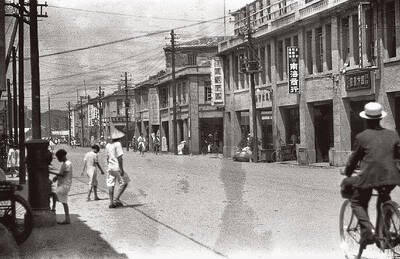
June 1 to June 7 "If all Taiwanese were as afraid of dying as you, then what would happen?” Physician Shih Chiang-nan (施江南) reportedly said this to his wife Chen Chiao-tung (陳焦桐) after she urged him to stop intervening on behalf of Taiwanese soldiers stranded overseas after serving in the Japanese Army during World War II. Shih had clashed with high-ranking officials over the issue, engaged in several heated arguments with Taiwan governor-general Chen Yi (陳儀) and allegedly shouted at general Ko Yuan-fen (柯遠芬), chief of staff of the Taiwan Garrison Command, over


 RSS
RSS