


Since launching his first clothing line just three years ago, Baron Lee (李倍) has been a featured designer at last year’s Taipei in Style showcase and Elle Taiwan’s New Design, New Power exhibition. He was also selected to show at the Flora Expo last month, where Lee debuted his new brand, Dleet.
Lee’s first store opened two weeks ago in Dunnan Eslite Bookstore (誠品敦南店).
Both Dleet and Talkie Talkie, Lee’s first brand, combine avant-garde styling and innovative construction with practicality and comfort. He finds inspiration from unlikely sources: Talkie Talkie’s designs paid tribute to Chang and Eng Bunker, the conjoined twin brothers who were known as “the first Siamese twins,” while Dleet’s first collection was inspired by paper airplanes.
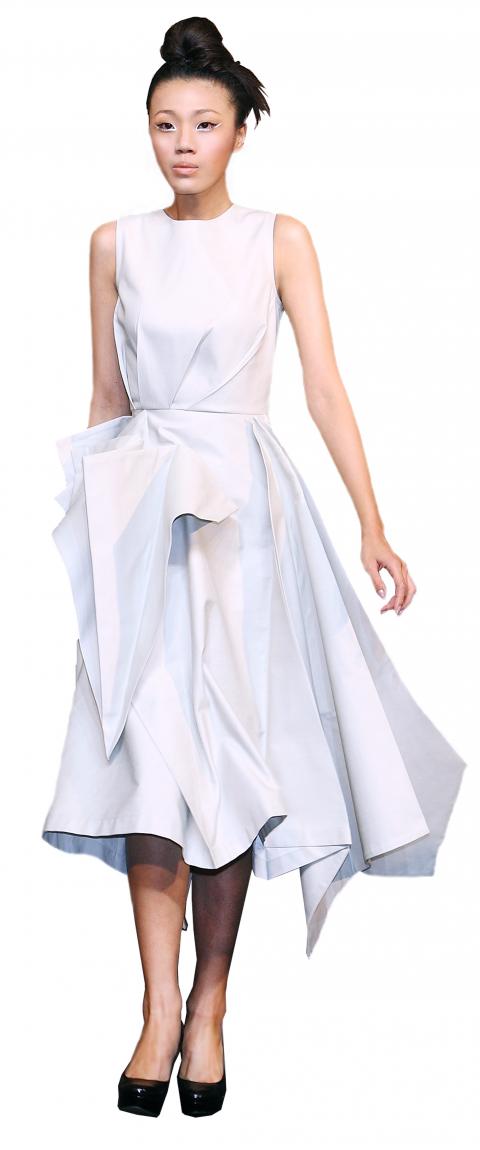
Photo Courtesy of Dleet
Lee grew up “playing next to sewing machines” in his mother and father’s Hsinchu dressmaking studio. After graduating from Shih Chien University (實踐大學) with a degree in fashion design, Lee followed in his parents’ footsteps and began making custom dresses.
When he wasn’t working on commissions for clients, Lee drafted patterns and created items for his own wardrobe.
“I liked making more experimental patterns and I would focus on adding unusual details or trying different construction methods,” Lee says. “I like to make things that don’t seem logical when you first look at them, but are actually constructed very logically.”
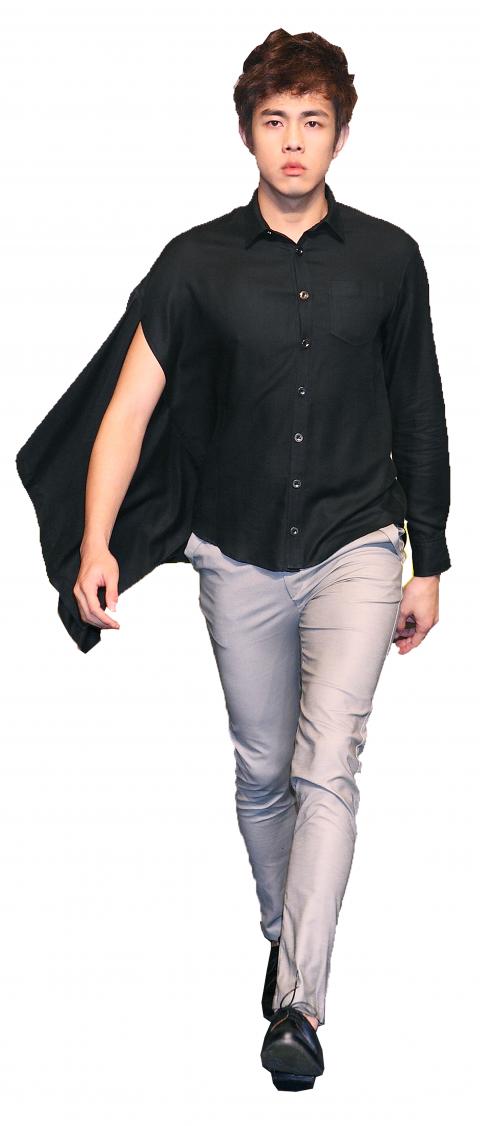
Photo Courtesy of Dleet
Encouraged by friends, Lee launched his first collection in 2007 under the Talkie Talkie label, selling pieces on consignment in boutiques. His designs were inspired by the Bunker twins, who were born in Siam (now Thailand) in 1811. Joined at the sternum, the two were exhibited as human curiosities around the world before settling in North Carolina, where they married two sisters and ran a plantation.
Lee was fascinated by photos of the twins in their elegant 19th-century gentleman’s attire.
“I thought it was very interesting, the idea of creating one piece of clothing for two bodies,” he says.
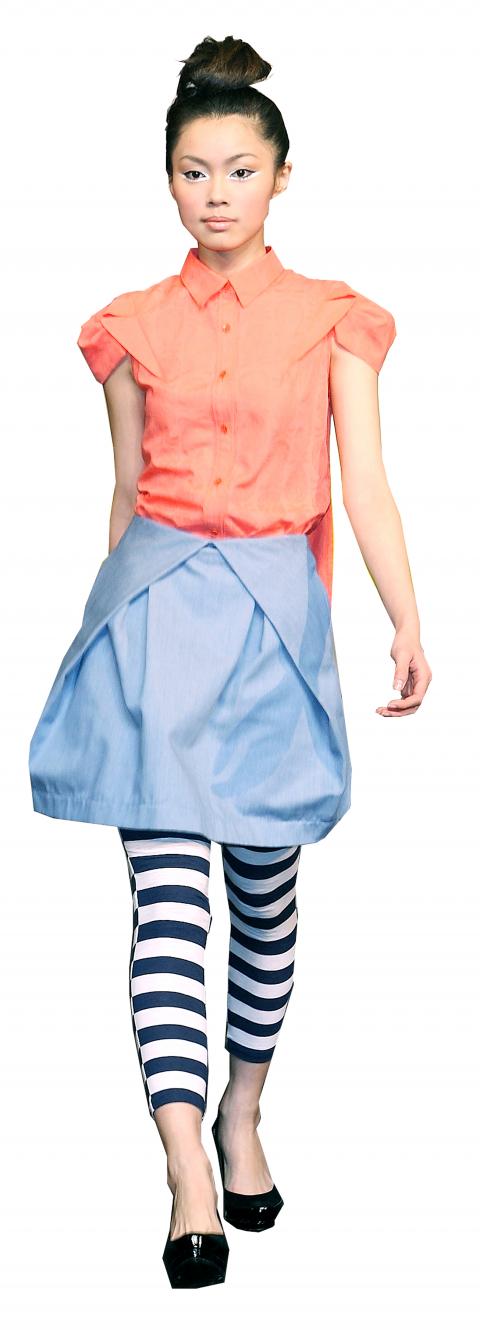
Photo Courtesy of Dleet
Talkie Talkie’s designs included shirts with collars on both ends and dresses that can be worn in four different ways. The unusual silhouettes were balanced by quiet monochrome colors and simple materials like jersey and shirting fabrics.
Dleet’s designs are meant to be “lower profile” than Talkie Talkie, but still retain Lee’s aesthetic signature. The first collection, inspired by paper planes, features seemingly simple lines. Upon closer inspection, however, details like creatively placed seam lines, darts and tiny pin tucks reveal themselves. Each item of clothing is structured, with many intricately sculpted details and origami-like folds, but the fabric flows naturally.
Some pieces have embellishments shaped like paper planes, while others interpret the children’s playthings in less literal ways. Wing-like lapels are sewn around the placket of men’s shirts, while women’s trousers and skirts cut from pale blue fabric have exaggerated paper-bag waists that unfurl like flower petals over the waist.
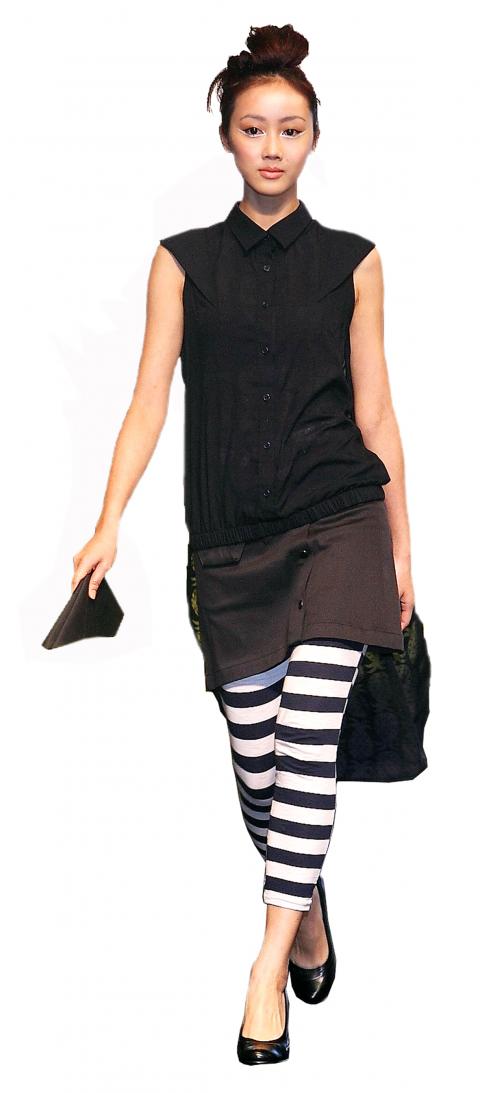
Photo Courtesy of Dleet
Lee looks up to conceptual fashion designers like Belgium-born Martin Margiela and Rei Kawakubo, the creator of Comme des Garcons.
“Japanese designers are excellent at the way they put unique details in clothing, but at the same time their pieces aren’t complicated to wear. Their designs feature a lot of interesting construction methods, which is also what I like to work with,” Lee says.
Before opening his first store, Lee sold his clothing on consignment in boutiques like Deeplay and Minty Minty. In the future, Lee plans to spend most of his time creating collections for Dleet and hopes to open a new store each year. Most of his items are priced accessibly for young shoppers, at an average of NT$3,000 to NT$5,000 each, and Lee hopes that his customers will incorporate his designs into their daily wardrobe.
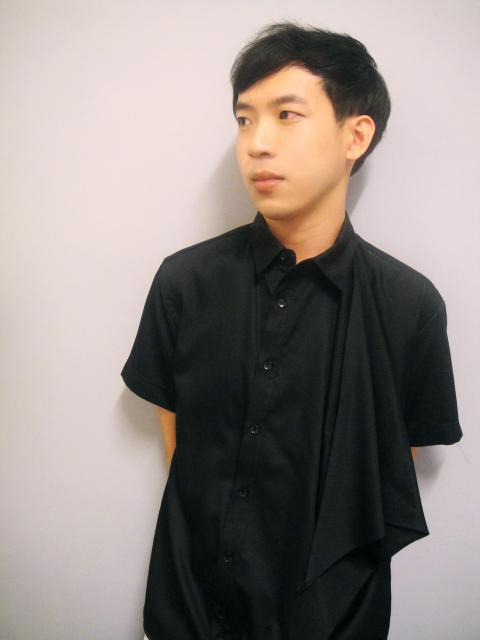
Photo Courtesy of Dleet
“The most important part of my clothing is that it has to be easy to wear,” Lee says. “People should feel comfortable when they put it on.”

Michael slides a sequin glove over the pop star’s tarnished legacy, shrouding Michael Jackson’s complications with a conventional biopic that, if you cover your ears, sounds great. Antoine Fuqua’s movie is sanctioned by Jackson’s estate and its producers include the estate’s executors. So it is, by its nature, a narrow, authorized perspective on Jackson. The film ends before the flood of allegations of sexual abuse of children, or Jackson’s own acknowledgment of sleeping alongside kids. Jackson and his estate have long maintained his innocence. In his only criminal trial, in 2005, Jackson was acquitted. Michael doesn’t even subtly nod to these facts.

Writing of the finds at the ancient iron-working site of Shihsanhang (十 三行) in New Taipei City’s Bali District (八里), archaeologist Tsang Cheng-hwa (臧振華) of the Academia Sinica’s Institute of History and Philology observes: “One bronze bowl gilded with gold, together with copper coins and fragments of Tang and Song ceramics, were also found. These provide evidence for early contact between Taiwan aborigines and Chinese.” The Shihsanhang Web site from the Ministry of Culture says of the finds: “They were evidence that the residents of the area had a close trading relation with Chinese civilians, as the coins can be
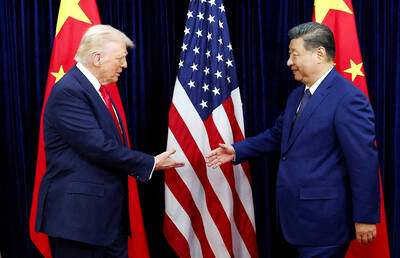
The March/April volume of Foreign Affairs, long a purveyor of pro-China pablum, offered up another irksome Beijing-speak on the issues and solutions for the problems vexing the People’s Republic of China (PRC) and the US: “America and China at the Edge of Ruin: A Last Chance to Step Back From the Brink” rang the provocative title, by David M. Lampton and Wang Jisi (王緝思). If one ever wants to describe what went wrong with US-PRC relations, the career of Wang Jisi is a good place to start. Wang has extensive experience in the US and the West. He was a visiting

The January 2028 presidential election is already stirring to life. In seven or eight months, the primary season will kick into high gear following this November’s local elections. By this point next year, we will likely know the Democratic Progressive Party (DPP) candidate and whether the Taiwan People’s Party (TPP) will be fielding a candidate. Also around this time, the Chinese Nationalist Party (KMT) will either have already completed their primary, or it will be heading into the final stretch. By next summer, the presidential race will be in high gear. The big question is who will be the KMT’s


 RSS
RSS