


Acclaimed Singaporean singer/songwriter Tanya Chua (蔡健雅) is all set to show off her groovier side. For the first time in her career, she’s incorporating dance into her performances.
“It’s a very little known fact that I actually started out as a dancer before I became a singer,” Chua told the Taipei Times in a phone interview on Saturday.
Chua begins her second world tour, titled 2011 Tanya Chua Tanya and the Cities Asia Tour (2011蔡健雅Tanya and the Cities 亞洲巡迴演唱會), at Taipei Arena (台北小巨蛋) on March 26. Afterwards, she’ll perform at the Singapore Indoor Stadium before returning to Taiwan to perform at the Taichung City Fulfillment Amphitheater (圓滿戶外劇場) on April 23.

Photo Courtesy of Da Da Arts PromotioN
“My music always has that quality of ‘listening to it alone in the living room,’” Chua said. “I will hopefully retain that living room quality and present the more visual aspects of myself.”
A two-time Golden Melody Best Female Singer Award-winner (2006 and 2008), the Mando-pop poetess is acclaimed for creating incisive odes, such as Bottomless Abyss (無底洞) and Night Blindness (夜盲症), and somber metaphors.
Chua will present her new tour as a troubadour who delivers travelogues about life’s romantic encounters.
“The things I have seen and heard in different cities inspired me tremendously,” she said. “Travel is food to my soul. I love the motion of traveling. If I am at home, I will even move furniture around periodically, just to feel a sense of motion.”
Regarded as a modern-day goddess of love equipped with ultra-sensitive antennae with which she hones in on the minutiae of romance, Chua says she has mellowed with age.
“I have seen and gone through enough relationships not to be swayed by romance,” she said. “I fight against being emotional. I don’t want people to know that my feelings are hurt.”
Chua likens her writing process to a volcanic eruption.
“After a period of being very infatuated, overwhelmed or angry, songs will pour out of me,” she said.
While her haunting love songs have earned praise, the songstress has become more celebratory about life on recent albums.
“The next album will be more groovy and rhythmic,” Chua said.
PERFORMANCE NOTES
WHAT: 2011 Tanya Chua Tanya and the Cities Asia Tour (2011蔡健雅Tanya and the Cities亞洲巡迴演唱會)
WHEN: March 26 at 7:30 pm and April 23 at 7:30 pm
WHERE: March 26 at Taipei Arena (台北小巨蛋), 2, Nanjing E Rd Sec 4, Taipei City (台北市南京東路四段2號), April 23 at Taichung City Fulfillment Amphitheater (圓滿戶外劇場) in Wensin Park (文心森林公園), at the intersection of Wensin Road Section 1 (文心路一段) and Siangshang Road Section 2 (向上路二段)
ADMISSION: Tickets are from NT$800 to NT$3,600, available online at www.tickets.books.com.tw or through 7-Eleven ibon kiosks
ON THE NET: www.tanyachuamusic.com

Taiwan’s English education system is being pulled apart by three opposing forces. Bilingual Nation 2030 pulls students toward English and global communication. Artificial Intelligence (AI) readiness pulls them toward digital judgment, verification and AI-mediated work. But Taiwan’s old exam culture pulls them back toward memorization, grammar drills, timed reading and correct answers. If the education system keeps using old exams to define success, it risks producing graduates who are neither genuinely bilingual nor genuinely AI-ready, but trained for tasks machines can already perform. The first force is Bilingual Nation 2030. Launched in 2018, the policy aimed to “help Taiwan’s workforce connect
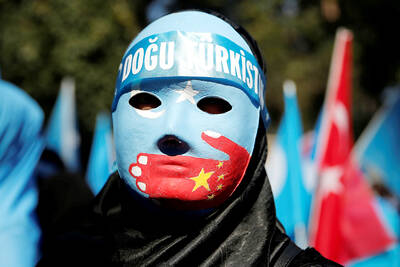
It seems every few days one bumps into one of those “real man” comments in which Taiwan is urged to “face reality” or similar, and “make a deal,” with the speaker implying that soon it will be too late. “Deal” advocates always present themselves as having a superior grip on reality, and the manly ability to make the “hard choice.” Their testosterone-laden language often echoes that of Taiwan sellout advocates. Note that such commentary always specifies a process (“make a deal, work with, make progress”), never the end state of what occupation by a violent authoritarian colonialist state will entail. In
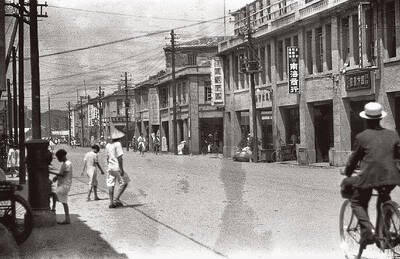
June 1 to June 7 "If all Taiwanese were as afraid of dying as you, then what would happen?” Physician Shih Chiang-nan (施江南) reportedly said this to his wife Chen Chiao-tung (陳焦桐) after she urged him to stop intervening on behalf of Taiwanese soldiers stranded overseas after serving in the Japanese Army during World War II. Shih had clashed with high-ranking officials over the issue, engaged in several heated arguments with Taiwan governor-general Chen Yi (陳儀) and allegedly shouted at general Ko Yuan-fen (柯遠芬), chief of staff of the Taiwan Garrison Command, over

“Taiwan’s Opposition Leader Comes to US With a Message Straight Out of Beijing” read a May 31 headline in the Wall Street Journal. Top US administration officials and members of Congress almost certainly read the WSJ, and if there was a bullet point takeaway that people in Washington should absorb ahead of Chinese Nationalist Party (KMT) Chair Cheng Li-wun’s (鄭麗文) arrival in DC on June 9, that headline is it. The last few columns have discussed this very topic, and the timing is not coincidental. While those top officials likely do not read the Taipei Times, judging by the number


 RSS
RSS