


Post-rock holds considerable sway over indie music fans in Taiwan, and it makes sense that the genre has trickled into more conventional forms of rock. The music of Silverbus (銀色巴士) is an example. The Taipei-based band, a trio formed in 2009, has just released a 10-track collection of slow-core indie rock songs as well as several guitar-driven instrumentals.
Orange (橘色), Silverbus’ first full-length album, moves at an unhurried pace, from the step-by-step notes of the piano on the opening track Reverse Clock (倒轉的鐘) to the spaceship-preparing-for-launch vibe of White Line (白色的線).
Guitarist, vocalist and songwriter Foo Li (李承軒) says that he envisioned the album’s songs as akin to a series of short documentary films. In this sense, the music tends to be understated and distant. The album’s sound is full of gray tones, much like the cover art to the CD (a nicely rendered pencil-sketch drawing of Taipei and Kaohsiung’s skylines illuminated by a hazy orange sun).

The sparse instrumental The New Song (The New Year), one of the album’s better tracks, has a wintry but cozy feel, with Li’s clean guitar lines drawing warm melodic figures.
Li attempts an emotive, bluesy rock vocal on Starlight, but overall his delivery falls short. Lyrically, Silverbus covers the usual territory for a young indie rock band: loneliness, disconnection, self-doubt. A handful of songs are sung in English, such as the minor-key rocker Keep Myself From Falling, the sentiment of which is summed up in the line “I wish I could escape/Just keep myself from falling.”
The band really comes together in later tracks like the ballad Today and the closer Forget (遺忘), which has a predictable but satisfying coda that explodes with guitar noise and cymbal crashes.
Silverbus has nailed down its form and aesthetic, but still has room to mature. Some songs feel a little too fresh, as if they haven’t been road-tested enough. But all in all, Orange is well done, and those who like the album will likely enjoy watching the band grow.
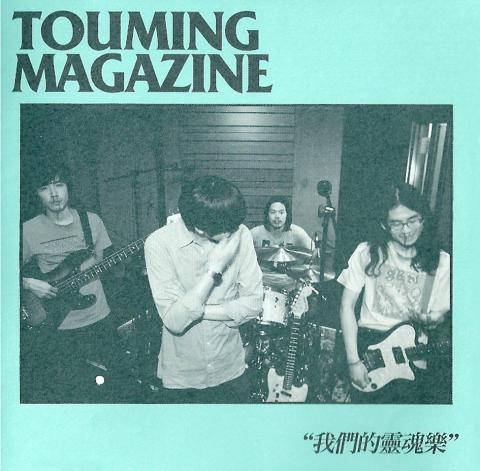
Touming Magazine (透明雜誌) is the latest breath of fresh air in Taipei’s underground rock scene. The four-piece band has a confident grip on its sound: fun, peppy guitar-fueled rock that gives a nod to late 1980s/early 1990s alternative bands like the Pixies and Superchunk.
But this full-length debut, Soul Music (我們的靈魂樂), goes well beyond rock hero worship.
With tightly arranged songs and a party atmosphere, the 14-track collection sounds original and inspired. There isn’t one dud to be found, and the mixtape-like variety flows nicely from track to track. It’s always nice to see a band putting the album format to good use.
Twenty-eight-year-old Hung Shen-hao (洪申豪), the band’s frontman vocalist and guitarist, has a syrupy smooth voice that brings to mind 1976’s Raykai Chen (陳瑞凱) when he croons on tunes like the bittersweet rocker September Classroom (九月教室).
But Hung loves to wail and scream, too, and he lets loose on tracks like Soul Blast and Punch You (有的時候真想往你臉上灌一券), both fine examples of the high-octane speed punk that the band is capable of.
As an ensemble of two guitarists, a bassist and drummer, Touming Magazine sounds well glued together, even when it’s on the verge of falling apart. Layered sheets of fuzz and distortion from two guitars whip up a melodic frenzy in Fastball Rock (時速160公里的吉他,貝斯和鼓). The guitar noise bounces all over the place, but the rhythm section never loses it.
Underneath all of Touming Magazine’s post-punk verve is a keenness for 1970s funk and soul. Hung mentioned to the Taipei Times in an interview that he was a big fan of Motown and hip-hop. You’ll hear the influence in the programmed drums of the opening track De Fitted Beat, the vaguely Motown bass line intro to Soul Blast and the disco groove of Hell of Sex (性的地獄, better translated as “Sex is Hell”), one of the album’s best tracks.
Then there’s the goofy but jazzy hip-hop of Illmaga, which breaks into a punk jam that sounds like something straight out of the Beastie Boys’ Ill Communication.
Add to the mix a couple of solid slow-core rock numbers, including Girl (少女), which has a vocal duet by Hung and Ban Ban (斑斑) of Boyz and Girl. The album closer, Sing to the End of the World (世界還是毀滅算了), sums up the band’s attitude in its refrain: “Let’s dance tonight, let’s kill tomorrow.”
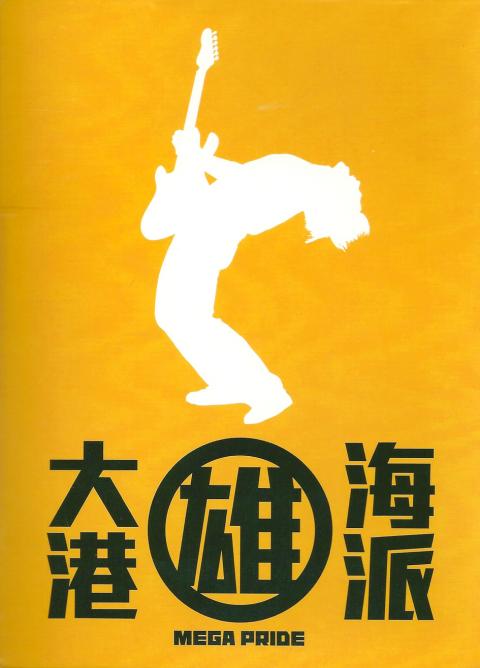
Next weekend the Megaport Music Festival (大港開唱) takes place in Kaohsiung. The lineup features some of the country’s best indie bands, as well as aspiring groups. Mega Pride is a two-disc collection of music designed to whet your appetite for the event, and it’s also a handy go-to primer for a glimpse at some of the better acts in Taiwan’s ever-growing contemporary rock universe.
Most of the artists on this compilation are associated with either Uloud Music, one of Taiwan’s most prominent indie labels, or Taipei venue The Wall (這牆), both of which were started by Freddy Lim (林昶佐) of the storied metal group Chthonic (閃靈).
Lim’s band isn’t on the compilation, but Solemn (恕) represents the black metal scene with its track Serenity Avenue (肅穆大道), which sounds polished and anything but serene.
Mega Pride covers a variety of genres, which is largely the point of the festival. The first disc consists of well-received bands from their respective scenes: Fire Ex (滅火器) shows just how radio-friendly Taiwanese punk can be on Fight Again, while ska/punk outfit Shy Kick Apple (害羞踢蘋果) rips through Happy at a joyous pace.
Windmill (風籟坊), which plays indie rock along the lines of Galaxie 500 and Pavement, contribute Other People’s Songs (別人的歌) to the compilation, which is sung in Mandarin instead of Hoklo (commonly known as Taiwanese), the band’s preferred language for performing. It’s a fantastic track, nonetheless.
Other highlights include post-rock group Aphasia’s (阿飛西雅) ambient and loop-filled Taipei Oscillator (台北震盪) and Orange Doll’s (橘娃娃) dreamy outer-space rock number August 5 (8月5).
Any compilation of Taiwan’s cream-of-the-crop indie bands would not be complete without Loh Tsui Kweh Commune (濁水溪公社), commonly known as LTK. The influential punk band’s latest album is a twisted tribute to cheesy 1980s electronica, which is represented here by the track Starlight Shower — Two Kinds of Moods (流星雨 — 兩樣情).
Mega Pride is also intended to support the growing indie scene in Kaohsiung. The second disc showcases up-and-coming Kaohsiung bands that Uloud is keeping an eye on. And the future sounds pretty good.

Yesterday, the Democratic Progressive Party (DPP) nominated legislator Puma Shen (沈伯洋) as their Taipei mayoral candidate, the Chinese Nationalist Party (KMT) put their stamp of approval on Wei Ping-cheng (魏平政) as their candidate for Changhua County commissioner and former legislator Tsai Pi-ru (蔡壁如) of the Taiwan People’s Party (TPP) has begun the process to also run in Changhua, though she has not yet been formally nominated. All three news items are bizarre. The DPP has struggled with settling on a Taipei nominee. The only candidate who declared interest was Enoch Wu (吳怡農), but the party seemed determined to nominate anyone

In a sudden move last week, opposition lawmakers of the Chinese Nationalist Party (KMT) and Taiwan People’s Party (TPP) passed a NT$780 billion special defense budget as a preemptive measure to stop either Chinese leader Xi Jinping (習近平) or US President Donald Trump from blocking US arms sales to Taiwan at their summit in Beijing, said KMT heavyweight Jaw Shaw-kong (趙少康), speaking to the Taipei Foreign Correspondents Club on Wednesday night in Taipei. The 76-year-old Jaw, a political talk show host who ran as the KMT’s vice presidential candidate in 2024, says that he personally brokered the deal to resolve
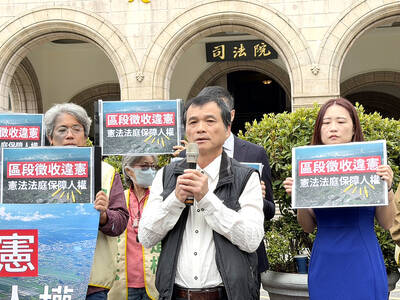
What government project has expropriated the most land in Taiwan? According to local media reports, it is the Taoyuan Aerotropolis, eating 2,500 hectares of land in its first phase, with more to come. Forty thousand people are expected to be displaced by the project. Naturally that enormous land grab is generating powerful pushback. Last week Chen Chien-ho (陳健和), a local resident of Jhuwei Borough (竹圍) in Taoyuan City’s Dayuan District (大園) filed a petition for constitutional review of the project after losing his case at the Taipei Administrative Court. The Administrative Court found in favor of nine other local landowners, but

The Chinese Nationalist Party (KMT) and its sock puppet, the Taiwan People’s Party (TPP), passed their version of the government’s proposed supplementary defense spending bill last week, engendering much commentary. While all eyes were on the defense budget, the PRC’s assault on Taiwan was advancing on other fronts. The removal of domestic drone production and other technologies critical to the nation’s asymmetrical defenses from the list of items purchased in the “compromise” bill shows how the KMT-TPP alliance appears to be serving the People’s Republic of China (PRC). Ironically, the cuts will impact industries heavily represented by tech firms in areas run


 RSS
RSS