


Yitunghsien is a Japanese-style curry and grill restaurant that opened two months ago in an alley close to National Taiwan Normal University’s exercise track. With the Shida area witnessing a slew of burger joints opening up recently, it’s refreshing to see some Asian alternatives.
Unadorned concrete walls painted gray and a sparsely decorated interior give the restaurant a vaguely minimalist vibe. The front section features a few tables located below French-style windows that offer unobstructed views of the alley’s passing traffic. A second room of equal size leads back to a bar with a few tall stools that face the open kitchen.
Yitunghsien’s appetizers are served on heavy ceramic dishes of monotone colors — a soy sauce brown glaze with an expressionist swath of white on the margins. It’s a nice touch. The fiery orange of the carrot balls with osmanthus (NT$39), the emerald green of the miso cucumbers (NT$39) and the buttery yellow of the pumpkin in passion fruit sauce (NT$39) looked like delectable still life paintings.
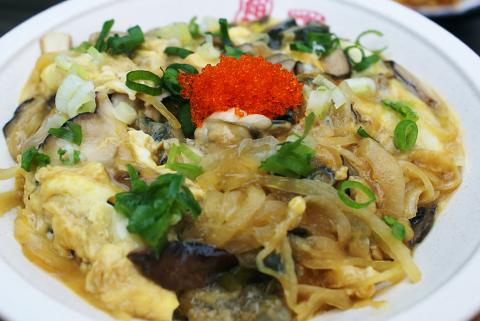
Photo: Noah Buchan, Taipei Times
The food’s flavor, however, was hit and miss. The miso cucumbers were sweet with a vaguely metallic finish, as though they had been sitting in a cheap metal bowl for too long, and the carrot balls tasted like cheap candy. The eggplant with ginger served with stringed tofu (NT$39) was much better because of the subtle hint of ginger. The dish of pumpkin slices marinated in passion fruit juice stood out for its tanginess and crunchy texture, which made it an excellent palate cleanser.
The two skewers of grilled beef marinated in apple sauce (NT$80) were a little gamy and yet had relatively no flavor. There was little to suggest that they had been cooked on a grill or marinated. Other grilled options include pork, shrimp and lamb — all cost the same price.
For an entree, I ordered the energy donburi (NT$138) — donburi meaning “bowl” in Japanese — after my server said it was the restaurant’s most popular dish. What arrived was a little more exotic than I had expected: oysters, shrimp, seaweed, century egg (皮蛋), mushrooms and cubes of soft tofu were cooked together and served piping hot over a bed of white rice. It was topped with a dollop of neon-orange fish roe and garnished with spring onions.
The aroma of egg, similar to the smell of a freshly made omelet, was immediately appealing. After digging in, I was pleasantly surprised by the blend of robust flavors and unique textures. Be warned, however, that this is probably a dish that only seafood lovers could enjoy.
Yitunghsien also offers an extensive variety of fried dishes, rice stews and Japanese-style curries. If you go, give the donburi and curry dishes a try, but avoid the grill and don’t put too much faith in the appetizers.

For many people, Bilingual Nation 2030 begins and ends in the classroom. Since the policy was launched in 2018, the debate has centered on students, teachers and the pressure placed on schools. Yet the policy was never solely about English education. The government’s official plan also calls for bilingualization in Taiwan’s government services, laws and regulations, and living environment. The goal is to make Taiwan more inclusive and accessible to international enterprises and talent and better prepared for global economic and trade conditions. After eight years, that grand vision is due for a pulse check. RULES THAT CAN BE READ For Harper Chen (陳虹宇), an adviser
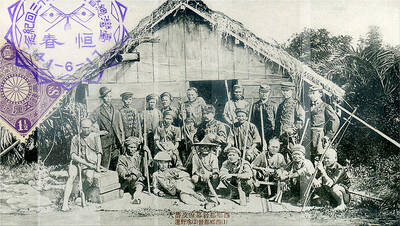
Traditionally, indigenous people in Taiwan’s mountains practice swidden cultivation, or “slash and burn” agriculture, a practice common in human history. According to a 2016 research article in the International Journal of Environmental Sustainability, among the Atayal people, this began with a search for suitable forested slopeland. The trees are burnt for fertilizer and the land cleared of stones. The stones and wood are then piled up to make fences, while both dead and standing trees are retained on the plot. The fences are used to grow climbing crops like squash and beans. The plot itself supports farming for three years.
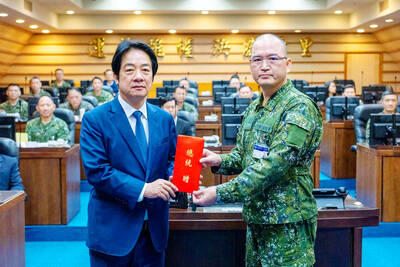
President William Lai (賴清德) on Nov. 25 last year announced in a Washington Post op-ed that “my government will introduce a historic US$40 billion supplementary defense budget, an investment that underscores our commitment to defending Taiwan’s democracy.” Lai promised “significant new arms acquisitions from the United States” and to “invest in cutting-edge technologies and expand Taiwan’s defense industrial base,” to “bolster deterrence by inserting greater costs and uncertainties into Beijing’s decision-making on the use of force.” Announcing it in the Washington Post was a strategic gamble, both geopolitically and domestically, with Taiwan’s international credibility at stake. But Lai’s message was exactly

May 4 to May 10 It was once said that if you hadn’t performed at the Sapphire Grand Cabaret (藍寶石大歌廳), you couldn’t truly be considered a star. Taking the stage at the legendary Kaohsiung club was more than just a concert. Performers were expected to entertain in every sense, wearing outlandish or revealing costumes and staying quick on their feet as sharp-tongued, over-the-top hosts asked questions and delivered jokes that would be seen as vulgar, even offensive, by today’s standards. Opening in May 1967 during a period of strict political and social control, Sapphire offered a rare outlet for audiences in


 RSS
RSS