


Chiachia Hakka Restaurant’s (家家海鮮客家餐廳) classic dishes and original creations feature the complex yet well-balanced mixture of flavors of Hakka cuisine, which is known for hearty stir fries and the liberal use of piquant ingredients like garlic, ginger, scallions and chili peppers.
Take the stinky tofu (臭豆腐, NT$220). The humble night market snack is the only item on Chiachia’s menu marked with the words “can’t miss” (非吃不可), which turned out to be true. Chunks of tofu and century eggs (皮蛋) are flash fried with plenty of diced garlic, scallions and red chili peppers, then topped with a few sprigs of cilantro. As you bite into each piece of tofu, the crunchy surface gives way to the buttery soft inside distinctly pungent steam wafts over your tongue. The jelly-like egg white and creamy yoke of the century egg lend an unexpected contrast. The very different flavors and textures in the dish mesh extremely well and it’s easy to see why Chiachia’s stinky tofu is one of its signature dishes.
Another one of Chiachia’s best sellers is its vinegar-flavored cuttlefish (醋溜中卷, NT$260). Slices of cuttlefish are very lightly battered, fried and served drizzled in a sweet-and-sour sauce and covered with chopped chili peppers. The sweetness of the sauce balanced well with the vinegar and the cuttlefish was firm without being chewy.
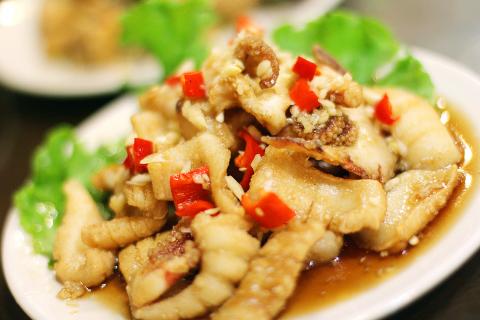
Photo: Catherine Shu, Taipei Times
Even Chiachia’s vegetable dishes leave an indelible impression on the tongue — at least until the aftertaste of garlic wears off.
Surprisingly, the Hakka stir-fry (客家小炒, NT$220) was the least memorable part of our meal. The traditional dish consists of strips of pork, squid and dried tofu (豆乾) mixed with heaps of scallions and stir-fried until the meat and tofu are very firm and slightly chewy. Chiachia’s Hakka stir fry was delicious, with plenty of fatty pork, and its sauce tasted wonderful with white rice, but the dish is very similar to versions you can find in any number of restaurants. By the end of our meal, we regretted not having ordered a lighter dish to offset the fried items we picked, like the salt steamed chicken (客味鹽焗雞, NT$220).
Make sure to show up at Chiachia with an empty stomach and, hopefully, a few friends. The restaurant’s very large menu includes more than 20 dishes in its seafood section alone.

Michael slides a sequin glove over the pop star’s tarnished legacy, shrouding Michael Jackson’s complications with a conventional biopic that, if you cover your ears, sounds great. Antoine Fuqua’s movie is sanctioned by Jackson’s estate and its producers include the estate’s executors. So it is, by its nature, a narrow, authorized perspective on Jackson. The film ends before the flood of allegations of sexual abuse of children, or Jackson’s own acknowledgment of sleeping alongside kids. Jackson and his estate have long maintained his innocence. In his only criminal trial, in 2005, Jackson was acquitted. Michael doesn’t even subtly nod to these facts.
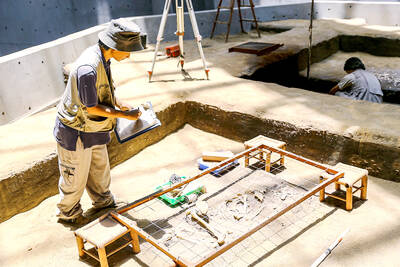
Writing of the finds at the ancient iron-working site of Shihsanhang (十 三行) in New Taipei City’s Bali District (八里), archaeologist Tsang Cheng-hwa (臧振華) of the Academia Sinica’s Institute of History and Philology observes: “One bronze bowl gilded with gold, together with copper coins and fragments of Tang and Song ceramics, were also found. These provide evidence for early contact between Taiwan aborigines and Chinese.” The Shihsanhang Web site from the Ministry of Culture says of the finds: “They were evidence that the residents of the area had a close trading relation with Chinese civilians, as the coins can be
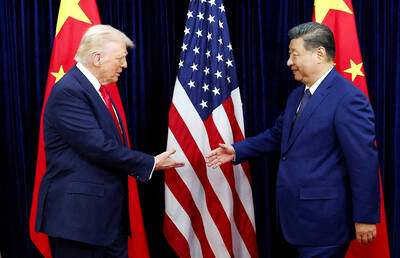
The March/April volume of Foreign Affairs, long a purveyor of pro-China pablum, offered up another irksome Beijing-speak on the issues and solutions for the problems vexing the People’s Republic of China (PRC) and the US: “America and China at the Edge of Ruin: A Last Chance to Step Back From the Brink” rang the provocative title, by David M. Lampton and Wang Jisi (王緝思). If one ever wants to describe what went wrong with US-PRC relations, the career of Wang Jisi is a good place to start. Wang has extensive experience in the US and the West. He was a visiting
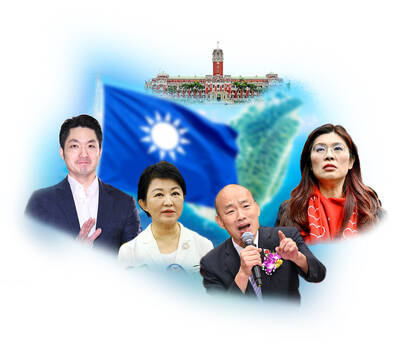
The January 2028 presidential election is already stirring to life. In seven or eight months, the primary season will kick into high gear following this November’s local elections. By this point next year, we will likely know the Democratic Progressive Party (DPP) candidate and whether the Taiwan People’s Party (TPP) will be fielding a candidate. Also around this time, the Chinese Nationalist Party (KMT) will either have already completed their primary, or it will be heading into the final stretch. By next summer, the presidential race will be in high gear. The big question is who will be the KMT’s


 RSS
RSS