


Those who have bickered about the Golden Horse Awards (金馬獎) being hijacked by Hong Kong flicks and Chinese cinema can set their minds at ease. Two years after the renaissance of Taiwanese cinema was kick-started with films like Cape No. 7 (海角七號), Winds of September (九降風) and Orz Boyz (囧男孩), Taiwanese movies ruled the 47th Golden Horse Awards held at Taoyuan County Performing Arts Center (桃園縣展演中心) on Saturday night. Chang Tso-chi’s (張作驥) When Love Comes (當愛來的時候) and Chung Mong-hong’s (鍾孟宏) The Fourth Portrait (第四張畫) led the way, walking away with awards for best feature film and best director respectively.
Chang said that the family drama is dedicated to his 82-year-old mother and hoped that the winning would boost the film’s lukewarm box-office reception, reportedly just NT$5 million so far.
“I made a commercial film, not an art-house movie,” the director said backstage.
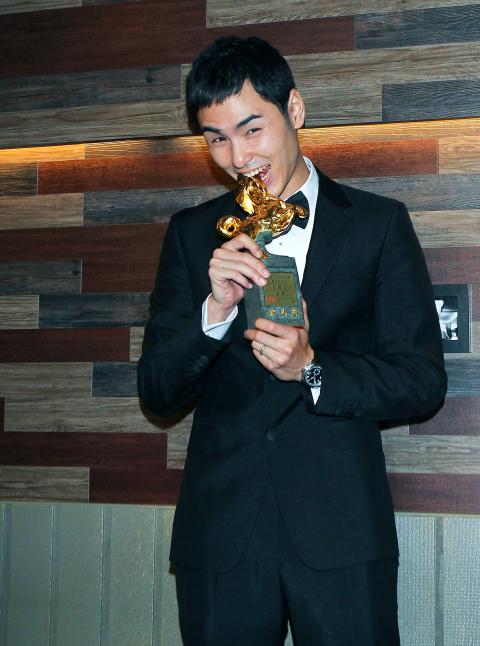
Photo: TAIPEI TIMES
Chang now has two Golden Horse trophies for Best Feature Film under his belt, following his award for The Best of Times (美麗時光) in 2002.
A promising film auteur-to-be, Chung kept his cool after being honored as Best Director and said he didn’t deserve the award. “I really want to give [the award] to Chang Tso-chi, who I highly respect. I’ll keep the award money [NT$100,000] though,” Chung joked during his brief thank-you speech.
According to jury chairman Edmond Wong (黃建業), there was a heated debate among jury members in deciding the Best Feature Film, with The Fourth Portrait losing to When Love Comes by a single vote.
Chung won Best Director for his “innovative vision and surrealistic approach to a realistic subject, rarely seen in today’s Chinese-language cinema,” according to awards and festival executive director Wen Tien-hsiang (聞天祥).
While it was a banner year for Taiwanese productions, Hong Kong cinema flailed. Once a dominant force, Hong Kong movies have lost favor in the Chinese-language awards over the past couple of years. With nominations in nine categories including Best Feature Film and Best Leading Actor, mega-budget Bodyguards and Assassins (十月圍城) only picked up an award for Best Makeup and Costume Design. Box-office sensation Detective Dee and the Mystery of the Phantom Flame (通天神探狄仁傑) only bagged one award as well — Best Visual Effects.
The jury’s taste at this year’s Golden Horse was evidently geared toward art-house cinema rather than big-budget commercial films. Apart from the failure of commercial cinema from Hong Kong and China, Taiwan’s box-office success Monga (艋舺) didn’t garner as many nominations as expected, and director Doze Niu’s (鈕承澤) absence from the award ceremony was interpreted by the press as a protest.
Even a majority of the technical awards went to non-mainstream movies such as When Love Comes, Lou Ye’s (婁燁) gay flick Spring Fever (春風沉醉的夜晚) and Judge (透析), a film about the judicial system in China.
Taiwanese and Chinese actors dominated both the best actor and actress categories. When model-turned-actor Ethan Ruan (阮經天) beat out China’s Wang Xueqi (王學圻), Ni Dahong (倪大紅) and Qin Hao (秦昊) to take home the trophy in the Best Leading Actor category for his role in Monga, a mixed reaction erupted at the news center backstage as many reporters questioned whether the 28-year-old Ruan was experienced enough for the top honor.
Jury chairman Wong said the reason for the actor’s coronation was that “he completely shook off his image as a pop idol and showed a mature understanding of the character.” Ruan, bursting into tears of joy backstage, said he had set a goal to win the award in 20 years, not now.
The last time that the Best Leading Actor award went to a Taiwanese actor was 11 years ago, when Ko Chun-hsiung (柯俊雄) won.
Another winner who was overwhelmed by an unexpected triumph was Taiwan’s veteran theater actor Wu Peng-fon (吳朋奉), who beat out Hong Kong’s Nicholas Tse (謝霆鋒) and Chinese veteran Xu Caigen (徐才根) to win Best Supporting Actor for his performance in Seven Days in Heaven (父後七日). “A fortune teller recently told me I’d be unlucky. How come I won?” Wu exclaimed in bewilderment. “I won the Golden Bell [in 2008], and now the Golden Horse. What the heck is going on?”
The proudest winner on Saturday night was probably Tu Duu-chih (杜篤之), who won the Best Sound Effects category for Monga. The accomplished filmmaker said that he wasn’t sure how many times he won the top honor (for the record, he’s won eight) and added that he felt excited his son Patrick Tu’s (杜均堂) Magabahai (馬嘎巴海) was nominated in the Best Short Film category. Later that night, Tu junior won.
“My dad pushed me into the [filmmaking] profession. When I was younger, I didn’t want to do what my dad does. But gradually I developed interest,” the 27-year-old Patrick Tu said. “We talked about my film at home. He gave me lots of advice.”
The young filmmaker graduated from the Department of Radio, TV and Film at Shih Hsin University (世新大學) last year. Magabahai is his graduation project.
China’s Lu Liping (呂麗萍) won best actress for City Monkey (玩酷青春).
Best Feature Film
When Love Comes (當愛來的時候)
Best Director
Chung Mong-hong (鍾孟宏) for The Fourth Portrait (第四張畫)
Best New Director
Ho Wi-ding (何蔚庭) for Pinoy Sunday (台北星期天)
Best Leading Actor
Ethan Ruan (阮經天) for Monga (艋舺)
Best Leading Actress
Lu Liping (呂麗萍) for City Monkey (玩酷青春)
Best Supporting Actor
Wu Peng-fon (吳朋奉) for Seven Days in Heaven (父後七日)
Best Supporting Actress
Hao Lei (郝蕾) for The Fourth Portrait
Best New Performer
Lee Chien-na (李千娜) for Juliets (茱麗葉)
Best Original Screenplay
Gao Shan (高山), Liu Jie (劉杰) for Judge (透析)
Best Adapted Screenplay
Essay Liu (劉梓潔) for Seven Days in Heaven
Best Cinematography
Chang Chan (張展) for When Love Comes
Best Visual Effects
Nan Xiang-yu (南相宇), Lee Yong-gi (李庸基) for Detective Dee and the Mystery of the Phantom Flame (通天神探狄仁傑)
Best Art Direction
Peng Wei-min (彭維民) for When Love Comes
Best Make-up and Costume Design
Dora Ng (吳里璐) for Bodyguards and Assassins (十月圍城)
Best Action Choreography
Sammo Hung (洪金寶) for Ip Man 2 (葉問2)
Best Film Editing
Zeng Jian (曾劍), Florence Bresson, Robin Weng (翁首鳴) for Spring Fever (春風沉醉的夜晚)
Best Sound Effects
Tu Duu-chih (杜篤之) for Monga
Best Original Film Score
Peyman Yazdanian for Spring Fever
Best Original Film Song
Taipei Exchanges (第36個故事) from Taipei Exchanges (第36個故事)
Composer: Summer Lei (雷光夏)
Lyricist: Summer Lei (雷光夏)
Performer: Summer Lei (雷光夏)
Best Documentary
Hip-Hop Storm (街舞狂潮)
Best Short Film
Magabahai (馬嘎巴海)
Outstanding Taiwanese Film of the Year
The Fourth Portrait (第四張畫)
Outstanding Taiwanese Filmmaker of the Year
Lee Lieh (李烈) for Monga
Lifetime Achievement Award
Hsu Li-kong (徐立功)
Special Contribution Award
Sun Yueh (孫越)

Taiwan’s English education system is being pulled apart by three opposing forces. Bilingual Nation 2030 pulls students toward English and global communication. Artificial Intelligence (AI) readiness pulls them toward digital judgment, verification and AI-mediated work. But Taiwan’s old exam culture pulls them back toward memorization, grammar drills, timed reading and correct answers. If the education system keeps using old exams to define success, it risks producing graduates who are neither genuinely bilingual nor genuinely AI-ready, but trained for tasks machines can already perform. The first force is Bilingual Nation 2030. Launched in 2018, the policy aimed to “help Taiwan’s workforce connect
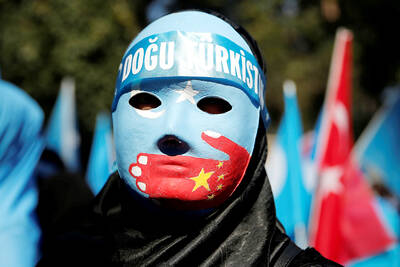
It seems every few days one bumps into one of those “real man” comments in which Taiwan is urged to “face reality” or similar, and “make a deal,” with the speaker implying that soon it will be too late. “Deal” advocates always present themselves as having a superior grip on reality, and the manly ability to make the “hard choice.” Their testosterone-laden language often echoes that of Taiwan sellout advocates. Note that such commentary always specifies a process (“make a deal, work with, make progress”), never the end state of what occupation by a violent authoritarian colonialist state will entail. In
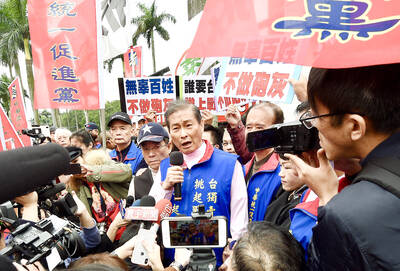
There are shadowy cabals plotting to sell out Taiwan to be annexed by China, by invasion if necessary. Fortunately, they are buffoons. In 2019, former Bamboo Union gangster and founder of the China Unification Promotion Party (CUPP), Chang An-le (張安樂, colorfully known as “White Wolf”), led a protest at the Legislative Yuan against comments made by then-premier Su Tseng-chang (蘇貞昌) that in the event of an attack by China, he would never surrender, but would protect the nation by fighting to the end, even if he only had a broom. Chang had party members bring a wooden casket that they
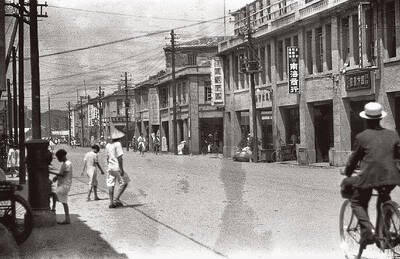
June 1 to June 7 "If all Taiwanese were as afraid of dying as you, then what would happen?” Physician Shih Chiang-nan (施江南) reportedly said this to his wife Chen Chiao-tung (陳焦桐) after she urged him to stop intervening on behalf of Taiwanese soldiers stranded overseas after serving in the Japanese Army during World War II. Shih had clashed with high-ranking officials over the issue, engaged in several heated arguments with Taiwan governor-general Chen Yi (陳儀) and allegedly shouted at general Ko Yuan-fen (柯遠芬), chief of staff of the Taiwan Garrison Command, over


 RSS
RSS