


Loh Tsui Kweh Commune (濁水溪公社), also known as LTK, is celebrating its 20th anniversary with an outdoor concert in Taipei tomorrow evening.
The pioneering underground rock band, which performs at the Sanjiaodu Ferry Port
(三腳渡擺渡口) near Jiantan MRT Station (劍潭捷運站) in Taipei County, is carrying out tomorrow’s festivities with a literal bang.
Expect plenty of fireworks, as well as other hallmarks that have made LTK’s live shows the stuff of notorious legend: zany costumes, twisted versions of traditional temple ceremonies, smashing and burning guitars or whatever spare furniture is around, and a sing-a-long about masturbation with a giant inflatable penis as a stage prop (a first for the band).
“Oh yes, it’s a big production,” said bandleader and founder Ko Ren-chien (柯仁堅), who says he’s been working on the concert’s logistics for the past two months. “It will be very lively, like participating in a temple fair or a carnival, that kind of feeling.”
LTK has just released a new album, but Ko says the idea behind the anniversary concert (which was actually planned for last year, LTK’s true 20th anniversary — the band formed in 1989) is also to give newer fans a taste of “our classic performances from the past.”
The band polled long-time fans on its blog, asking them about to write about their favorite past performances, many of which will be reenacted tomorrow.
Some of LTK’s most storied shows took place at the annual indie music festival Spring Scream.
The band often put on elaborate skits that ended in chaos. One year, bandmembers sprayed fire extinguishers at each other and into the audience. Another year, they almost burned down the stage after lighting a pile of smashed guitars on fire.
At another Spring Scream, LTK’s show lasted only five minutes. As soon as they stepped on stage, the audience started throwing bottles, empty lunchboxes and other bits of trash at the bandmembers. Things got so out of control, organizers had to cancel their set.
In many ways, LTK is Taiwan’s first true punk band, and their music today — a mixture of punk, British new wave and working-class karaoke pop mixed with lyrics that serve as a biting, absurdist commentary on politics and society — remains unique in Taiwan’s indie scene.
The band was among the first to embrace taike (台客), which used to be a derogatory term referring to “uncultured” Taiwanese. Its classic album, Taik’s Eye for an Eye (台客的復仇, literally “Revenge of the Taike”) melded nakashi melodies and punk with Hoklo (commonly known as Taiwanese) lyrics. The record came out in 1999, well before taike became hip.
Ko, now 40, says it’s “unbelievable” that LTK has lasted as long as it has. “How could we have done this for so long?” he laughed.
“The last thing I would have thought when we started was that this group would last 20 years. Because at that time, Taiwan had just lifted martial law, in 1989.”
Back then, Ko was a student at National Taiwan University, and along with classmate and LTK co-founder Tsai Hai-en (蔡海恩), he took part in student-led democracy protests. The pair often came up with skits and created props for protests, which paved the way for LTK’s theatrical tendencies.
LTK’s recent work has a bit more polish — their last album Sapphire is more straightforward rock and pop, while their latest, Loh Tsui Kweh Commune 20 Years Project, is all electronica music — but their subversive spirit and desire to “shock” remains the same, says Ko.
“The things we want to say, the ideas we want to express, that hasn’t changed at all,” he said.
Ko says tomorrow’s show, which will last almost three hours, is also a chance for fans “to blow off some steam” after frustration with recent events. The band is planning a spoof on the Economic Cooperation Framework Agreement (ECFA).
And for the record, Ko, who happens to spend his days as a mild-mannered employee at the National Tax Administration, offered an updated inventory of items destroyed during LTK concerts over the past 20 years: 30 guitars, 12 chairs, five basses, three televisions, five tables, two bicycles, two hospital beds and two mannequins.
Expect those numbers to go up tomorrow.



Taiwan’s English education system is being pulled apart by three opposing forces. Bilingual Nation 2030 pulls students toward English and global communication. Artificial Intelligence (AI) readiness pulls them toward digital judgment, verification and AI-mediated work. But Taiwan’s old exam culture pulls them back toward memorization, grammar drills, timed reading and correct answers. If the education system keeps using old exams to define success, it risks producing graduates who are neither genuinely bilingual nor genuinely AI-ready, but trained for tasks machines can already perform. The first force is Bilingual Nation 2030. Launched in 2018, the policy aimed to “help Taiwan’s workforce connect

It seems every few days one bumps into one of those “real man” comments in which Taiwan is urged to “face reality” or similar, and “make a deal,” with the speaker implying that soon it will be too late. “Deal” advocates always present themselves as having a superior grip on reality, and the manly ability to make the “hard choice.” Their testosterone-laden language often echoes that of Taiwan sellout advocates. Note that such commentary always specifies a process (“make a deal, work with, make progress”), never the end state of what occupation by a violent authoritarian colonialist state will entail. In
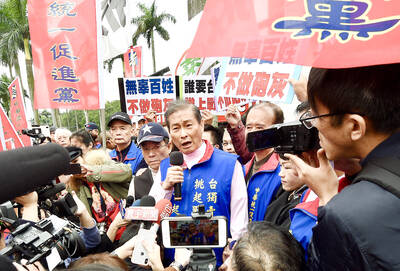
There are shadowy cabals plotting to sell out Taiwan to be annexed by China, by invasion if necessary. Fortunately, they are buffoons. In 2019, former Bamboo Union gangster and founder of the China Unification Promotion Party (CUPP), Chang An-le (張安樂, colorfully known as “White Wolf”), led a protest at the Legislative Yuan against comments made by then-premier Su Tseng-chang (蘇貞昌) that in the event of an attack by China, he would never surrender, but would protect the nation by fighting to the end, even if he only had a broom. Chang had party members bring a wooden casket that they
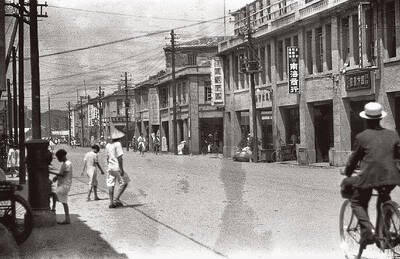
June 1 to June 7 "If all Taiwanese were as afraid of dying as you, then what would happen?” Physician Shih Chiang-nan (施江南) reportedly said this to his wife Chen Chiao-tung (陳焦桐) after she urged him to stop intervening on behalf of Taiwanese soldiers stranded overseas after serving in the Japanese Army during World War II. Shih had clashed with high-ranking officials over the issue, engaged in several heated arguments with Taiwan governor-general Chen Yi (陳儀) and allegedly shouted at general Ko Yuan-fen (柯遠芬), chief of staff of the Taiwan Garrison Command, over


 RSS
RSS