


Manga and anime fans have a new mecca in the capital.
The only Taiwanese outpost of the world’s largest anime chain store, Animate (安利美特) recently moved to a 120-ping (1 ping = 3.3m2) location steps away from Ximen MRT Station (西門捷運站) exit No. 6. Twice the size of Animate’s previous location on Wuchang Street (武昌街), the new store has an entire floor dedicated to collectibles, in addition to another floor stocked with manga series, graphic novels, anime DVDs and magazines.
Animate was founded in 1983 by Movic, a Japanese manufacturer of anime-themed figurines and other items. In Japan, Animate operates more than 90 stores, but the chain has found it more difficult to gain a foothold overseas. The Taipei location, which opened in 2000, is currently its only one abroad; a branch that opened in Los Angeles at the same time closed after less than three years.
Stores dedicated exclusively to selling manga, including many small mom-and-pop operations, were once ubiquitous in Taiwan’s cities, but the number has dwindled over the past decade as the lackluster economy forced students and young professionals, manga’s main customer base, to tighten their wallets.
“In the last few years, we’ve seen an impact on our customers because manga is a luxury, not something you need to survive,” says Huang Yuan-chia (黃苑嘉), the manager of Animate’s Taipei store. “At the same time, a lot of manga readers consider it a very important part of their lives. The market is smaller, but there will always be passionate fans.”
Animate customers range from elementary school students to office professionals in their mid-forties. Huang estimates that the gender ratio is split 60-to-40 in favor of females.
Manga sold in Animate is divided evenly between Japanese and Chinese-language editions, though the bulk of the titles are written and illustrated in Japan. The best-selling genres in the store are shonen (少男) and shojo (少女) manga, which are marketed to adolescent boys and girls, respectively.
Another popular genre is BL, or “boy love,” manga, which is targeted toward young women and feature homoerotic themes. Many BL books contain implied sexual encounters and are only sold to customers aged 18 and older. An entire corner is stocked with hundreds of titles like Hitsujitachi no Bannin, about a priest struggling between his earthly and spiritual needs. BL manga is a favorite topic of social scientists and has received considerable notoriety in the press, but at Animate it’s just another section.
“About 10 years ago, all BL readers were women, but in the last few years we’ve also had more men enter that fan group,” says Huang.
Huang, who has worked for Animate since it opened in Taiwan, started reading manga when she was a third grader.
“I like manga that has to do with history, but I’ve been in the manga business for 15 years and have been reading it for so long that it’s really hard to pick a favorite genre,” she says.
One of Animate’s current best-sellers is Hetalia: Axis Powers (義呆利), a satirical comedy based on World War II. Other popular series feature characters from video games, including the romantic Starry Sky and Hakuouki: Shinsengumi Kitan (薄櫻鬼), which revolves around the Shinsengumi, or special police force, of the late
Edo period.
The new location gives Animate room to dedicate its entire lower level to collectibles based on popular anime and manga series, art supplies and DVDs. One corner displays brightly colored wigs, make-up, costume sets and other accoutrements of cosplay, in which participants dress up as their favorite characters.
Collectibles sold at Animate run the gamut from figurines and stationary to washcloths, cushions, alarm clocks, magnets, even rosaries. Items tied to the Starry Sky and Hakuouki series are especially popular — no matter what they are.
“As long as something has one of those two series attached to it, it sells well. What’s interesting is that it has nothing to do with what the item actually is. The popularity is all about the characters,” says Huang.
Yet another section in the new Animate location is filled with secondhand doujinshi (同人誌), or independently published manga, some of which, like fan fiction, is based on existing characters. Each slim volume is priced at NT$100.
While all the doujinshi sold in Animate are written in Japanese, Taiwanese fans also write and illustrate their own comic books. Many of them sell their creations at doujinshi conventions that take place every few months (for schedules, check www.comic.com.tw) and often include cosplay events.
“There is a manga series for everyone, no matter what subject matter you like or what kind of art you like,” says Huang. “A lot of series are very long and the more time you devote to reading them, the more you fully appreciate the beauty of the characters and the story.”
Animate (安利美特)
Address: 104, Zhonghua Rd Sec 1, Taipei City (台北市中華路一段104號)
Open: 10am to 10pm
Phone: (02) 2389-3420
On the Net: www.animate.co.jp/taipei



Taiwan’s English education system is being pulled apart by three opposing forces. Bilingual Nation 2030 pulls students toward English and global communication. Artificial Intelligence (AI) readiness pulls them toward digital judgment, verification and AI-mediated work. But Taiwan’s old exam culture pulls them back toward memorization, grammar drills, timed reading and correct answers. If the education system keeps using old exams to define success, it risks producing graduates who are neither genuinely bilingual nor genuinely AI-ready, but trained for tasks machines can already perform. The first force is Bilingual Nation 2030. Launched in 2018, the policy aimed to “help Taiwan’s workforce connect
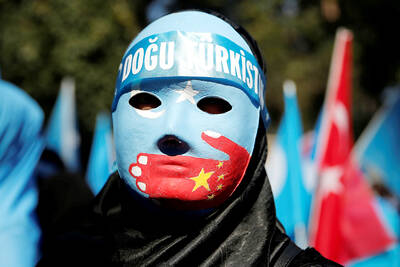
It seems every few days one bumps into one of those “real man” comments in which Taiwan is urged to “face reality” or similar, and “make a deal,” with the speaker implying that soon it will be too late. “Deal” advocates always present themselves as having a superior grip on reality, and the manly ability to make the “hard choice.” Their testosterone-laden language often echoes that of Taiwan sellout advocates. Note that such commentary always specifies a process (“make a deal, work with, make progress”), never the end state of what occupation by a violent authoritarian colonialist state will entail. In
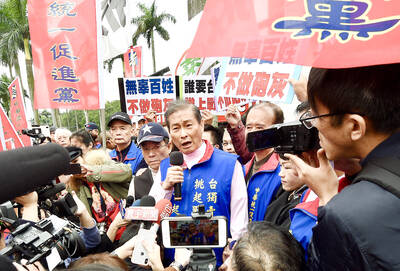
There are shadowy cabals plotting to sell out Taiwan to be annexed by China, by invasion if necessary. Fortunately, they are buffoons. In 2019, former Bamboo Union gangster and founder of the China Unification Promotion Party (CUPP), Chang An-le (張安樂, colorfully known as “White Wolf”), led a protest at the Legislative Yuan against comments made by then-premier Su Tseng-chang (蘇貞昌) that in the event of an attack by China, he would never surrender, but would protect the nation by fighting to the end, even if he only had a broom. Chang had party members bring a wooden casket that they
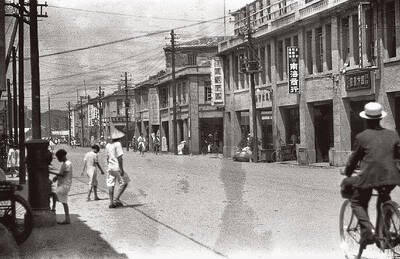
June 1 to June 7 "If all Taiwanese were as afraid of dying as you, then what would happen?” Physician Shih Chiang-nan (施江南) reportedly said this to his wife Chen Chiao-tung (陳焦桐) after she urged him to stop intervening on behalf of Taiwanese soldiers stranded overseas after serving in the Japanese Army during World War II. Shih had clashed with high-ranking officials over the issue, engaged in several heated arguments with Taiwan governor-general Chen Yi (陳儀) and allegedly shouted at general Ko Yuan-fen (柯遠芬), chief of staff of the Taiwan Garrison Command, over


 RSS
RSS