


Family sagas do not usually adapt well to the screen. With their profusion of characters and incidents, the two-hour plus format of the conventional feature film does not give them time to develop and they often seem like a race, with the director working frantically to cram in all the main elements. Thomas Mann’s novel Buddenbrooks, which was published in 1901 and contributed to his winning of the Nobel Prize for literature in 1929, covers the decline of a mercantile dynasty over four generations. Central themes include the emotional price paid by various family members to maintain the family’s prosperity, and the conflict between the disciplined life of commerce and the expressive life of art.
The complexities of the narrative are deftly handled by director Heinrich Breloer, whose experience directing a major German television docudrama on the Mann family, Die Manns — Ein Jahrhundertroman, has clearly helped in priming him to key elements of Mann’s ideas and style. Buddenbrooks certainly falls into the category of worthy film adaptations, and has a strongly literary quality, but as a cinematic experience it is sometimes rather flaccid. This is made up for by strong performances from an excellent ensemble cast, particularly Armin Mueller-Stahl as Johann Buddenbrook, a man whose life is totally dedicated to maintaining the position and wealth of the Buddenbrook family. Mueller-Stahl, one of a small number of German actors to have broken into the international mainstream (he was brilliant in David Cronenberg’s Eastern Promises and was on the cast of The West Wing, The International and Demons and Angels), exudes a palpable aura of menace from beneath an avuncular exterior, and is captivating to watch — when the family business is taken over by his son Christian (August Diehl), his presence is sorely missed by the audience.
August Diehl does a perfectly fine job in portraying Christian, a young man who sacrifices everything to continue the success of the Buddenbrook enterprise. Christian doesn’t possess his father’s steely assurance, and Diehl hasn’t quite got Mueller-Stahl’s charisma to fully flesh out this complex character who finds himself suffocated by a Faustian pact through which he becomes totally subsumed by the family business.
While Christian’s fate is imposed on him, his two siblings find themselves drifting on uncertain currents. Thomas (Mark Waschke) becomes a drunken man-about-town, totally dependent on his brother’s generosity, and Tony (Jessica Schwarz) makes a series of disastrous marriages that contribute to the family’s woes.
With the birth of Hanno, heir to the dwindling Buddenbrook fortune, the struggle between self-fulfillment and family responsibility reaches a new level, as the young man dedicates himself to music, and finds himself unable to take an interest in the hurly-burly of commercial life. That tragedy awaits is patently clear, and despite the fine settings and solid acting, by this time it really can’t come soon enough.
Hanno is never fully realized as a character, and this diminishes the human aspect of the family’s disintegration, and contributes to the feeling that the director is struggling to tie off the story as quickly as possible. Breloer manages to maintain a sense of structure, which has the virtues of discipline, but doesn’t have the space to truly immerse the audience in the Buddenbrook’s world.
Despite these shortcomings, Buddenbrooks is a perfectly adequate film, but like many such sagas, it would probably have been much better as a six or eight-hour made-for-television miniseries.



Ajay Verma, a consultant gastroenterologist at Kettering general hospital in Northamptonshire, says our gut is a “complex machine.” “It is constantly providing us with the nutrition we need, initially to grow and develop, and then for us to survive, thrive and repair from injury and illness.” How can we keep it functioning well? Put simply: “Make sure what you put into it is balanced, and that you clear out its waste products adequately,” Verma says. “In a general gastroenterology clinic, the most common conditions we see are irritable bowel syndrome (IBS), gastroesophageal reflux disease, inflammatory bowel disease and constipation,” says Nisha
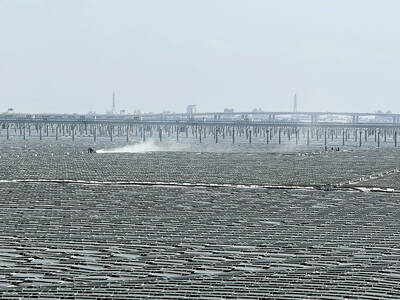
The arithmetic is straightforward and uncomfortable. By the end of 2025, Taiwan had committed itself to a 50-30-20 electricity mix — half natural gas, 30 per cent coal, 20 per cent renewables. The Ministry of Economic Affairs’s (MOEA) own monthly energy reports tell a different story. Natural gas reached 47.8 per cent of generation last year. Coal stood at 35.4 per cent, comfortably above its target ceiling. Renewables came in at 13.1 per cent, well short of the 20 per cent Taipei had pledged a decade earlier. Installed renewable capacity reached roughly half of the 12 gigawatts (GW) the government

There are shadowy cabals plotting to sell out Taiwan to be annexed by China, by invasion if necessary. Fortunately, they are buffoons. In 2019, former Bamboo Union gangster and founder of the China Unification Promotion Party (CUPP), Chang An-le (張安樂, colorfully known as “White Wolf”), led a protest at the Legislative Yuan against comments made by then-premier Su Tseng-chang (蘇貞昌) that in the event of an attack by China, he would never surrender, but would protect the nation by fighting to the end, even if he only had a broom. Chang had party members bring a wooden casket that they
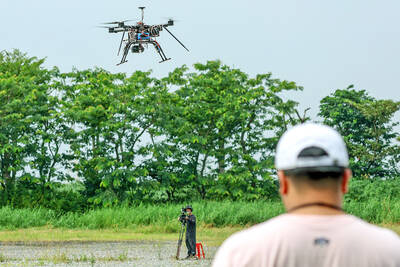
Taiwan’s drone exports are taking off, fuelled by the war in Ukraine, as Taiwanese companies seek a stake in the fast-growing global market for unmanned aerial vehicles (UAV). Low-cost drones used for reconnaissance and strikes are in high demand as governments around the world boost defense spending in the face of intensifying conflicts. A relative new player in the increasingly competitive industry, Taiwan’s pitch is to be an “Asian hub” for the production of UAVs and components free of Chinese materials, or “non-red.” That means its UAVs can be up to three times more expensive than their Chinese competitors, like the world’s biggest


 RSS
RSS