


Over the weekend, Novel Hall (新舞臺) played host to Tianjin Renmin Yishu Juyuan’s (天津人民藝術劇院) new production of The Wilderness (原野), a play by Cao Yu (曹禺), widely regarded as China’s greatest modern playwright. The production has toured very successfully in China, and there were some outstanding performances, but the more than half-century gap separating the late 1930s, when the play was written, and this version’s modern political and artistic climate, was almost embarrassingly evident.
Various well-worn modern theatrical devices were used, and some recourse was also made to the conventions of traditional Chinese opera, in which props are imagined rather than actually present on the stage. All this was part of a heroic effort to make The Wilderness seem contemporary.
Director Wang Yansong (王延松) has been too keen on bringing in all the tricks of the theater, both Western and Chinese, and their use often appeared inconsistent, suggesting that they were
there more as trappings of modernity and artistic fusion rather than having been rigorously thought out as part of the production’s structure.
In addition to the characters, lines were also spoken by a Greek chorus of primitivist clay dolls, a device clearly intended to deconstruct Cao’s original narrative. Unfortunately, it was sometimes difficult to work out who was speaking the lines, which detracted from the effectiveness of this device. The excessive use of reverb for atmospheric effect was not only annoying, but tended to give the production a slightly kitschy feel.
This said, there were a number of outstanding performances, most notably by Zang Qian (臧倩) and Li Shumin (李淑敏), who take the conventional dislike between mother and daughter-in-law to murderous extremes. Both are ranked as artists of the first grade, and their talents showed in a cast of energetic but clearly less experienced performers.
The cast members worked hard, but were undermined not only by the director’s fussy mix-and-match presentation, but also by the material itself. Cao was among the first generation of Chinese writers to work in the form of Western drama, and for all the extravagant claims made for his reputation, he was not a particularly subtle exponent of the form. For that matter, even the superior plays of Western contemporaries such as J.B. Priestley when performed today, often also seem strangely irrelevant.
This production made a significant change to the ending of the play in an effort to provide some contemporary political relevance — this reviewer detected a reference to the moral trauma of a revolution that turned on itself — but this did irreparable damage to what passes for character development and made for something of an anticlimax.
For all the criticisms that can be leveled at this production, the high caliber of the acting was enjoyable and it was good to get a glimpse of what is happening in mainstream drama on the other side of the Taiwan Strait.

Taiwan’s English education system is being pulled apart by three opposing forces. Bilingual Nation 2030 pulls students toward English and global communication. Artificial Intelligence (AI) readiness pulls them toward digital judgment, verification and AI-mediated work. But Taiwan’s old exam culture pulls them back toward memorization, grammar drills, timed reading and correct answers. If the education system keeps using old exams to define success, it risks producing graduates who are neither genuinely bilingual nor genuinely AI-ready, but trained for tasks machines can already perform. The first force is Bilingual Nation 2030. Launched in 2018, the policy aimed to “help Taiwan’s workforce connect
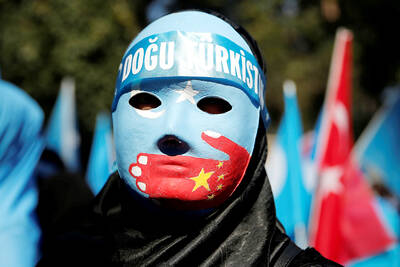
It seems every few days one bumps into one of those “real man” comments in which Taiwan is urged to “face reality” or similar, and “make a deal,” with the speaker implying that soon it will be too late. “Deal” advocates always present themselves as having a superior grip on reality, and the manly ability to make the “hard choice.” Their testosterone-laden language often echoes that of Taiwan sellout advocates. Note that such commentary always specifies a process (“make a deal, work with, make progress”), never the end state of what occupation by a violent authoritarian colonialist state will entail. In
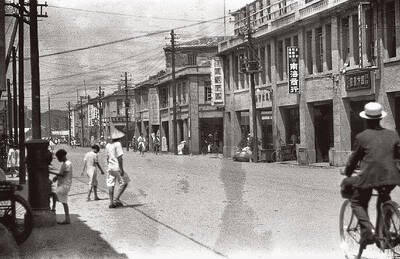
June 1 to June 7 "If all Taiwanese were as afraid of dying as you, then what would happen?” Physician Shih Chiang-nan (施江南) reportedly said this to his wife Chen Chiao-tung (陳焦桐) after she urged him to stop intervening on behalf of Taiwanese soldiers stranded overseas after serving in the Japanese Army during World War II. Shih had clashed with high-ranking officials over the issue, engaged in several heated arguments with Taiwan governor-general Chen Yi (陳儀) and allegedly shouted at general Ko Yuan-fen (柯遠芬), chief of staff of the Taiwan Garrison Command, over

“Taiwan’s Opposition Leader Comes to US With a Message Straight Out of Beijing” read a May 31 headline in the Wall Street Journal. Top US administration officials and members of Congress almost certainly read the WSJ, and if there was a bullet point takeaway that people in Washington should absorb ahead of Chinese Nationalist Party (KMT) Chair Cheng Li-wun’s (鄭麗文) arrival in DC on June 9, that headline is it. The last few columns have discussed this very topic, and the timing is not coincidental. While those top officials likely do not read the Taipei Times, judging by the number


 RSS
RSS