


The Battle of Red Cliff is an event known to every Chinese school student, not just as an encounter that altered history, but as a story that defines all manner of human virtue and vice. The National Palace Museum’s exhibition A Thousand, Thousand Churning Waves: The Legendary Red Cliff Heritage (捲起千堆雪 — 赤壁文物特展) looks back over some of the works, both in literature and in the visual arts, that helped define this millennia-old conflict as part of a Chinese national consciousness.
The exhibition, which runs until Aug. 31, mainly consists of calligraphy, books and paintings. Many of them are beautiful, but their significance is often buried deep in the notes that accompany each piece. To endow these scholarly items with greater dynamism, the museum has launched a series of artistic and educational activities that will take place in conjunction with the exhibition. The most elaborate component is the staging of two outdoor performances, one tonight and one on June 20, of theatrical pieces that feature characters who took part in the great battle.
The two performances, by the Beijing opera troupe of the National Guoguang Opera Company (國立國光劇團) and by puppetmaster Huang Chun-hsiung (黃俊雄), show that the story of Red Cliff remains very much a living part of Chinese traditional arts.
Like Agincourt or Waterloo, the figures in the battle lines on either side are more than dusty characters from the past. They have been turned into living embodiments of a cultural and moral consciousness. In recent years, comic books and video games have introduced the characters of the story to the young, and recently, the popularity of the story has been given a further boost by John Woo’s (吳宇森) massive star-studded two-part epic, Red Cliff (赤壁). The second installment was released in Taiwan at the beginning of this year.
Linking the National Palace Museum’s academic might with a topic that is so closely connected with popular culture seemed to be a winning idea. It was, therefore, disconcerting to hear the show’s chief curator, Lin Tien-jen (林天人), eagerly disowning any association with the popular expressions of interest in the story. That he might not want his serious and painstaking research undermined is understandable, but the determinedly scholarly presentation of the show runs counter to many major museums’ efforts to create exhibitions that wear their scholarship more lightly in an effort to foster a broader appeal.
For an audience familiar with the history of the Three Kingdoms and the works of literature that brought it to life, the exhibition has some astonishing treasures, not least a Sung Dynasty scroll by the poet Su Shi (蘇軾) of the Former Ode on Red Cliff (前赤壁賦), which helped turn the Battle of Red Cliff into a potent literary symbol both of the splendor of great ambition and of the impermanence of all man’s work.
Lin sees this work as a major milestone in the establishment of Red Cliff as a literary theme. The other side of the exhibition looks at the historical and practical aspects of the battle, with exhibits including a Sung Dynasty copy of pages from Sun Zi’s Art of War (孫子兵法) as annotated by Cao Cao (曹操), a major protagonist whose ambitions to bring southern China under his sway were scuppered at the Battle of Red Cliff. Then there are the illustrated books, the comics of former centuries, shown alongside learned speculation from ancient scholars about mundane aspects of archaic warfare in treatises such as the delightfully abstruse Description of the Machinery and Implements Employed on Rivers (河工器具圖說), an academic work from the Qing Dynasty.
Lin believes that his achievement in organizing this exhibition is to break out from the confines of an actual historical event and look at perceptions of it over many centuries. “The exhibition is not caught up in the events of 208 (when the battle was fought). It starts there, in the earth-shattering battle, then it becomes a topic from which artists and poets drew inspiration, and finally into a popular story known by all. I am looking at how the idea of Red Cliff developed through history and art,” Lin said.
The exhibition itself fails to update this iconography by not relating ancient artifacts to recognizable characters such as Tony Leung Chiu Wai (梁朝偉) and Takeshi Kaneshiro (金城武), who both play major parts in Woo’s movie. From the perspective of foreign visitors to the museum, who may well have at least heard about the Battle of Red Cliff as a result of the significant publicity for Woo’s films, the exhibition tantalizes, but offers little to draw them deeper into the subject.
The museum has attempted to make good this deficiency by staging a program of educational activities and performances, but the opportunity to build this kind of accessibility into the exhibition itself is wasted.
The desire to be enlightened about subjects of popular appeal can be seen from the fact that a Parents and Children DIY class (scheduled for June 21), which includes a special guided tour of the exhibition and various hands-on activities, is already full. Two further DIY activities aimed at families are scheduled for July 5 and July 15 (online bookings can be made at tech2.npm.gov.tw/signup/frontend/index.asp). An online educational game has also been designed for children (tech2.npm.gov.tw/98events/redcliffgame).
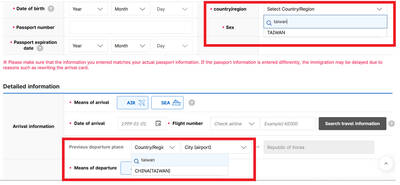
Jason Han says that the e-arrival card spat between South Korea and Taiwan shows that Seoul is signaling adherence to its “one-China” policy, while Taiwan’s response reflects a reciprocal approach. “Attempts to alter the diplomatic status quo often lead to tit-for-tat responses,” the analyst on international affairs tells the Taipei Times, adding that Taiwan may become more cautious in its dealings with South Korea going forward. Taipei has called on Seoul to correct its electronic entry system, which currently lists Taiwan as “China (Taiwan),” warning that reciprocal measures may follow if the wording is not changed before March 31. As of yesterday,
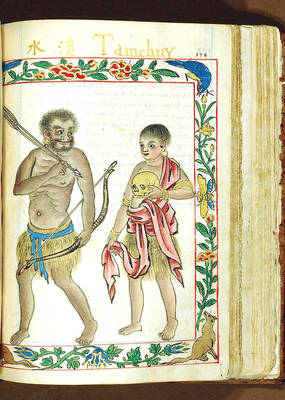
The Portuguese never established a presence on Taiwan, but they must have traded with the indigenous people because later traders reported that the locals referred to parts of deer using Portuguese words. What goods might the Portuguese have offered their indigenous trade partners? Among them must have been slaves, for the Portuguese dealt slaves across Asia. Though we often speak of “Portuguese” ships, imagining them as picturesque vessels manned by pointy-bearded Iberians, in Asia Portuguese shipping between local destinations was crewed by Asian seamen, with a handful of white or Eurasian officers. “Even the great carracks of 1,000-2,000 tons which plied
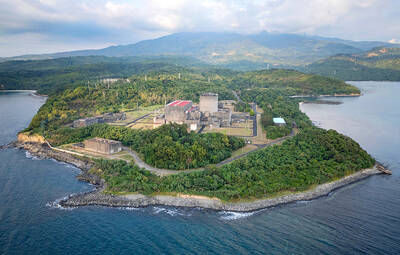
Nuclear power is getting a second look in Southeast Asia as countries prepare to meet surging energy demand as they vie for artificial intelligence-focused data centers. Several Southeast Asian nations are reviving mothballed nuclear plans and setting ambitious targets and nearly half of the region could, if they pursue those goals, have nuclear energy in the 2030s. Even countries without current plans have signaled their interest. Southeast Asia has never produced a single watt of nuclear energy, despite long-held atomic ambitions. But that may soon change as pressure mounts to reduce emissions that contribute to climate change, while meeting growing power needs. The

On Monday morning, in quick succession, the Chinese Communist Party (CCP) and the Chinese Nationalist Party (KMT) released statements announcing “that the Central Committee of the Communist Party of China and General Secretary Xi Jinping (習近平) have invited KMT Chairwoman Cheng Li-wun (鄭麗文) to lead a delegation on a visit to the mainland” as the KMT’s press release worded it. The KMT’s press release added “Chairwoman Cheng expressed her gratitude for the invitation and has gladly accepted it.” Beijing’s official Xinhua news release described Song Tao (宋濤), head of the Taiwan Work Office of the CCP Central Committee, as


 RSS
RSS