


The Peak Restaurant Cafe sits alluringly at the edge of the winding way on the route to Yangmingshan National Park not far from Chinese Culture University (中國文化大學). It sports a stylishly rustic exterior, a pleasant garden and a formal interior dining area, but years of dining at so-called “scenic restaurants” had disillusioned me, and I didn’t embark on this culinary journey with particularly high expectations. I was pleasantly surprised. Despite the Western decor, the menu is made up predominantly of Cantonese-style Chinese food, and there was a nice balance between innovation and good old-fashioned fundamentals. Sweets are Western in style and generally quite elaborate, ideal for topping off a romantic afternoon enjoying the beauty of nature. The chef formerly officiated at the banquet kitchen of the Westin Taipei, and the five-star hotel flair can be seen in the elegant presentation.
If the weather is fine, outdoor dining at The Peak is highly recommended. The garden furnishings are of very high quality, and the seats wonderfully comfortable. There is the added bonus of a reclining function so that you can put your feet up and relax over tea after your meal. While the traffic on Gezhi Road (格致路) is invisible, hidden by a high hedge, it is sadly not inaudible.
Even for outside dining, The Peak uses an attractive matte black dinner service ornamented with cherry blossoms, and a wide range of elegant glazed ware that nicely complements the presentation. The fried rice with Chinese toon sprouts (香椿芽炒飯, NT$220) looked unusual, and its presentation in a pyramid flecked with brightly colored vegetables had an element of flamboyance. It was also flavorful and light.
The shrimp and squid with XO sauce (XO醬煲雙脆, NT$320), a more traditional dish, was lavish and richly flavored, impressing with the size and crispness of the shrimps. The green of the sugar snaps, with the lustrous red sheen of the XO sauce veiling the lighter colors of the seafood, gave the dish, a simple enough stir-fry, a boisterous energy that made it worth the price tag.
The lavishness of the shrimp contrasted rather poorly with the stinginess of the lamb cutlets (生抽羊小排, NT$480), which were perfectly tasty but just insufficiently generous in quantity. The Peak is not a particularly cheap eat, but for most of the dishes the food presented more or less justifies the price tag. The lamb unfortunately disappointed on this count.
Service is friendly if not particularly well informed, and on weekends the inexperience of staff shows through as crowds jostle for tables. There is also plenty of action on the afternoon tea front, and for those unwilling to splash out on a full meal, the dessert menu provides plentiful proof of the chef’s skill. The most widely touted item is the baked ice cream (脆皮冰心, NT$280), a hot pastry shell filled with ice cream. Tea and cake sets are NT$270, and for those who want something stronger, there is a very respectable wine and spirits menu, which is notable for its good range of single malt whiskeys.

What was the population of Taiwan when the first Negritos arrived? In 500BC? The 1st century? The 18th? These questions are important, because they can contextualize the number of babies born last month, 6,523, to all the people on Taiwan, indigenous and colonial alike. That figure represents a year on year drop of 3,884 babies, prefiguring total births under 90,000 for the year. It also represents the 26th straight month of deaths exceeding births. Why isn’t this a bigger crisis? Because we don’t experience it. Instead, what we experience is a growing and more diverse population. POPULATION What is Taiwan’s actual population?
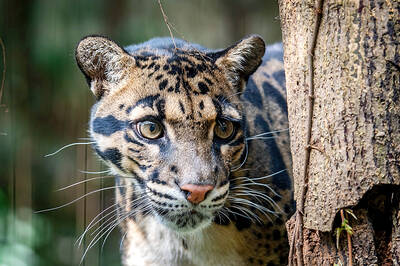
After Jurassic Park premiered in 1993, people began to ask if scientists could really bring long-lost species back from extinction, just like in the hit movie. The idea has triggered “de-extinction” debates in several countries, including Taiwan, where the focus has been on the Formosan clouded leopard (designated after 1917 as Neofelis nebulosa brachyura). National Taiwan Museum’s (NTM) Web site describes the Formosan clouded leopard as “a subspecies endemic to Taiwan…it reaches a body length of 0.6m to 1.2m and tail length of 0.7m to 0.9m and weighs between 15kg and 30kg. It is entirely covered with beautiful cloud-like spots
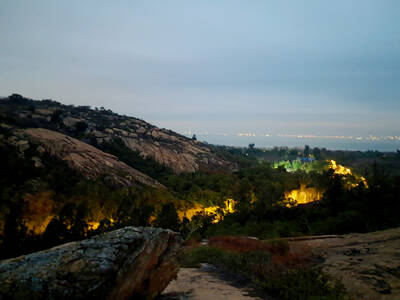
For the past five years, Sammy Jou (周祥敏) has climbed Kinmen’s highest peak, Taiwu Mountain (太武山) at 6am before heading to work. In the winter, it’s dark when he sets out but even at this hour, other climbers are already coming down the mountain. All of this is a big change from Jou’s childhood during the Martial Law period, when the military requisitioned the mountain for strategic purposes and most of it was off-limits. Back then, only two mountain trails were open, and they were open only during special occasions, such as for prayers to one’s ancestors during Lunar New Year.
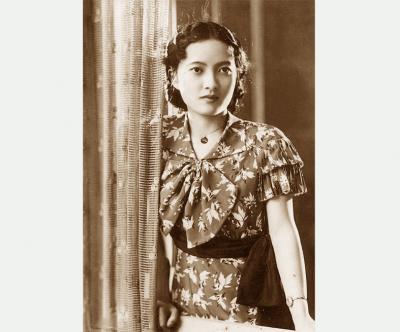
March 23 to March 29 Kao Chang (高長) set strict rules for his descendants: women were to learn music or cooking, and the men medicine or theology. No matter what life path they chose, they were to use their skills in service of the Presbyterian Church and society. As a result, musical ability — particularly in Western instruments — was almost expected among the Kao women, and even those who married into the family often had musical training. Although the men did not typically play instruments, they played a supporting role, helping to organize music programs such as children’s orchestras, writes


 RSS
RSS