


March 23 to March 29
Kao Chang (高長) set strict rules for his descendants: women were to learn music or cooking, and the men medicine or theology. No matter what life path they chose, they were to use their skills in service of the Presbyterian Church and society.
As a result, musical ability — particularly in Western instruments — was almost expected among the Kao women, and even those who married into the family often had musical training. Although the men did not typically play instruments, they played a supporting role, helping to organize music programs such as children’s orchestras, writes Kao Ya-li (高雅俐) in “The image of women in Japanese-era Western musical activities” (日治時期西式音樂活動中的女性形象).
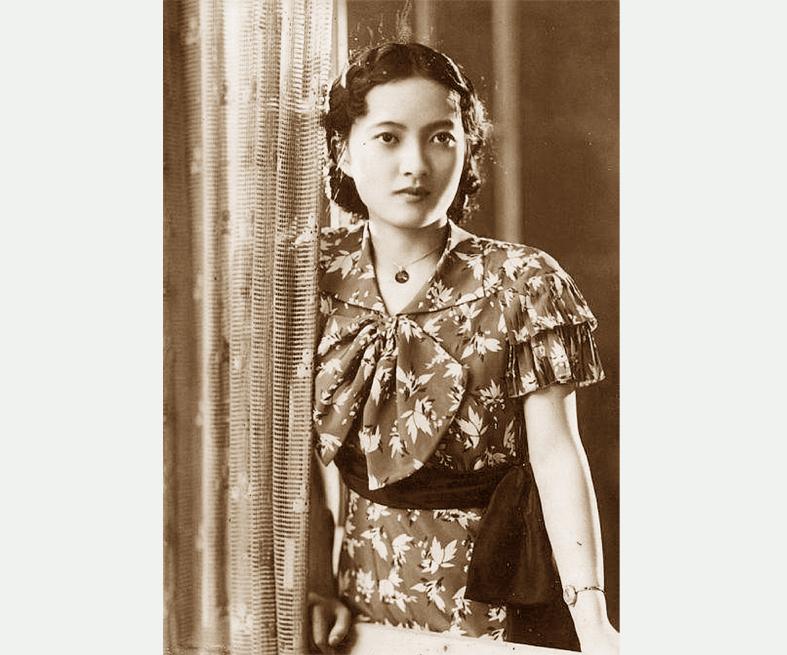
Photo courtesy of Wikimedia Commons
Yet within the gender constraints of the early Japanese colonial period, many women kept their talents to the home or church — though two of Kao Chang’s granddaughters went beyond such limits to become prominent pianists and instructors.
Kao Chin-hua (高錦花) served as tutor to the prominent Wufeng Lin family (霧峰林家) and was known for her work in promoting music education and nurturing young talent. Among her students was the renowned composer Tyzen Hsiao (蕭泰然).
Her cousin, Kao Tzu-mei (高慈美), was also active in musical circles, and the two were known for their participation in charity concerts. After decades of teaching at the university level, Kao Tzu-mei was promoted in 1970 to become Taiwan’s first female professor of piano.
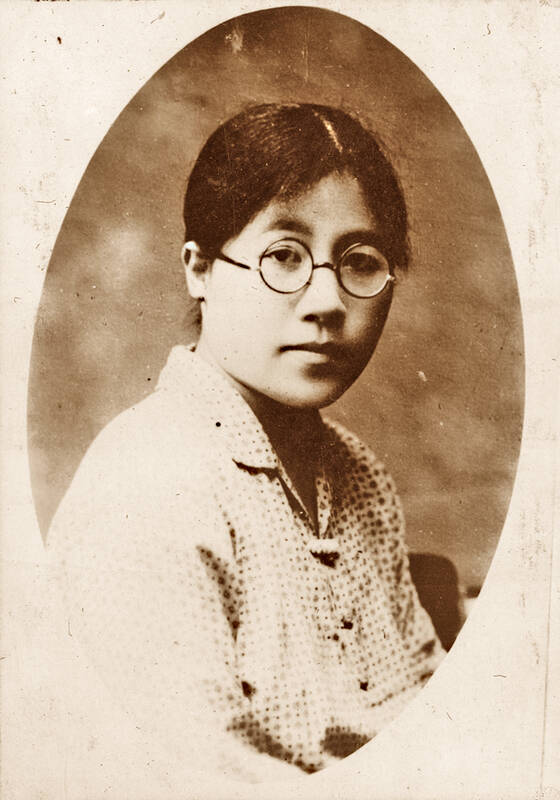
Photo courtesy of Wikimedia Commons
The two shared the stage on several occasions, most notably on April 18, 1949, when they performed Beethoven’s Piano Concerto No. 5 to great acclaim.
MUSIC IN FAITH
Western music first reached Taiwan with the Dutch and Spanish, only to disappear after Ming loyalist Koxinga, also known as Zheng Chenggong (鄭成功), drove out the Dutch in 1661. It did not return until two centuries later, when the 1858 Treaty of Tianjin opened the ports of Tamsui and Kaohsiung to foreign trade, allowing missionaries to return, writes Hsu Li-sha (徐麗紗) in “Overview of modern music education in Taiwan” (臺灣近現代音樂教育綜觀).
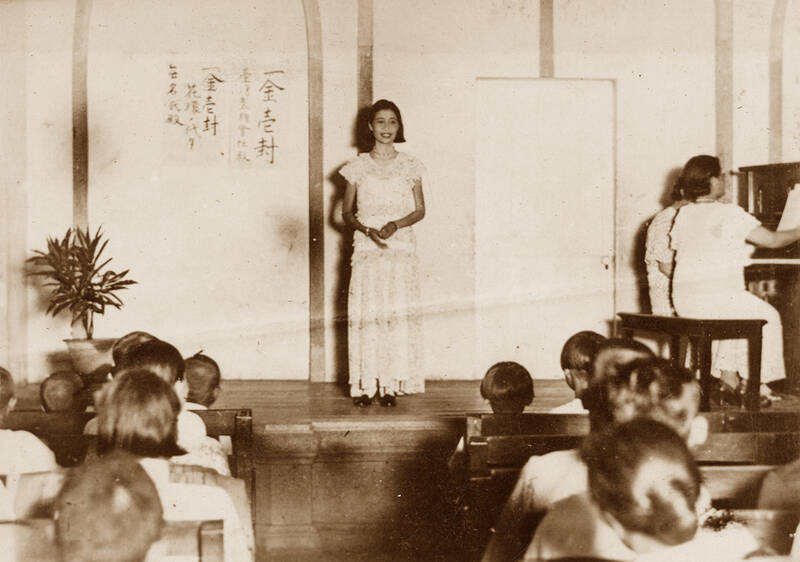
Photo courtesy of Wikimedia Commons
Kao Chang, who arrived in Tainan from China’s Fujian Province in 1864, was among the Presbyterian Church’s earliest converts. According to his grandson Kao Chun-ming (高俊明), he struggled to find work, finally deciding to gamble what remained of his savings.
On his way to a temple to pray for luck, however, he instead stumbled upon a sermon by Scottish missionary James Laidlaw Maxwell, who had recently arrived in Taiwan. Maxwell would establish Taiwan’s first Presbyterian church the following year.
Baptized in 1866, Kao devoted the rest of his life to spreading the faith in central and southern Taiwan. He worked closely with various Pingpu (plains Indigenous) groups and married a Hoanya woman.
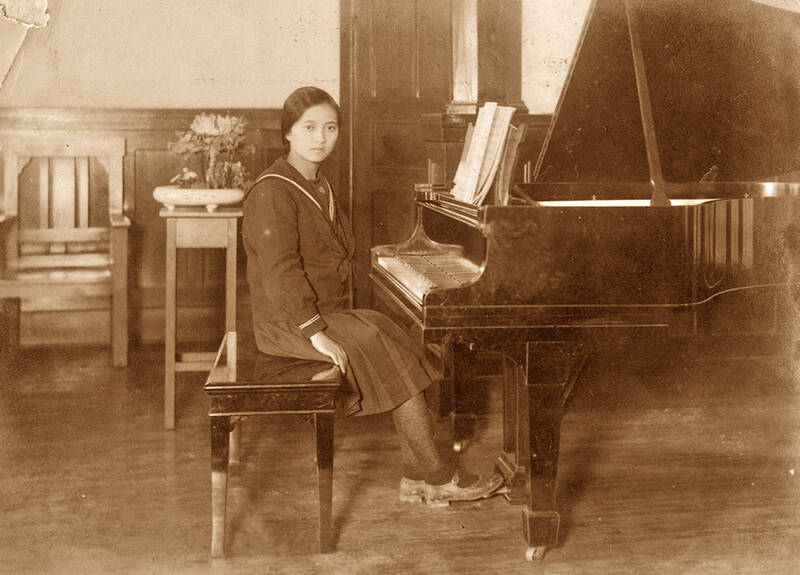
Photo courtesy of Wikimedia Commons
Born on March 27, 1906, Kao Chin-hua attended the Presbyterian Church’s girl’s school (today’s Chang Jung Girls’ Senior High School), where she learned music under the wife of pastor W. E. Montgomery. Since music formed the foundation of Christian practice, church-affiliated schools emphasized cultivating musical talent and made it a compulsory subject, Hsu writes.
This focus was particularly pronounced in girls’ schools, where students were trained to serve as church accompanists. As a result, nearly every church in the area had at least one formally trained female graduate.
STUDYING IN JAPAN
Although Kao Chang remained poor, he prioritized education and four of his sons became doctors, elevating the family’s status. This, in turn, enabled Kao Chin-hua to further her musical studies in Tokyo in 1926.
Her cousin Kao Tzu-mei, born on Feb. 17, 1914, was even able to study in Japan immediately after finishing primary school, first attending the Christian Baiko Academy before enrolling in what is now Tokyo Music College.
From 1931 to 1932, Kao Chin-hua traveled to Wufeng once a week to tutor Aiko Fujii, the wife of Lin Hsien-tang’s (林獻堂) second son, writes historian Lee Yu-fen (李毓芬) in “The marriage circles of the Wufeng Lin family during the Japanese era” (日治時期霧峰林家的婚姻圈). She developed a close relationship with the family and performed at various events, with her name frequently appearing in Lin’s diary.
While Kao Chin-hua and Kao Tzu-mei both spent much of the 1930s in Japan, they often returned home to perform, especially for charitable events. The two took part in a concert series organized Tsai Pei-huo (蔡培火) following the 1935 Hsinchu-Taichung earthquake, which left more than 3,000 dead and 11,000 injured. Kao Tzu-mei was reportedly one of four musicians to appear in all 37 shows during the seven-week tour.
NURTURING TALENT
While studying in Tokyo, Kao Chin-hua met and married lawyer Chen Ming-ching (陳明清), but this did not seem to affect her musical career, writes Kao Ya-li. After World War II, she served as an officer of the Taiwan Provincial Cultural Promotion Association’s Music Culture Research Society, and helped organize numerous concerts and nationwide competitions.
Born in 1938, Tyzen Hsiao began training under Kao Chin-hua while attending Chang Jung Senior High School, and through her guidance was accepted to National Taiwan Normal University’s music program. Hsiao later studied under composer Hsu Chang-hui (許常惠), who had just returned from France on a scholarship provided by Kao Tzu-mei and her associates. Kao was known for her generosity toward less fortunate students.
By contrast, Kao Tzu-mei put her career on hold after marrying Lee Chao-jan (李超然), great grand-son of Dadaocheng tea magnate Lee Chun-sheng (李春生), in 1937. However, she later resumed teaching and performing, returning to Japan to refine her techniques in 1939 under a German instructor.
After the war, she taught at National Taiwan Normal University and today’s Fu Hsing Kang College. She remained active in high society and charitable events after her retirement in 1984.
Taiwan in Time, a column about Taiwan’s history that is published every Sunday, spotlights important or interesting events around the nation that either have anniversaries this week or are tied to current events.

Last week the government announced that by year’s end Taiwan will have the highest density of anti-ship missiles in the world. Its inventory could exceed 1,400, or enough for the opening two hours of an invasion from the People’s Republic of China (PRC). Snark aside, it sounds impressive. But an important piece is missing. Lost in all the “dialogues” and “debates” and “discussions” whose sole purpose is simply to dawdle and delay is what the Chinese Nationalist Party (KMT) alternative special defense budget proposal means for the defense of Taiwan. It is a betrayal of both Taiwan and the US. IT’S

Paul Thomas Anderson’s “One Battle After Another” was crowned best picture at the 98th Academy Awards, handing Hollywood’s top honor to a comic, multi-generational American saga of political resistance. The ceremony Sunday, which also saw Michael B. Jordan win best actor and “Sinners” cinematographer Autumn Durald Arkapaw make Oscar history as the first female director of photography to win the award, was a long-in-coming coronation for Anderson, a San Fernando Valley native who made his first short at age 18 and has been one of America’s most lionized filmmakers for decades. Before Sunday, Anderson had never won an Oscar. But “One Battle
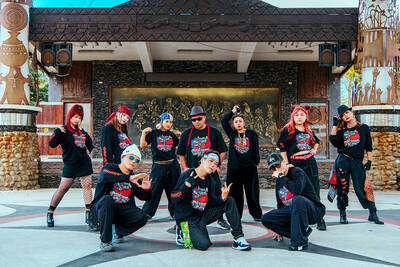
In Kaohsiung’s Indigenous People’s Park (原住民主題公園), the dance group Push Hands is training. All its members are from Taiwan’s indigenous community, but their vibe is closer to that of a modern, urban hip-hop posse. MIXING CULTURES “The name Push Hands comes from the idea of pushing away tradition to expand our culture,” says Ljakuon (洪濬嚴), the 44-year-old founder and main teacher of the dance group. This is what makes Push Hands unique: while retaining their Aboriginal roots, and even reconnecting with them, they are adamant about doing something modern. Ljakuon started the group 20 years ago, initially with the sole intention of doing hip-hop dancing.

You would never believe Yancheng District (鹽埕) used to be a salt field. Today, it is a bustling, artsy, Kowloon-ish “old town” of Kaohsiung — full of neon lights, small shops, scooters and street food. Two hundred years ago, before Japanese occupiers developed a shipping powerhouse around it, Yancheng was a flat triangle where seawater was captured and dried to collect salt. This is what local art galleries are revealing during the first edition of the Yancheng Arts Festival. Shen Yu-rung (沈裕融), the main curator, says: “We chose the connection with salt as a theme. The ocean is still very near, just a


 RSS
RSS