


Lido Pizza (里朵), which opened last month near the Shida night market, sells hand-tossed pizza baked in a large, brick oven that takes pride of place in the restaurant’s open kitchen. The newly refurbished space’s ambience is more upscale than other pizza restaurants nearby, but is nonetheless still laid-back enough for this college neighborhood. The interior’s sleek black chairs and tables are tempered by warm earth tones, brick walls and soft lighting. The wait staff is attentive and food is delivered briskly, even during a recent lunch hour when the restaurant was filled with customers.
We ordered a prosciutto e fungi pizza (NT$260) and an asparagus and white egg pizza lunch set (NT$180). For an extra NT$90, all pizzas can be served as a set meal, which come with soup, salad and choice of coffee or iced tea. In my opinion, the soup by itself is enough to justify the added expenditure. This week it was a delicious pumpkin soup that was more savory than expected, served hot and topped with just a few drops of sweet cream. The salad is a small, neat mound of butter lettuce and cherry tomatoes garnished with a few sprigs of watercress, brought to life by a very tangy vinaigrette.
My pizza had slices of hard-boiled eggs and stalks of asparagus artfully arranged on a layer of mozzarella cheese. A light but potent dusting of Parmesan cheese and salt saved the pie from blandness. The crust was slightly more buttery and chewy than that of my companion’s order, the prosciutto e fungi, which was topped with thin slices of cured ham, an ample helping of mushrooms, mozzarella and tomato sauce. The crust on this pizza was thin and satisfyingly crispy.
Other dishes on the menu include the margherita, which is topped with tomato sauce, mozzarella and oregano (NT$160) and the Hawaii (NT$240) laden with ham, pineapple and cream cheese.
Vegetarian offerings include the felicitously named vegetariana (sweet pepper, eggplant and zucchini, NT$220), porcini (a mix of mushrooms, NT$360) and formaggi (blue, ricotta, Parmesan and mozzarella cheese, NT$380). Sweet tooths can be indulged with the la frutta pizza (NT$200), which is topped with a variety of in-season fruits.
One other notable dish on the menu is the Caprese pizza (NT$280), which is similar to the margherita but garnished with basil instead of oregano and large soft slices of buffalo mozzarella instead of the standard cheese. The buffalo mozzarella is made from water buffalo milk, which is higher in fat and as a result much creamier tasting than run-of-the-mill cow milk. Stone-oven baked pizza connoisseurs who like their crusts thin and crispy may however be disappointed, as the Caprese’s crust was of a similar texture to that of the asparagus and white egg pizza.
Lido also offers several pasta dishes and will be expanding its menu of lunch specials starting today.

Taiwan’s English education system is being pulled apart by three opposing forces. Bilingual Nation 2030 pulls students toward English and global communication. Artificial Intelligence (AI) readiness pulls them toward digital judgment, verification and AI-mediated work. But Taiwan’s old exam culture pulls them back toward memorization, grammar drills, timed reading and correct answers. If the education system keeps using old exams to define success, it risks producing graduates who are neither genuinely bilingual nor genuinely AI-ready, but trained for tasks machines can already perform. The first force is Bilingual Nation 2030. Launched in 2018, the policy aimed to “help Taiwan’s workforce connect

“Taiwan’s Opposition Leader Comes to US With a Message Straight Out of Beijing” read a May 31 headline in the Wall Street Journal. Top US administration officials and members of Congress almost certainly read the WSJ, and if there was a bullet point takeaway that people in Washington should absorb ahead of Chinese Nationalist Party (KMT) Chair Cheng Li-wun’s (鄭麗文) arrival in DC on June 9, that headline is it. The last few columns have discussed this very topic, and the timing is not coincidental. While those top officials likely do not read the Taipei Times, judging by the number

With weighty, anxiety-inducing geopolitical topics dominating the headlines, checking in on the wild and weird state of local politics can take some of the edge off. This November’s elections will determine who will be in charge of fixing potholes in your neighborhood, not the potholes in Taiwan’s complicated geopolitical space. Recently, after an online interview with a Taipei-based journalist, I commented that Taipei journalists never go further than the MRT can take them. He laughed and agreed. Naturally, the Taipei mayoral race is eating up much of the press attention. TAIPEI CITY Democratic Progressive Party (DPP) candidate Puma Shen (沈伯洋) has
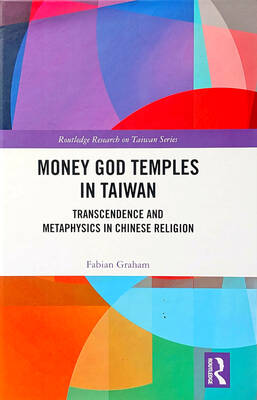
As someone who normally steers clear of books with “transcendence” or “metaphysics” in their subtitles, this reviewer — a casual observer of local belief systems since the 1990s — found Fabian Graham’s Money God Temples in Taiwan a challenging read. Those who’ve only dipped their toes into temple culture will likely need to parse several sections with special care if they’re to keep up with the author, a British ethnographic researcher whose previous books have investigated religious practices among ethnic Chinese in Southeast Asia. This scholarly volume examines a facet of Taiwan’s religious landscape that didn’t exist a century ago, and


 RSS
RSS