


Looking for Taiwanese music beyond Mando-pop and karaoke dirges? So is the government.
The Government Information Office (GIO, 新聞局) started a program last year that gives independent musicians recording funds and some official promotion.
The bands and musicians apply for subsidies by submitting a demo and written plan, which is reviewed by a panel of industry professionals and musicians selected by the government. This year, 20 bands were chosen to each receive NT$300,000 to put towards producing a new album.
On top of that, the chosen groups are showcased in the government-sponsored Taiwan Band Festival (台灣樂團節), which started last weekend and runs until the beginning of next month, and takes place at live music venues in Taipei, Taichung and Kaohsiung.
The festival aims to bring wider attention to the bands, which represent a broad range of genres, from fusion jazz and punk to traditional folk and electronica.
“There is so much really great music [out there] … why hasn’t anyone heard it? I think it’s really too bad,” says Terri Wu of the Taiwan Music Culture International Alternation Association (TCMIAA, 台灣音樂文化國際交流協會), which was hired by the government to organize the festival.
For Wu, part of the remedy for Taiwan’s independent music scene lies in nurturing “live houses,” which she says have been an “important source of strength” in helping bands grow and develop.
With this in mind, the association arranged for shows to be held at places that regularly host live music.
Popular indie venues in Taipei like The Wall (這牆) and Underworld (地下社會) will not charge admission fees for festival performances [see schedule for details], while others will only charge a one-drink minimum instead of the normal cover charge, which averages NT$300.
Loyal fans might rejoice at the prospect of gratis or cheaper shows, but Wu says the aim is not to provide a free ride, but to attract people who don’t normally go to live shows and cultivate new crowds.
Wu thinks audiences at live music venues need even more support in the form of business — which means buying a drink outside of the freebie that comes with admission.
“If you come to watch a show, and you want to support the band, actually you should also support the [performance] space,” she says.
The festival continues this weekend in Taichung with performances from indie-electronica duo Nylas and pop punk band Mojo, and concludes on Nov. 1 with a free show at The Wall, featuring indie-pop rockers Tizzy Bac and a guest appearance by local underground rock legends the Chairman (董事長).

Taiwan’s English education system is being pulled apart by three opposing forces. Bilingual Nation 2030 pulls students toward English and global communication. Artificial Intelligence (AI) readiness pulls them toward digital judgment, verification and AI-mediated work. But Taiwan’s old exam culture pulls them back toward memorization, grammar drills, timed reading and correct answers. If the education system keeps using old exams to define success, it risks producing graduates who are neither genuinely bilingual nor genuinely AI-ready, but trained for tasks machines can already perform. The first force is Bilingual Nation 2030. Launched in 2018, the policy aimed to “help Taiwan’s workforce connect
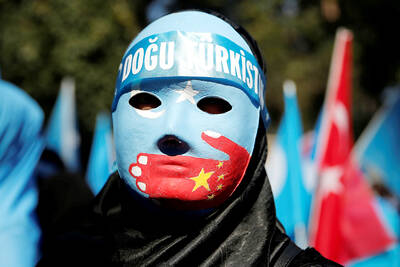
It seems every few days one bumps into one of those “real man” comments in which Taiwan is urged to “face reality” or similar, and “make a deal,” with the speaker implying that soon it will be too late. “Deal” advocates always present themselves as having a superior grip on reality, and the manly ability to make the “hard choice.” Their testosterone-laden language often echoes that of Taiwan sellout advocates. Note that such commentary always specifies a process (“make a deal, work with, make progress”), never the end state of what occupation by a violent authoritarian colonialist state will entail. In
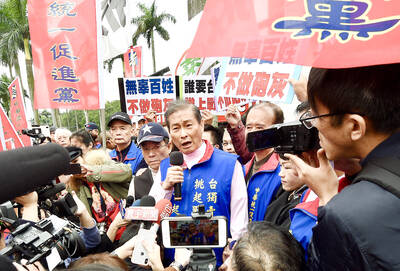
There are shadowy cabals plotting to sell out Taiwan to be annexed by China, by invasion if necessary. Fortunately, they are buffoons. In 2019, former Bamboo Union gangster and founder of the China Unification Promotion Party (CUPP), Chang An-le (張安樂, colorfully known as “White Wolf”), led a protest at the Legislative Yuan against comments made by then-premier Su Tseng-chang (蘇貞昌) that in the event of an attack by China, he would never surrender, but would protect the nation by fighting to the end, even if he only had a broom. Chang had party members bring a wooden casket that they
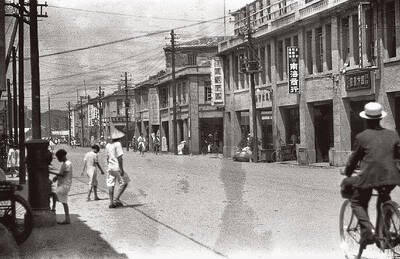
June 1 to June 7 "If all Taiwanese were as afraid of dying as you, then what would happen?” Physician Shih Chiang-nan (施江南) reportedly said this to his wife Chen Chiao-tung (陳焦桐) after she urged him to stop intervening on behalf of Taiwanese soldiers stranded overseas after serving in the Japanese Army during World War II. Shih had clashed with high-ranking officials over the issue, engaged in several heated arguments with Taiwan governor-general Chen Yi (陳儀) and allegedly shouted at general Ko Yuan-fen (柯遠芬), chief of staff of the Taiwan Garrison Command, over


 RSS
RSS