


They were the best of ties. They were the worst of ties.
Skinny little beatnik ties and mod double-wide ties. Suave and sophisticated Frank Sinatra ties and greedy Gordon Gekko power ties.
Bar Mitzvah boy clip-on ties and Jerry Garcia trippin’ ties.

PHOTO: NY TIMES NEWS SERVICE
And, of course, all those closet doors decked with millions of gifted ties.
But now, comes word that the necktie — that elongated swatch of silk or polyester or rayon whose donning has long marked a male rite of passage while serving no discernible utility — may be fading into the fashion sunset.
The recent decision by the Men’s Dress Furnishings Association — the trade group for America’s neckwear makers — to shut down has some folks tied up in knots. A calendar crammed with casual Fridays (and Mondays and Thursdays ...) has exacted its last, grim toll, some said.

PHOTO: NY TIMES NEWS SERVICE
In an age where some people show up for job interviews in flip-flops, the imminent death of the tie seems plausible.
It’s been a good, long time, after all, since America was a nation of necktie-wearers.
Look back at pictures from the Great Depression and you’ll see men who put on ties before taking their place on soup lines. The stands at baseball games were once filled with men in ties — even on weekends. In the years after World War II, when employers created thousands of new office jobs, the sidewalks of downtowns across the US were thronged by men whose necks were cloaked in soldierly stripes and solids.
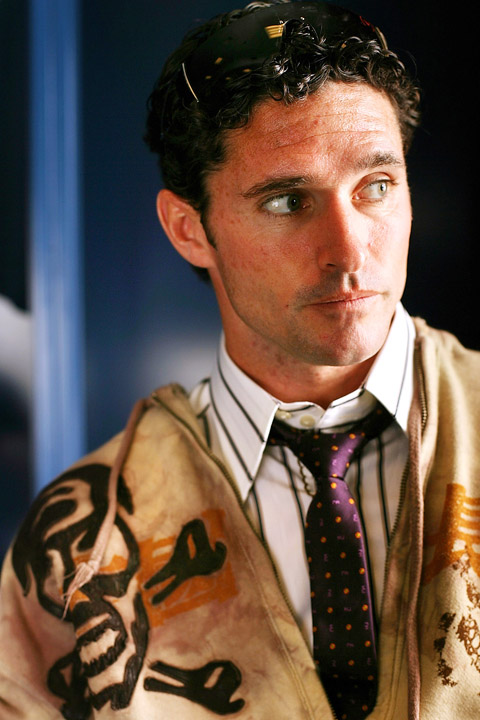
PHOTO: NY TIMES NEWS SERVICE
But before we deliver the eulogy for the necktie, consider this: Men have been wrapping and winding pieces of cloth around their necks for hundreds of years. It’s clear that the tie, once the very symbol of the male establishment, is far from the icon it used to be.
Still, there’s small comfort for neckwear makers: At least they’re not selling fedoras.
And, given the fickleness of fashion and the fact that some occasions still demand a tie, it’s probably too soon to write its epitaph.
“You almost want to say, ‘poor necktie,’ so abused and underappreciated,’’ says Candace Corlett, president of the consulting firm WSL Strategic Retail.
Predictions of the necktie’s demise have been circulating for years. In the mid-1990s, designer Gianni Versace offered his vision of male fashion in a coffee-table book titled Men Without Ties, a sure sign of where things were headed. A bronzed Adonis dashed across its cover dressed in nothing but a few ties, lashed loosely around his waist.
The burgeoning popularity of casual Fridays turned khakis and open collar-shirts into suitable wear for workplaces previously better suited to suits. The dot-com boom filled thousands of instant offices with laid-back twentysomethings who saw no point in lashing something tight around their necks.
But rumors of the tie’s death are roughly equivalent to the longtime predictions that the computer would soon turn society paperless. There’s a lot of truth to the prognostication, but somehow it hasn’t quite turned out that way.
Clearly, the tie business is nothing like the old days. In the early 1970s, when sales peaked, manufacturers sold between 200 million and 250 million ties a year in the US. Today annual sales have dropped to about 50 million, according to Lee Terrill, president of the neckwear division of Phillips-Van Heusen Corp, the nation’s largest tie maker.
A Gallup poll last year found just 6 percent of men wearing neckties to work each day, down from 10 percent in 2002. More than two-thirds of the men surveyed said they never wear a tie to work, up from 59 percent five years earlier.
But the necktie still has its defenders and devotees, men who invest the kind of affection in their ties that a golf shirt will probably never know.
“A lot of people call me the Tie Guy,’’ says Bob Smith, the outgoing provost and vice chancellor of academic affairs at the University of Arkansas in Fayetteville, Arkansas.
Smith has a collection of more than 400 ties in his closets. They are vital accessories in a job requiring him to deliver many speeches and presentations — more than 700 in the past eight years.
Every Smith speech is punctuated with a tie themed to the subject.
A tie with a giraffe on it for a speech about the qualities that make a good supervisor, one who is able to raise his head above the fracas to see the landscape clearly. Another featuring a painting by Charles Rennie Mackintosh of a rose inside a teardrop that he saves for delivering eulogies.
“When I walk into a room, they’ll look at my necktie, they’ll actually pick it up when I walk in, and say ‘Oh, what are you going to talk about today? and I’ll say, ‘Oh, wait and see.’ It actually creates a sense of mystery,’’ Smith says.
Smith’s collection, though, pales compared to the more than 1,000 ties owned by Richard Arutunian, a retired Southern California neckwear manufacturer.
Arutunian rejects this talk that the tie has come undone. A tie is singularly irreplaceable, he says, uniquely capable of sending a message about its wearer to women and to his fellow men.
“To me it tells more about the person than even the shoe does,’’ says Arutunian, who long served as official tie historian for the neckwear industry association’s predecessor. “Is he trying to impress me? Is he wearing a tie because he has to wear that tie? How is he tying that knot?”
Wearing cloth around the neck stretches back a long way. Some trace the modern tie to the early 1600s when Croatian fighters looped fabric around their necks before battle, captivating the public’s imagination.
Hard to believe, but for most of history men were the peacocks of the fashion world, and that included draping their necks in all sorts of status symbols, from waterfall cloths to cravats, says Paula Baxter, who curated an exhibit that closed last year at the New York Public Library on the rakish history of men’s wear.
“Even the Puritans. They would wear lace collars,’’ she says.
The era of the male dandy ended in the late 19th century, when the uniformity of the tailored suit took over. In the early 1920s, neckwear makers began cutting cloth on the bias — diagonally, at an angle to the weave — and the modern tie was born. It found a welcome home on the necks of the expanding ranks of white-collar workers.
By the 1960s, 600 companies made ties in the US, mostly smaller, regional manufacturers. They banded together in a professional association that lobbied on their behalf.
Those days are long past.
“The number you have dialed is not in service at this time,’’ a recording greeted callers to the New York offices of the Dress Furnishings Association this week. “Please check the area code and number and dial your call again.” Don’t bother.
Today there are only about two-dozen companies making ties in the US, and the business is dominated by huge firms. Many of the ties American men wear are made overseas. It didn’t seem to make any sense to keep running an association built for an industry so fundamentally different from what it used to be, says Terrill, the neckwear business executive and a member of the association’s board.
“We didn’t think anybody would notice,’’ he says, of the decision to close.
Instead, the association’s closure has been greeted as confirmation that the tie is done.
The suggestion alarms Terrill, who says that sales have steadied and ties are poised to make a modest comeback.
There are still a few islands of tie-wearers. Lawyers and folks in finance and insurance work in offices where suits and tie remain the badges of professionalism.
“When you wear a tie it still says ... you’re dressed for the occasion,’’ says Amy Klaris, a retail strategist at consulting firm Kurt Salmon Associates.
Today, with the economy softening, men need to market themselves and a big part of that is the way they dress. That will send the pendulum swinging, albeit subtly, back to the suit and tie, Terrill says.
In the past 10 years or 15 years, as dress codes loosened, men who’d always worn ties “were making a statement. I’m not going to wear a tie because I don’t have to wear a tie,” Terrill says. “But now so many people don’t wear a tie, that it’s a statement to wear one.’’
That sounds like wishful thinking to Corlett, the consultant. She agrees that sales of ties have leveled off, but a comeback is unlikely.
“I think it’s about as untrue as women returning to hosiery.
“Once you free the body of the tie and the hose, yeah, you may go back to it occasionally to make a statement or on dress-up day, but nobody willingly goes back to wearing a tie five days a week,’’ she says.
For those waiting to see if men will once again embrace the constriction that comes with ties, she suggests looking to examples in women’s fashion.
“You know,’’ she says, “corsets never came back.”

For many people, Bilingual Nation 2030 begins and ends in the classroom. Since the policy was launched in 2018, the debate has centered on students, teachers and the pressure placed on schools. Yet the policy was never solely about English education. The government’s official plan also calls for bilingualization in Taiwan’s government services, laws and regulations, and living environment. The goal is to make Taiwan more inclusive and accessible to international enterprises and talent and better prepared for global economic and trade conditions. After eight years, that grand vision is due for a pulse check. RULES THAT CAN BE READ For Harper Chen (陳虹宇), an adviser
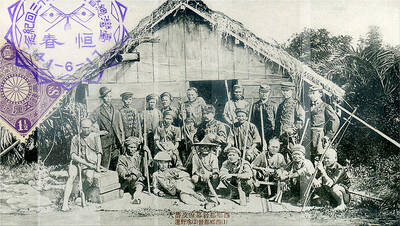
Traditionally, indigenous people in Taiwan’s mountains practice swidden cultivation, or “slash and burn” agriculture, a practice common in human history. According to a 2016 research article in the International Journal of Environmental Sustainability, among the Atayal people, this began with a search for suitable forested slopeland. The trees are burnt for fertilizer and the land cleared of stones. The stones and wood are then piled up to make fences, while both dead and standing trees are retained on the plot. The fences are used to grow climbing crops like squash and beans. The plot itself supports farming for three years.

President William Lai (賴清德) on Nov. 25 last year announced in a Washington Post op-ed that “my government will introduce a historic US$40 billion supplementary defense budget, an investment that underscores our commitment to defending Taiwan’s democracy.” Lai promised “significant new arms acquisitions from the United States” and to “invest in cutting-edge technologies and expand Taiwan’s defense industrial base,” to “bolster deterrence by inserting greater costs and uncertainties into Beijing’s decision-making on the use of force.” Announcing it in the Washington Post was a strategic gamble, both geopolitically and domestically, with Taiwan’s international credibility at stake. But Lai’s message was exactly

May 4 to May 10 It was once said that if you hadn’t performed at the Sapphire Grand Cabaret (藍寶石大歌廳), you couldn’t truly be considered a star. Taking the stage at the legendary Kaohsiung club was more than just a concert. Performers were expected to entertain in every sense, wearing outlandish or revealing costumes and staying quick on their feet as sharp-tongued, over-the-top hosts asked questions and delivered jokes that would be seen as vulgar, even offensive, by today’s standards. Opening in May 1967 during a period of strict political and social control, Sapphire offered a rare outlet for audiences in


 RSS
RSS