


Every hour or so, Mia Farrow gets four Google alerts relating to the search terms, "Darfur," "Central African Republic," "Eastern Chad" and "Genocide Olympics," her shorthand for China's suitability as host nation of this year's games. She is on her fourth reading of Julie Flint and Alex de Waal's primer, Darfur: A Short History of a Long War. She has been to Sudan and its neighboring countries eight times in the past five years and is planning another trip in May.
"I have no life," says Farrow, in that silvery voice that seems to self-mock and at the same time parody the expectations of those who would mock her. "This is my life. So while it may be that I'm only an actress and it may be that I'm an idiot in many aspects - but no more so than half the population - I have earned some stripes, if hours of study count. Yes, I am a celebrity, so take it with a grain. But I'm also a messenger. I'm also a witness."
Three weeks ago, her message was amplified by Steven Spielberg's decision to resign as artistic adviser to the opening ceremony in Beijing; almost a year after Farrow compared the Hollywood director to Leni Riefenstahl in an op-ed piece for the Wall Street Journal. "China," she wrote, "is bankrolling Darfur's genocide," and Spielberg was a "key collaborator" for agreeing to work with it. Since then she has written six more articles, lobbied the Olympic sponsors to tear up their contracts, offered to exchange places with an incarcerated Sudanese rebel, and urged those heads of government planning to attend the games, Gordon Brown included, to think better of it. Of Spielberg she says, "I gather he's quite annoyed with me."
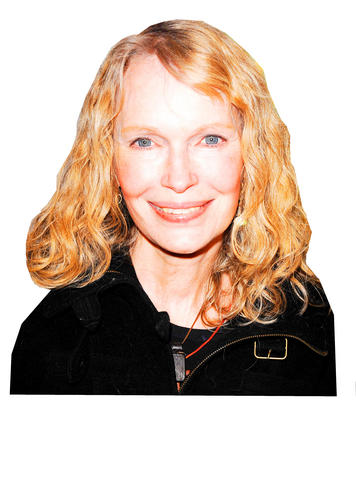
Indifference is the enemy of any cause, but Farrow suffers from its opposite: the fame that gives her a platform, also prejudices how what she says is received. Even Farrow has to admit that her reputation is a little funky.
In a cafe in New York, she hauls out her laptop to show me photos taken on her last trip to Darfur and, with a smile, tells me of a dream she had in which she relocated to an underwater kingdom, was elected leader of the dolphins and had to give a presentation for which the only device that could withstand the conditions was the latest Macbook.
The UN estimates that at least 200,000 people have been killed in Darfur in the past five years in the conflict - between the government-backed Janjaweed militias and rebel groups - that has also displaced 2.5 million people. Of course, says Farrow, the blame lies squarely with Khartoum, but in line with a growing consensus in the west, she adds, Beijing has "under-written" the atrocities. China is Sudan's biggest buyer of oil. It has sold Khartoum millions of US dollars worth of weapons and has used its veto in the security council to frustrate UN action within the region.
It was a piece by Samantha Power in the New York Times that first brought Darfur to her attention. "It was just one of those jaw-dropping moments and I realized that there was a genocide ongoing in a region that I had never heard of - I started looking for information."
Before writing about him in the Wall Street Journal, Farrow sent Spielberg three letters explaining the situation and urging him to use his "unique point of leverage" to put pressure on Beijing. If he's annoyed one imagines it is owing to the parallels she drew with one of Hitler's favorite filmmakers. Some might call this intemperate.
"You think?" Farrow says, her far-away look sharpening in an instant. "Genocide is genocide. I don't equate one with the other; the Holocaust is the Holocaust and this is the Darfur genocide." The UN hasn't designated Darfur a genocide yet. "They haven't. They've called it 'atrocities of the worst kind,'" she says. "They've sidestepped the word 'genocide' because it would mandate that they go in. There is no precedent for the UN to enter a sovereign country without the permission of that government. This is a flaw with the UN."
Quincy Jones is another creative consultant to the Beijing Olympics and an old friend of hers; she has known him since she was 17 and named her youngest daughter after him. She calls him "a man of impeccable conscience" and says he has assured her that he is "trying to use his position with officials in Beijing" to get Khartoum to allow a peace keeping force of 26,000 - at the moment it is 9,000 - to enter Sudan. "I believe that he will do his best," she says. "My belief is that China will come round."
So she has at least some sympathy for what the British sport and culture secretary Tessa Jowell calls "constructive engagement" with the Chinese? No, Farrow says, too often western governments use it as a smokescreen to protect lucrative trade agreements. "You impose it over a timeline of how many are dying in Darfur. How fruitful is the engagement? One asked oneself this about Spielberg until he withdrew."
So would she have Jones boycott the event entirely? "My last e-mail from him said that he is really working hard with [the Chinese] and I said to him, just be wary of their assurances. Until we see verifiable security on the ground, don't let it slide. I would hope that at some point Quincy would withdraw if he's not satisfied with the progress."
When they were young, she took her children to meet Miep Gies, the woman who hid Anne Frank and her family from the Nazis. Farrow told them that they must ask themselves whether, in similar circumstances, they would be "prepared to do the thing that isn't safe." Farrow is a self-dramatist, but she is also a realist and when she offered to exchange places with the then-imprisoned Suleiman Jamous, a humanitarian coordinator in Darfur for the rebels, it was in the knowledge that, "realistically, I didn't think the government of Sudan would particularly want me in Kadugli. If I went, I'd be an American citizen, there'd be a lot of hoo-ha, compared to a rebel left rotting somewhere for the rest of his life. On the other hand, I had to be prepared to go."
Equally clear-sightedly, Farrow isn't advocating a boycott of the Olympics by athletes; it wouldn't be fair she says.
Corporate sponsors are another matter and she is making elaborate plans to thwart their interests. During the games she will urge US TV viewers to switch over during the commercial breaks to a channel airing her interviews from Darfur - this channel doesn't exist yet; but Farrow says it will in time for the games as well as being available online. On her Web site she directs consumers to the sponsors' main rivals.
She smiles impishly and says: "If you like Coca-Cola, try Pepsi. If you like McDonald's, you'll love Burger King.
"It's merciless but you know what? I don't care. I don't care if they lose a few million out of their gazillion. The great thing about Steven Spielberg's withdrawing his participation is that he did it through the front door, saying that it was a matter of conscience. And therefore he placed it squarely in the moral arena, leaving the sponsors very little place to hide."
As for Western leaders intending to go to the opening ceremony: "Shame on Gordon Brown I say. Because he represents the people of Great Britain. Our president has also accepted an invitation to go. I feel that - we don't care what he does next year - but this year he represents us and many of us don't want to see him take his place next to [Chinese] President Hu Jintao (胡錦濤) at the genocide Olympics. He could have made it provisional, and then used the leverage."
But the game is surely bigger than this, as it was last year when Brown was accused of jeopardizing the EU-Africa summit in Lisbon by threatening a boycott if Robert Mugabe turned up.
"Clearly there's a bigger game," Farrow says, "in which the people of Darfur are simply expendable chips. One would like to have our leadership reflect that with knowledge comes responsibility. I know that sounds naive and soft, but I do believe we've gone too far in emphasizing the need for trade and economics against the cost of the value of a human life, and our own moral compass."
Farrow's great strength, and weakness, as a campaigner is that she can use the kind of emotive language a politician can't. She is a movie star with the time and financial security to pursue her charitable instincts to their fullest expression, but there is little of the self-gratification that we saw, for example, in Madonna's recent fundraiser on the lawn of the UN. It comes down, says Farrow, to a simple question of standing up to bullies. "I think you call people on things at certain points. Otherwise you create monsters. I see that even in my own business, where performers get a lot of undeserved adulation and start believing it and people stop telling them no, or telling them what is true, their reality becomes distorted."
Around her neck she wears a good luck charm given to her by a Sudanese woman named Halima, who was wearing it when her village was attacked by Janjaweed. Halima saw her husband and three of her five children bayoneted to death, says Farrow. "I believe it contains a piece of the Koran. You see everyone in Darfur wearing one, and in eastern Chad. Halima insisted that I have this, for my protection. She said tell people what is happening here: that we will all be slaughtered."

Taiwan’s English education system is being pulled apart by three opposing forces. Bilingual Nation 2030 pulls students toward English and global communication. Artificial Intelligence (AI) readiness pulls them toward digital judgment, verification and AI-mediated work. But Taiwan’s old exam culture pulls them back toward memorization, grammar drills, timed reading and correct answers. If the education system keeps using old exams to define success, it risks producing graduates who are neither genuinely bilingual nor genuinely AI-ready, but trained for tasks machines can already perform. The first force is Bilingual Nation 2030. Launched in 2018, the policy aimed to “help Taiwan’s workforce connect
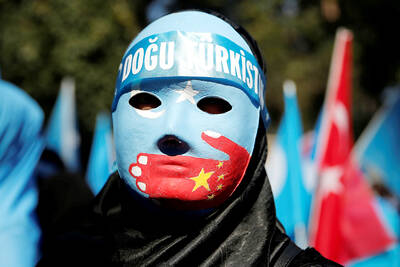
It seems every few days one bumps into one of those “real man” comments in which Taiwan is urged to “face reality” or similar, and “make a deal,” with the speaker implying that soon it will be too late. “Deal” advocates always present themselves as having a superior grip on reality, and the manly ability to make the “hard choice.” Their testosterone-laden language often echoes that of Taiwan sellout advocates. Note that such commentary always specifies a process (“make a deal, work with, make progress”), never the end state of what occupation by a violent authoritarian colonialist state will entail. In
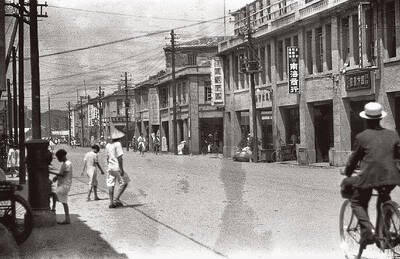
June 1 to June 7 "If all Taiwanese were as afraid of dying as you, then what would happen?” Physician Shih Chiang-nan (施江南) reportedly said this to his wife Chen Chiao-tung (陳焦桐) after she urged him to stop intervening on behalf of Taiwanese soldiers stranded overseas after serving in the Japanese Army during World War II. Shih had clashed with high-ranking officials over the issue, engaged in several heated arguments with Taiwan governor-general Chen Yi (陳儀) and allegedly shouted at general Ko Yuan-fen (柯遠芬), chief of staff of the Taiwan Garrison Command, over

“Taiwan’s Opposition Leader Comes to US With a Message Straight Out of Beijing” read a May 31 headline in the Wall Street Journal. Top US administration officials and members of Congress almost certainly read the WSJ, and if there was a bullet point takeaway that people in Washington should absorb ahead of Chinese Nationalist Party (KMT) Chair Cheng Li-wun’s (鄭麗文) arrival in DC on June 9, that headline is it. The last few columns have discussed this very topic, and the timing is not coincidental. While those top officials likely do not read the Taipei Times, judging by the number


 RSS
RSS