


It's time to get "Bootylicious."
R 'n' B star Beyonce Knowles comes to Taipei's Zhongshan Football Stadium (中山足球場) on Monday for a two-hour show that is sure to be a spectacle.
The 26-year-old Texan, known for her skimpy on-stage outfits and explosive voice, explosive lyrics and explosive dance moves, is visiting Taiwan as part of her Beyonce Experience 2007 World Tour.
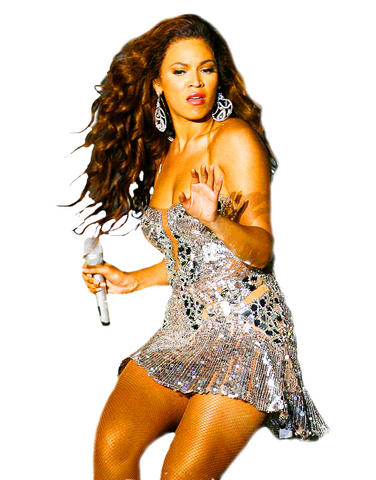
Photo: AFP
Reviewers have been raving about the show, which opened April 10 at the 55,000-seat Tokyo Dome and included stops in Europe and 41 North American cities.
"From the diva-style opening, when she rises from beneath the stage amidst a blinding sparkler display, to the final audience sing-along on the female-empowering hit Irreplaceable, the star delivers a crowd-pleasing spectacle that offers as much visual as musical stimulation," wrote a reviewer in the Hollywood Reporter.
Apparently the word hasn't spread to Taiwan yet. As of press time, tickets for all sections of the stadium were 30 percent off.
Though only in her mid-twenties, Beyonce has been big for a decade, first as a member of the girl group Destiny's Child, then as a solo singer and, recently, as an actress in such films as Dreamgirls and The Pink Panther. She's recorded eight singles that reached number one on the US charts and an additional eight that cracked the Top 10, sold 140 million albums, and won 10 Grammys.
For last Tuesday's concert in Shanghai, Beyonce wore 10 different glittering silver costumes and sang more than 30 songs, including Crazy in Love and Baby Boy, according to published reports.
Previous dates included Jakarta, which she added after canceling her Malaysia concert to protest that country's ultra-conservative dress code.
The cancellation came in the wake of rumors that Beyonce, who is well-known for her sultry image and revealing outfits, disapproved of the Malaysian government's policy that women performers wear clothes covering their chests and shoulders down to their knees.
Earlier this year, former No Doubt frontwoman, Gwen Stefani, made what she called "a major sacrifice" by wearing clothes that showed little skin at a Kuala Lumpur performance after Muslim activists called for the concert's cancellation.
Beyonce chose instead to perform in Jakarta, capital of the world's most populous Muslim country. Indonesia did not require her to follow a strict dress code.
One of the highlights of this year's Beyonce tour was a concert last month that was part of Ethiopia's 2,000th birthday celebrations. In September, Los Angeles-based hip-hop group the Black Eyed Peas kicked off a year of birthday concerts in the country, but received a lukewarm reception from their Ethiopian audience. So did Beyonce's opening act, the rapper Ludacris. But Beyonce got a hysterical welcome from the crowd and told them, "You have been one of the best audiences of my lifetime."
The Beyonce Experience 2007 World Tour also includes dates in Russia, Romania, Turkey, India, Thailand and Macau.
This singer's Taipei concert is being organized by Liquid Lifestyle Promotions (www.liquid-lifestyle.com).

Taiwan’s English education system is being pulled apart by three opposing forces. Bilingual Nation 2030 pulls students toward English and global communication. Artificial Intelligence (AI) readiness pulls them toward digital judgment, verification and AI-mediated work. But Taiwan’s old exam culture pulls them back toward memorization, grammar drills, timed reading and correct answers. If the education system keeps using old exams to define success, it risks producing graduates who are neither genuinely bilingual nor genuinely AI-ready, but trained for tasks machines can already perform. The first force is Bilingual Nation 2030. Launched in 2018, the policy aimed to “help Taiwan’s workforce connect
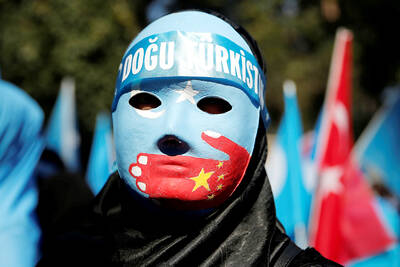
It seems every few days one bumps into one of those “real man” comments in which Taiwan is urged to “face reality” or similar, and “make a deal,” with the speaker implying that soon it will be too late. “Deal” advocates always present themselves as having a superior grip on reality, and the manly ability to make the “hard choice.” Their testosterone-laden language often echoes that of Taiwan sellout advocates. Note that such commentary always specifies a process (“make a deal, work with, make progress”), never the end state of what occupation by a violent authoritarian colonialist state will entail. In
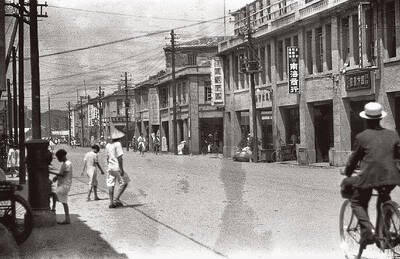
June 1 to June 7 "If all Taiwanese were as afraid of dying as you, then what would happen?” Physician Shih Chiang-nan (施江南) reportedly said this to his wife Chen Chiao-tung (陳焦桐) after she urged him to stop intervening on behalf of Taiwanese soldiers stranded overseas after serving in the Japanese Army during World War II. Shih had clashed with high-ranking officials over the issue, engaged in several heated arguments with Taiwan governor-general Chen Yi (陳儀) and allegedly shouted at general Ko Yuan-fen (柯遠芬), chief of staff of the Taiwan Garrison Command, over

“Taiwan’s Opposition Leader Comes to US With a Message Straight Out of Beijing” read a May 31 headline in the Wall Street Journal. Top US administration officials and members of Congress almost certainly read the WSJ, and if there was a bullet point takeaway that people in Washington should absorb ahead of Chinese Nationalist Party (KMT) Chair Cheng Li-wun’s (鄭麗文) arrival in DC on June 9, that headline is it. The last few columns have discussed this very topic, and the timing is not coincidental. While those top officials likely do not read the Taipei Times, judging by the number


 RSS
RSS