


Tito's been open for five years and has expanded from a small little eatery tucked away down an alley. It has become a charming spot, overlooking a park, where one can tuck into Continental cuisine and while away the hours over a cup of coffee, herb tea or fresh juice.
Located inside Fuxing Park (福星公園), off Kunming Street (昆明街), the restaurant is run by Alan Shao (邵行好), who has a romantic attitude toward life and business. According to him, there's nothing better than a plate of spaghetti, birdsong and puppies playing in the grass.
"The idea was to create an eating revolution in Taipei dining and provide a wonderful experience," Shao said. "I know that we have succeeded because if you look us up on the Internet everyone says so."
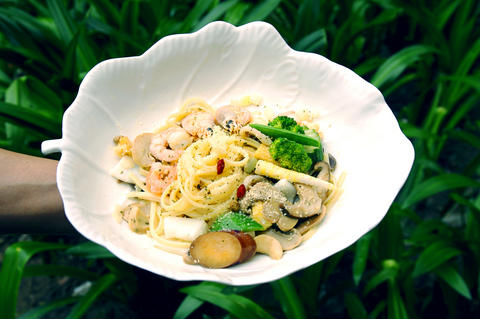
PHOTO: JULES QUARTLY, TAIPEI TIMES
Tito began as a restaurant serving just Italian food but has changed its focus to include French cuisine. Signature dishes include sauteed lamb chops in a spicy sauce and fillet steak with goose liver and chicken mousse. Spaghetti plates include seafood, chicken leg and a promising bacon and shrimp, among other choices.
These are all set meals and range in price from NT$250 to NT$600, including fruit pudding and a choice of over 30 drinks. The drink menu is comprehensive, ranging from vegetable juices and frozen fruit smoothies to coffee or tea.
Decor is casual, with decks for smokers overlooking the street and park. Including the basement, there is room for 68 diners, however, the best place to sit is on the deck overlooking small, but perfectly formed, Fuxing Park.
This is a good vantage point for people-watching as the Ximending crowd never thins. Students breeze by, shopping at the fashionable outlets nearby. Pet lovers walk their dogs, cats and even rabbits.
Having established Tito, Shao says he plans to open a new place in the East Side Shopping District (東區) within the next couple of months. This will be a fusion Italian and French-style diner with a heavy-duty motorbikes theme to attract the biker fraternity. Possible names: Hogs and fine food.

Taiwan’s English education system is being pulled apart by three opposing forces. Bilingual Nation 2030 pulls students toward English and global communication. Artificial Intelligence (AI) readiness pulls them toward digital judgment, verification and AI-mediated work. But Taiwan’s old exam culture pulls them back toward memorization, grammar drills, timed reading and correct answers. If the education system keeps using old exams to define success, it risks producing graduates who are neither genuinely bilingual nor genuinely AI-ready, but trained for tasks machines can already perform. The first force is Bilingual Nation 2030. Launched in 2018, the policy aimed to “help Taiwan’s workforce connect
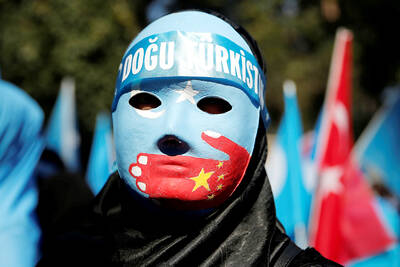
It seems every few days one bumps into one of those “real man” comments in which Taiwan is urged to “face reality” or similar, and “make a deal,” with the speaker implying that soon it will be too late. “Deal” advocates always present themselves as having a superior grip on reality, and the manly ability to make the “hard choice.” Their testosterone-laden language often echoes that of Taiwan sellout advocates. Note that such commentary always specifies a process (“make a deal, work with, make progress”), never the end state of what occupation by a violent authoritarian colonialist state will entail. In
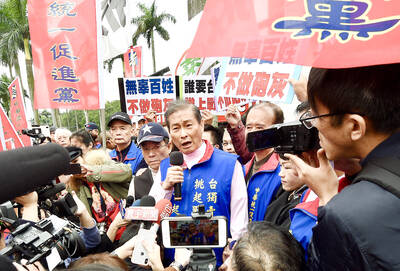
There are shadowy cabals plotting to sell out Taiwan to be annexed by China, by invasion if necessary. Fortunately, they are buffoons. In 2019, former Bamboo Union gangster and founder of the China Unification Promotion Party (CUPP), Chang An-le (張安樂, colorfully known as “White Wolf”), led a protest at the Legislative Yuan against comments made by then-premier Su Tseng-chang (蘇貞昌) that in the event of an attack by China, he would never surrender, but would protect the nation by fighting to the end, even if he only had a broom. Chang had party members bring a wooden casket that they
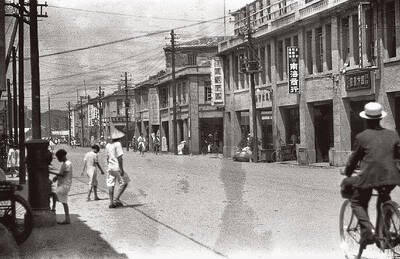
June 1 to June 7 "If all Taiwanese were as afraid of dying as you, then what would happen?” Physician Shih Chiang-nan (施江南) reportedly said this to his wife Chen Chiao-tung (陳焦桐) after she urged him to stop intervening on behalf of Taiwanese soldiers stranded overseas after serving in the Japanese Army during World War II. Shih had clashed with high-ranking officials over the issue, engaged in several heated arguments with Taiwan governor-general Chen Yi (陳儀) and allegedly shouted at general Ko Yuan-fen (柯遠芬), chief of staff of the Taiwan Garrison Command, over


 RSS
RSS