


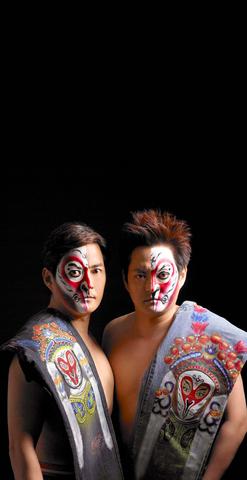
Twin brothers Li Chih-hsi (李志希) and Li Chih-chi (李志奇) are household names as actors with careers that span over two decades. Few people know they come from a renowned Peking opera family that provided China with a world-class artist, Li Wan-chun (李萬春), and left Taiwan a legacy in the form of esteemed maestros Li Tong-chun (李桐春) and Li Huan-chun (李環春), the twins' late father.
After his father died in 2004, Li Chih-chi, the youngest twin, embarked on a three-year journey across China, from Shanghai to Inner Mongolia, collecting antique Peking opera costumes, paraphernalia and contemporary designs. His endeavors are on display at the Taipei Costume Cultural Center (台北服飾文化館), which recently opened in Wanhua District (萬華區) with the aim of reinvigorating Taiwan's first wholesale garment district.
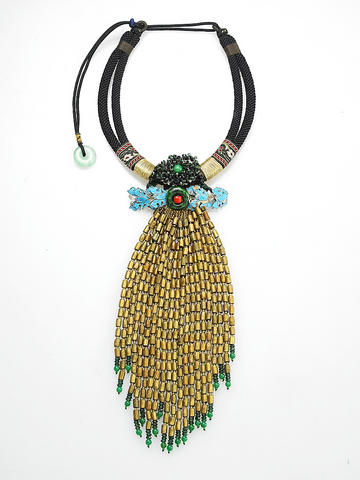
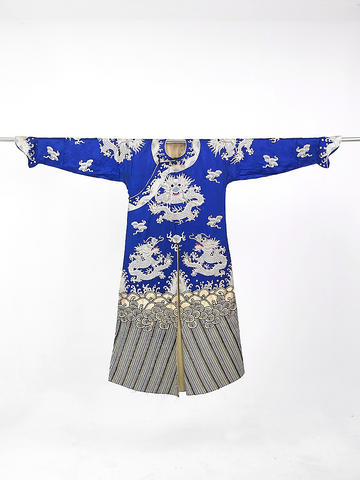
Several of the costumes date back to the 1930s and are examples of the dying art of hand embroidery that Canton, Hunan, Jiangsu and Sichuan provinces were famed for.
PHOTOS: COURTESY OF TAIPEI COSTUME CULTURAL CENTER
"Antique costumes are priceless since very few of them survived the Japanese invasion and Cultural Revolution," Li Chih-chi said.
Samples of cloth cut from costumes damaged beyond repair, called Mandarin squares, or buzi (補子), offer a rare chance to examine the costumes' detailed embroidery work. Buzi was the embroidered badge sewn onto the front and back of the imperial officials' surcoat depicting colorful animal or bird insignia that indicated the wearer's rank.
According to an unofficial history cited by Li Chih-chi, the origin of the animal and bird insignias worn by officials during the Qing Dynasty was an act of revenge by a Han imperial tailor.
"If you combine the civil officials' badge of a bird, Chinese character 禽, and the military officers' animal badge, Chinese character 獸, you get the word 禽獸 [which means bastard in Chinese]," said Li Chih-chi.
Equally valuable is Tien Tsui Tou Mien (點翠頭面), the exquisite head ornament made up of 51 pieces adorned with bluish kingfisher feathers and reserved for the role of women from aristocratic families.
"Each kingfisher has only 28 fine feathers that can be used to make the ornament and the feathers have to come from healthy, living birds so that they carry the desirable tune," explained Li Chih-chi, adding that the kingfisher is now a protected species.
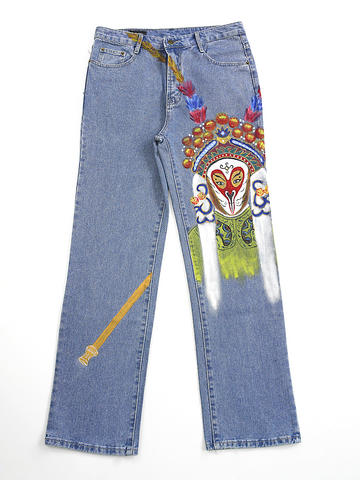
The collection of antique head ornaments is also the starting point for the second part of the exhibition, veteran actor Li Chih-chi's contemporary designs. The elder twin transformed the surviving curios collected from China into necklaces, earrings and other accessories.
This new cultural endeavor by the Li family is echoed through the exhibited series of jeans, T-shirts and glazed porcelain plates inspired by Peking opera face paintings and costumes.
Some designs are relatively rude compared to industry standards while others reflect the ingenious mind of the actor-turned-designer Li Chih-chi. The whole exhibition is part of wider efforts to safeguard the proud cultural tradition of Peking opera.
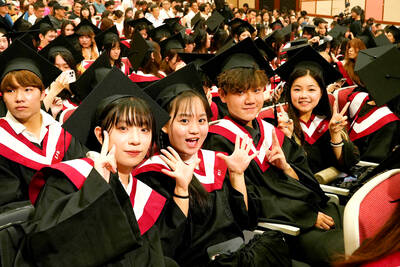
Taiwan’s English education system is being pulled apart by three opposing forces. Bilingual Nation 2030 pulls students toward English and global communication. Artificial Intelligence (AI) readiness pulls them toward digital judgment, verification and AI-mediated work. But Taiwan’s old exam culture pulls them back toward memorization, grammar drills, timed reading and correct answers. If the education system keeps using old exams to define success, it risks producing graduates who are neither genuinely bilingual nor genuinely AI-ready, but trained for tasks machines can already perform. The first force is Bilingual Nation 2030. Launched in 2018, the policy aimed to “help Taiwan’s workforce connect
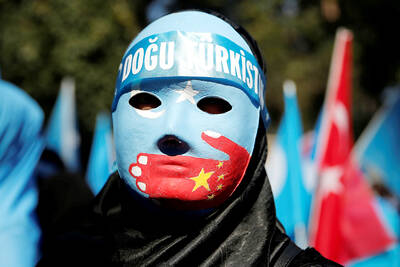
It seems every few days one bumps into one of those “real man” comments in which Taiwan is urged to “face reality” or similar, and “make a deal,” with the speaker implying that soon it will be too late. “Deal” advocates always present themselves as having a superior grip on reality, and the manly ability to make the “hard choice.” Their testosterone-laden language often echoes that of Taiwan sellout advocates. Note that such commentary always specifies a process (“make a deal, work with, make progress”), never the end state of what occupation by a violent authoritarian colonialist state will entail. In
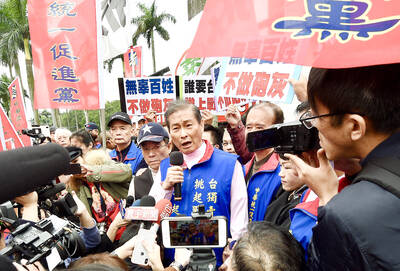
There are shadowy cabals plotting to sell out Taiwan to be annexed by China, by invasion if necessary. Fortunately, they are buffoons. In 2019, former Bamboo Union gangster and founder of the China Unification Promotion Party (CUPP), Chang An-le (張安樂, colorfully known as “White Wolf”), led a protest at the Legislative Yuan against comments made by then-premier Su Tseng-chang (蘇貞昌) that in the event of an attack by China, he would never surrender, but would protect the nation by fighting to the end, even if he only had a broom. Chang had party members bring a wooden casket that they
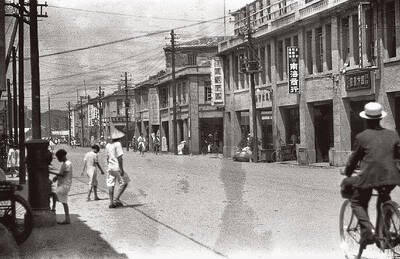
June 1 to June 7 "If all Taiwanese were as afraid of dying as you, then what would happen?” Physician Shih Chiang-nan (施江南) reportedly said this to his wife Chen Chiao-tung (陳焦桐) after she urged him to stop intervening on behalf of Taiwanese soldiers stranded overseas after serving in the Japanese Army during World War II. Shih had clashed with high-ranking officials over the issue, engaged in several heated arguments with Taiwan governor-general Chen Yi (陳儀) and allegedly shouted at general Ko Yuan-fen (柯遠芬), chief of staff of the Taiwan Garrison Command, over


 RSS
RSS