


Vera Wang is doing it. And Stella McCartney, Karl Lagerfeld and Proenza Schouler all did it while some in the rarefied fashion world gasped.
Now Libertine, Chip & Pepper and Roberto Cavalli are adding their names to the growing roster of high-end designers out to beat knockoff artists to the punch with budget lines for the fashion-starved masses.
"It's very exciting to think a million pieces of our product are going to be out across America," says LA-based designer Johnson Hartig, whose red-hot Libertine line recently became the seventh sought-after designer label in rotation as part of Target's Go International Flights of Fashion campaign.

PHOTOS: AGENCIES
Previous Go collaborators include red-carpet favorite Proenza Schouler, Sophia Albou of the French label Paul & Joe, and 40-year-old Patrick Robinson, recently named head of design at Gap.
Still, the high-low partnership is a challenge for both sides.
"For a designer working at a company like (Target), the central issue is the fact we're quality over quantity, and they're quantity over quality," says Lazaro Hernandez, half of the Parsons-trained design duo Proenza Schouler.
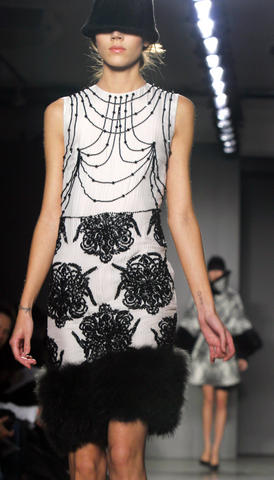
But success is practically guaranteed. Actress Maggie Gyllenhaal wore a stunning, navy blue Proenza Schouler gown to the Academy Awards this year. And awards-season buzz helped the pair create a buying frenzy with the affordable swing coats, bustier tops and pencil skirts in their spring/summer Target line.
The Libertine look? Punk meets preppy with skull and diamond-argyle sweater vests, silk bow-front blouses, bucket hats embroidered with whales, striped shirtdresses and bat-printed Bermuda shorts frayed at the seams.
Consider these pieces just a sampling of the cheap chic Hartig and New York-based Cindy Greene have dreamed up for their limited-edition Target line, priced from US$12.99 to US$39.99 - small change compared to the core brand's creations.
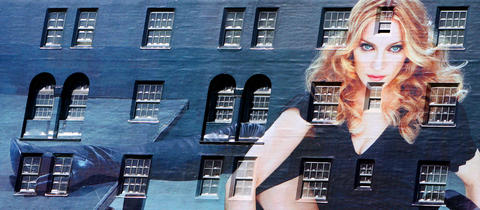
Libertine's deconstructed, reconstructed and then silk-screened vintage tees fetched US$375 when they first started flying off the racks at Fred Segal in 2001. A year later they were selling for US$500.
With their exposed stitching, rough edges and Victorian graphics, the label's shirts and other one-of-a-kind creations became an instant favorite among celebrities like Mick Jagger, Brad Pitt and Gwyneth Paltrow.
Even the German fashion guru Karl Lagerfeld is a fan.
Last year, Hartig told the Independent of London that one night while he and Greene were having dinner in a restaurant, "Karl and his posse of six or seven people walked in, and six of them were wearing Libertine. Our jaws fell to the table."
Lagerfeld preceded Libertine in the high-low design world when in 2004 he launched a capsule collection for the Swedish retailer H&M. He was followed by Stella McCartney and Viktor and Rolf.
Come Nov. 8, H&M will launch a Roberto Cavalli collection that the Italian fashion icon promises "will add a dash of festivity and dreams" to fall wardrobes.
According to H&M spokeswoman Lisa Sanberg, the designer collaborations have been well-received and sell out quickly, "exceeding our expectations with long lines and excited crowds.
"We always strive to be able to surprise our customers with something new and unique in our stores," she says. "It's also a great way for our customers to experience high fashion, design and quality, and introduce them to designers and fashions that may have previously been out of reach."
Take McCartney.
"So many people come up to me and say, 'I love your designs but could never afford them,' McCartney told H&M. "This collaboration is a great way to speak to a wider audience and let them get to know me and my designs better."
Vera Wang's Simply Vera line is scheduled to hit Kohl's stores in September, featuring clothes, lingerie, bedding, shoes, handbags, jewelry, sleepwear and sunglasses.
JC Penney shoppers already know Nicole Miller, and now they're going to get acquainted with identical-twin designers Chip and Pepper Foster, whose new C7P line of affordable Chip & Pepper denim and sportswear will debut at the mass-market retail chain this back-to-school season.
Inspired by the California surf lifestyle, the C7P line includes vintage jeans, Bermuda shorts, beach-printed tees and hoodies all priced from US$14.99 to US$34.99.
"At Chip & Pepper, we have always maintained that there should be an affordable alternative to the premium fashion market that allows young fashionistas and budding style kings to wear the clothes they want at a price they can afford," the Foster brothers have said.
They insist the C7P line maintains the same look as the US$200-plus straight-leg jeans, US$77 tank tops and US$126 hoodies in the premium Chip & Pepper line.
For Libertine's Hartig and Greene, designing clothes for Target customers is a chance for the bicoastal partners to stretch their creative muscle.
"We could do anything we wanted because we couldn't replicate these one-of-a-kind pieces," Hartig says. "So our initial design meeting entailed Cindy and I bringing in a bunch of vintage things we had collected over the years, taking elements from this and that and combining them to come up with a concept and a theme."
The shorts, for example, were inspired by a pair of 50s swimtrunks with a buckle on the front, which brings Hartig to Libertine's next venture.
"We're going to do a men's line next," he says. "But Target doesn't know that yet."

Taiwan’s English education system is being pulled apart by three opposing forces. Bilingual Nation 2030 pulls students toward English and global communication. Artificial Intelligence (AI) readiness pulls them toward digital judgment, verification and AI-mediated work. But Taiwan’s old exam culture pulls them back toward memorization, grammar drills, timed reading and correct answers. If the education system keeps using old exams to define success, it risks producing graduates who are neither genuinely bilingual nor genuinely AI-ready, but trained for tasks machines can already perform. The first force is Bilingual Nation 2030. Launched in 2018, the policy aimed to “help Taiwan’s workforce connect
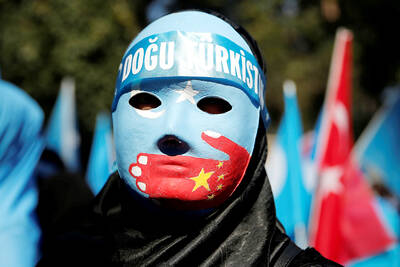
It seems every few days one bumps into one of those “real man” comments in which Taiwan is urged to “face reality” or similar, and “make a deal,” with the speaker implying that soon it will be too late. “Deal” advocates always present themselves as having a superior grip on reality, and the manly ability to make the “hard choice.” Their testosterone-laden language often echoes that of Taiwan sellout advocates. Note that such commentary always specifies a process (“make a deal, work with, make progress”), never the end state of what occupation by a violent authoritarian colonialist state will entail. In

“Taiwan’s Opposition Leader Comes to US With a Message Straight Out of Beijing” read a May 31 headline in the Wall Street Journal. Top US administration officials and members of Congress almost certainly read the WSJ, and if there was a bullet point takeaway that people in Washington should absorb ahead of Chinese Nationalist Party (KMT) Chair Cheng Li-wun’s (鄭麗文) arrival in DC on June 9, that headline is it. The last few columns have discussed this very topic, and the timing is not coincidental. While those top officials likely do not read the Taipei Times, judging by the number

As someone who normally steers clear of books with “transcendence” or “metaphysics” in their subtitles, this reviewer — a casual observer of local belief systems since the 1990s — found Fabian Graham’s Money God Temples in Taiwan a challenging read. Those who’ve only dipped their toes into temple culture will likely need to parse several sections with special care if they’re to keep up with the author, a British ethnographic researcher whose previous books have investigated religious practices among ethnic Chinese in Southeast Asia. This scholarly volume examines a facet of Taiwan’s religious landscape that didn’t exist a century ago, and


 RSS
RSS