


Since its formation almost 15 years ago, Kaohsiung rock band Elephant Gym (大象體操) has shattered every assumption about contemporary popular music, and their story is now on screen in a documentary titled More Real Than Dreams.
It’s an unlikely success story that says a lot about young people in Taiwan — and beyond.
For a start, their sound is analog. In the film, guitarist Tell Chang (張凱翔) proudly says: “There is no AI in our sound.”
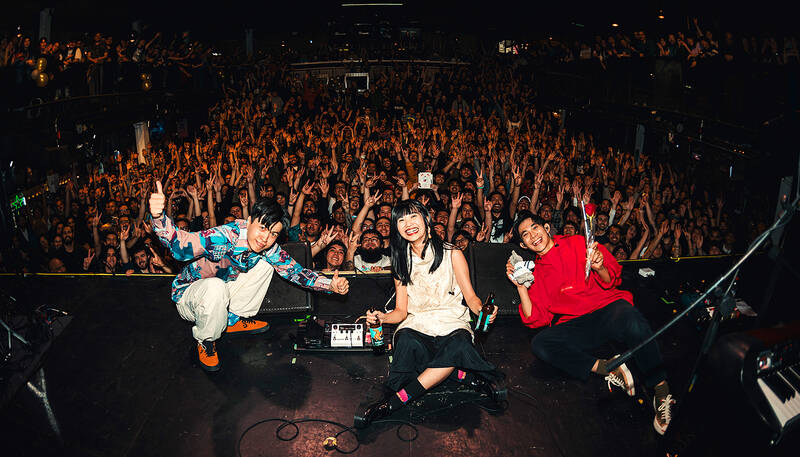
Photo courtesy of Elephant Gym
His sister, bass player KT Chang (張凱婷) is the true frontwoman — less for her singing abilities than for her thunderous sound on the instrument. Fast like The Who’s John Entwistle and agile like a jazz heroine, she is no binary boombox.
Their friend, drummer Tu Chia-Chin (涂嘉欽), sounds closer to what one might hear from jazz-fusion bands like Weather Report or Return to Forever in the 1970s than to the basic beats of saccharine pop.
Elephant Gym is classified as math rock, a mostly instrumental genre. In the film, it is defined as “complicated music that sounds simple,” with Tu explaining that it relies on strange time signatures, driven mostly by muscle memory and unconstrained by lyrics. Later, we hear KT Chang describing it as “thinking not in words.”
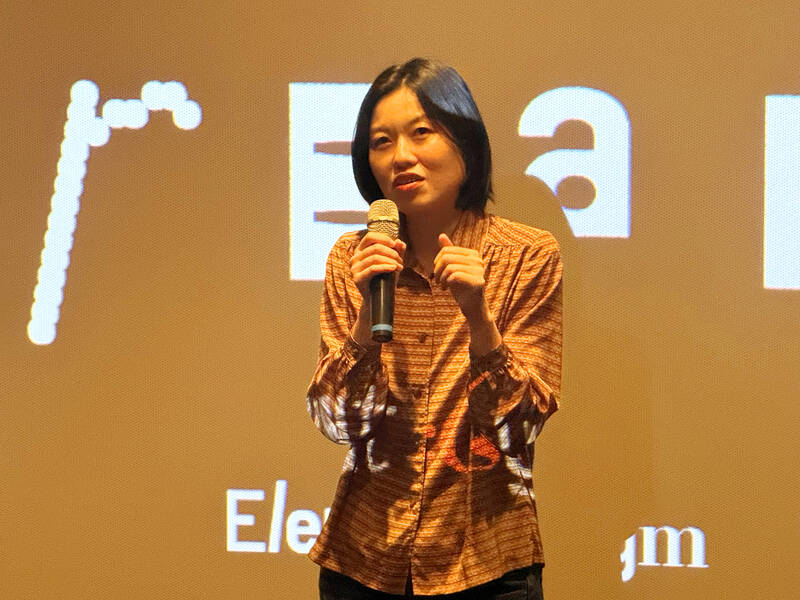
Photo: Julien Oeuillet
Ironically, despite its brainy allure, math rock is less cerebral than it is organic.
And this strange music has achieved global success. Elephant Gym has just returned from a world tour that took them across Asia, Europe and the Americas — all of it documented in the film.
But there is more.
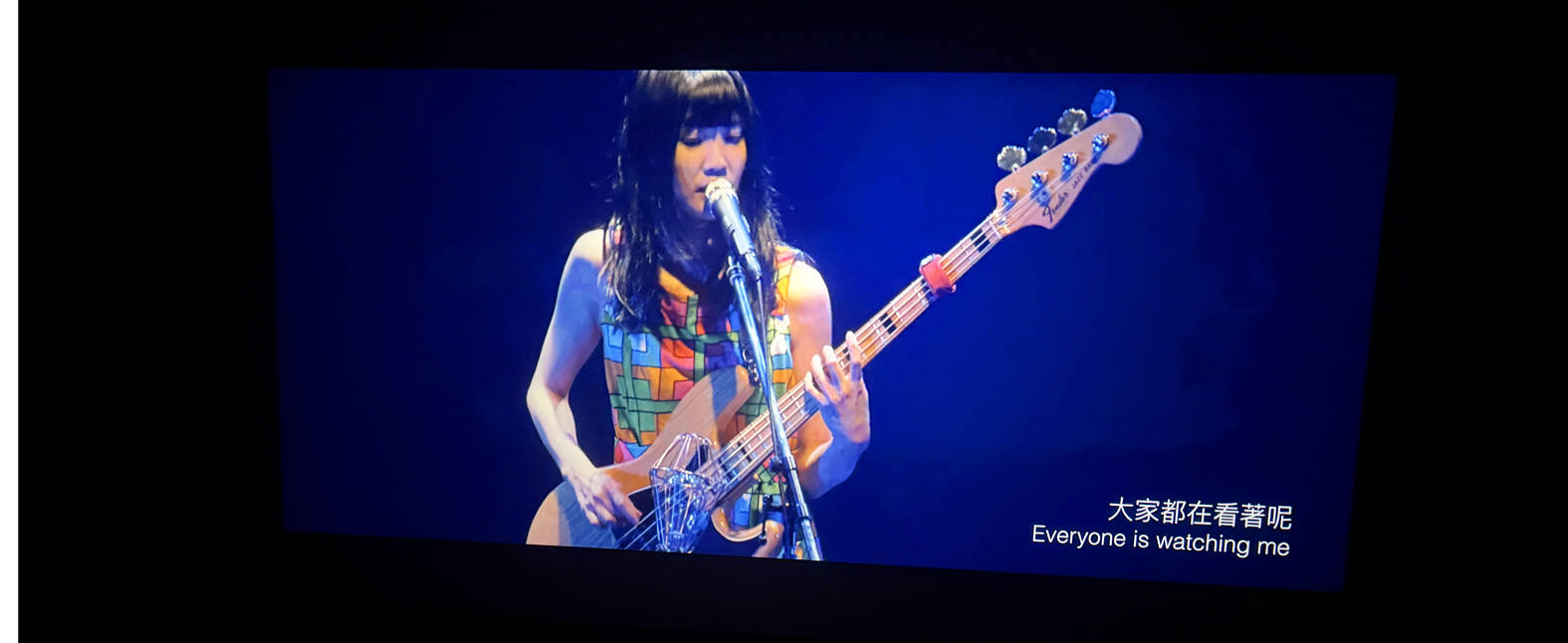
Photo: Julien Oeuillet
Its director, Alulu Kuo (郭晉汝), tells the Taipei Times: “This film is actually about relationships.” Indeed it is. Beyond concert footage, the audience is offered an intimate, fly-on-the-wall view of the dynamics between two siblings and their friend as they try to bring a Taiwanese band — and its demanding music — to a global audience.
“They are like a triangle,” Kuo says. “Very different, even contradictory personalities that balance each other.”
In the film, a Japanese promoter remarks: “Chia-Chin is the bones, KT is the heart and Tell is the brain.”
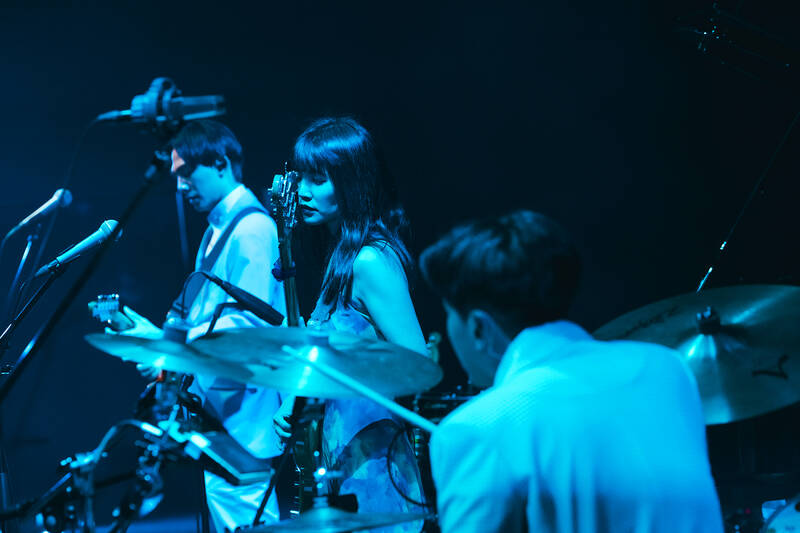
Photo courtesy of Elephant Gym
“I loved seeing how all three of them completed their individual journeys,” Kuo says. “It’s not over, but I witnessed how they matured. When I see how serious they are about communication, that’s a lesson. It’s not just about music — it’s also about how you work with people you love.”
Guitarist Tell Chang adds: “We tried to make sure it wasn’t like propaganda for the band. We wanted it to be touching.”
The film shows how KT Chang’s scooter accident brought them closer together, and how their musical career challenged their sibling bond — all conveyed with a surprising, innocent candor that is unusual for a rock band.
“I asked the other two how much they were willing to reveal in the film,” Tell Chang says. “How much emotion, and whether they wanted to remove footage that felt too intimate. In the end, we agreed that whatever served the story should stay in.”
The result feels like the opposite of This Is Spinal Tap, the mockumentary that lampooned rock-star egos and conflicts. Elephant Gym instead displays a remarkably mature ability to resolve conflict and move forward together.
Throughout the film, we laugh with them, not at them, and marvel at how their unusual sound inspires enthusiasm among fans worldwide.
“South America was the best human experience,” Tell Chang says. “I knew almost nothing about it. But there were so many fans — they were so kind, they sang our songs. We sold nearly 200,000 tickets in South America. It was very touching.”
And this global phenomenon emerged from Kaohsiung, of all places.
“They put Kaohsiung on the map,” says Eugene Wu (吳宗翰), a long-time friend who helped promote the city’s early indie rock scene 20 years ago. “They provided a blueprint for like-minded local musicians — how to build a sustainable career, work hard, and stay true to yourself.”
In the film, the mother of KT and Tell Chang recalls telling them early on that there would be no audience for such music — to which KT replied that they would simply create one.
The band also praises Kaohsiung for giving them a solid base from which to build their career.
“Kaohsiung has changed so much over the years,” Kuo tells the Taipei Times. “The city is blooming now, and I think they are part of that. They show what you can do here — how you can start here, go out into the world and influence it.”
“We’ve already screened the film in Japan and Taiwan,” Tell Chang says. “Next is the Philippines. Then we’ll go to the US and Europe.”
Young audiences around the world have embraced a Kaohsiung trio unafraid of making the strange music they love, working relentlessly toward their dream, placing empathetic communication at the centre of their work and showing vulnerability to inspire others.
The film opens with Tell Chang on stage in Boston telling the audience where they are from: “Taiwan — between Japan and the Philippines. A country that believes in democracy, equality and love, the first in Asia to legalize same-sex marriage. But we never take peace for granted, and I’m glad I’m holding a guitar and not a rifle.”
In the end, guitars proved mightier than rifles.

Ajay Verma, a consultant gastroenterologist at Kettering general hospital in Northamptonshire, says our gut is a “complex machine.” “It is constantly providing us with the nutrition we need, initially to grow and develop, and then for us to survive, thrive and repair from injury and illness.” How can we keep it functioning well? Put simply: “Make sure what you put into it is balanced, and that you clear out its waste products adequately,” Verma says. “In a general gastroenterology clinic, the most common conditions we see are irritable bowel syndrome (IBS), gastroesophageal reflux disease, inflammatory bowel disease and constipation,” says Nisha
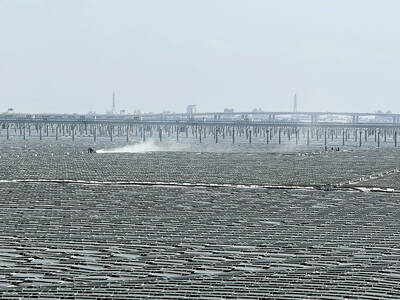
The arithmetic is straightforward and uncomfortable. By the end of 2025, Taiwan had committed itself to a 50-30-20 electricity mix — half natural gas, 30 per cent coal, 20 per cent renewables. The Ministry of Economic Affairs’s (MOEA) own monthly energy reports tell a different story. Natural gas reached 47.8 per cent of generation last year. Coal stood at 35.4 per cent, comfortably above its target ceiling. Renewables came in at 13.1 per cent, well short of the 20 per cent Taipei had pledged a decade earlier. Installed renewable capacity reached roughly half of the 12 gigawatts (GW) the government
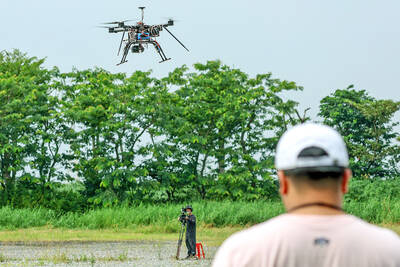
Taiwan’s drone exports are taking off, fuelled by the war in Ukraine, as Taiwanese companies seek a stake in the fast-growing global market for unmanned aerial vehicles (UAV). Low-cost drones used for reconnaissance and strikes are in high demand as governments around the world boost defense spending in the face of intensifying conflicts. A relative new player in the increasingly competitive industry, Taiwan’s pitch is to be an “Asian hub” for the production of UAVs and components free of Chinese materials, or “non-red.” That means its UAVs can be up to three times more expensive than their Chinese competitors, like the world’s biggest

There are shadowy cabals plotting to sell out Taiwan to be annexed by China, by invasion if necessary. Fortunately, they are buffoons. In 2019, former Bamboo Union gangster and founder of the China Unification Promotion Party (CUPP), Chang An-le (張安樂, colorfully known as “White Wolf”), led a protest at the Legislative Yuan against comments made by then-premier Su Tseng-chang (蘇貞昌) that in the event of an attack by China, he would never surrender, but would protect the nation by fighting to the end, even if he only had a broom. Chang had party members bring a wooden casket that they


 RSS
RSS