


Get ready to "Scream." Or should we say "squeal"?
The Spring Scream Double Pig 2007 (春天吶喊豬豬年) music festival, which starts this Thursday, attracts musicians and fans from around the world to the Kenting area for three days of sun, fun and rock 'n' roll. Taiwan has no shortage of outdoor music festivals, but for purists this is the most eagerly anticipated.
Spring Scream is always a party, even though Taiwan's music industry has had little to sing about in recent years. In 2006, overall album sales volumes were down 34 percent year on year, and industry employment has fallen 30 percent since 1999, according to the International Federation of the Phonographic Industry.

PHOTOS: TAIPEI TIMES AND COURTESY OF SPRING SCREAM
But Spring Scream has been going strong. As many as 230 bands, including some 40 groups from overseas, have signed up to participate in this year's event. Organizers are expecting daily attendance figures of 5,000 or more.
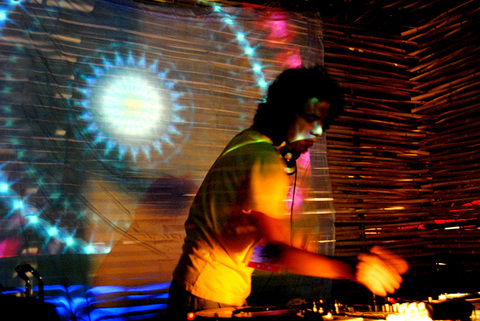
Drawing on Spring Scream's cache but run by a variety of different and non-related organizers is a slew of electronic dance music and hip-hop parties running simultaneously in the Kenting area. For coverage of these events, see today's article on the hip-hop oriented Spring Wave events and a rundown of the electronic dance music parties in the Vinyl Word on page 15.
Although the latter events are not connected with Spring Scream, Chinese-language media tend to lump them together. The distinction is important, however, as in recent years the dance parties have attracted heavy police attention and raids netting arrests of drug users and dealers, while Spring Scream has remained free of such trouble.
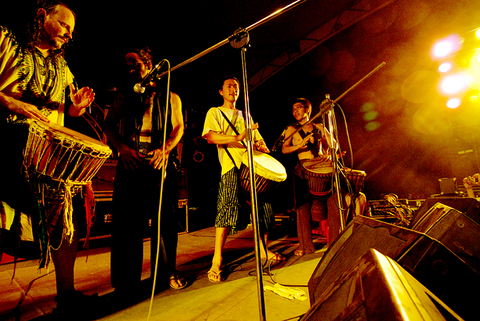
Some estimates say the total migration to what is collectively known as Kenting Spring Weekend could be as high as 100,000 or even 200,000 people.
It's the same, but different
This year Spring Scream has undertaken a major expansion, leaving its longstanding base at Liufu Ranch (六福山莊) and moving to two separate locations more than 20km apart, at Kentington (小墾丁) in Manjchou Township (滿州鄉) and Erluanpi National Park (鵝鑾鼻公園). (For useful information, including band bios and links to their music, log on at www.springscream.com).
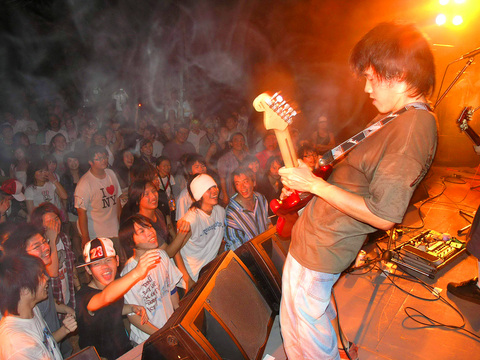
The new format looks complicated, but it isn't. Think of Spring Scream Double Pig as two separate events with two different crowds: Manchou is where most of the bands — especially the expat and foreign groups — will play, while more established Taiwanese acts like the Brit-pop oriented 1976 and indie songstress Deserts Chang (張懸) have been booked for Erluanpi. A few bands, notably Austin, Texas-based World Music ensemble Atash, will play both venues.
"We're experimenting with bigger Taiwanese acts over [in Erluanpi] to get the crowd off the Kenting streets," said Spring Scream cofounder Wade Davis. "Manchou is where you go to see your local [Taiwanese] indie group." It's also where the Japanese bands will be playing, as well as foreign indie acts like California hipster muses Mates of State and instrumental space dance quartet The Octopus Project out of Austin, Texas.
In other words, if you liked the old Spring Scream — or at least the way things have been developing over the past few years — you will go to the Manchou venue and probably not leave. There, you will find six stages for live music, food vendors, campsites and cabins for rent. But make reservations now, as spots for cabins and campsites are limited and filling up fast. (See the fact box on Page 14 for more information.)
For those who decide to check out Erluanpi's more pop-oriented scene and its three stages, Spring Scream is running shuttle buses there from Kenting and the Manchou venue. There are also shuttle buses connecting the Manchou venue to Hengchun (恆春).
The shuttle buses will run from noon until midnight. Exact schedules had not been finalized as of press time.
In an interview Monday evening, Spring Scream co-organizer Jimi Moe urged festival-goers to rent cabins at the Manchou venue. He said the rooms are of resort quality and rates are comparable to or better than hotel rooms in Kenting, which is more than 20km away from the Manchou venue. The international bands and many local bands will be staying in the cabins, and musicians will be allowed to play unamplified music there after midnight. Those staying in cabins are also encouraged to set up stalls outside their rooms.
The buzz is here
Started in 1995 by longstanding Taiwan residents Jimi Moe and Wade Davis when Taiwan's alternative music scene was in its infancy, Spring Scream is Taiwan's most important indie music showcase.
Among the acts who got their start here are insult rapper MC Hot Dog and Taiwan's most successful "indie" band May Day (五月天), whose first album sold more than 1 million copies and whose new release Born to Love (為愛而生) was third on last week's national Mandarin album charts.
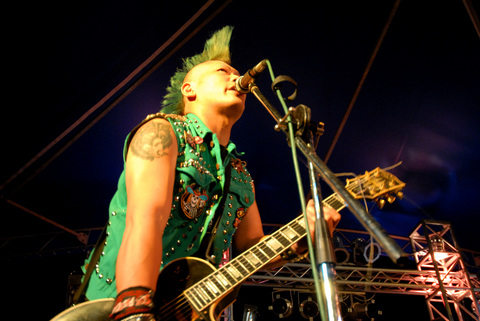
Many teenagers and college students save money all year just to make the trek, and each year new groups form and practice specifically so that they can play here.
"They get up on the stage and they're fulfilling their childhood dreams," said 1976 drummer Lin Yu-lin (林雨霖).

Taiwan’s English education system is being pulled apart by three opposing forces. Bilingual Nation 2030 pulls students toward English and global communication. Artificial Intelligence (AI) readiness pulls them toward digital judgment, verification and AI-mediated work. But Taiwan’s old exam culture pulls them back toward memorization, grammar drills, timed reading and correct answers. If the education system keeps using old exams to define success, it risks producing graduates who are neither genuinely bilingual nor genuinely AI-ready, but trained for tasks machines can already perform. The first force is Bilingual Nation 2030. Launched in 2018, the policy aimed to “help Taiwan’s workforce connect
It seems every few days one bumps into one of those “real man” comments in which Taiwan is urged to “face reality” or similar, and “make a deal,” with the speaker implying that soon it will be too late. “Deal” advocates always present themselves as having a superior grip on reality, and the manly ability to make the “hard choice.” Their testosterone-laden language often echoes that of Taiwan sellout advocates. Note that such commentary always specifies a process (“make a deal, work with, make progress”), never the end state of what occupation by a violent authoritarian colonialist state will entail. In
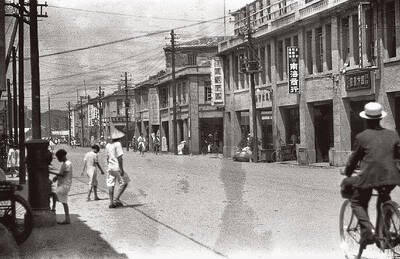
June 1 to June 7 "If all Taiwanese were as afraid of dying as you, then what would happen?” Physician Shih Chiang-nan (施江南) reportedly said this to his wife Chen Chiao-tung (陳焦桐) after she urged him to stop intervening on behalf of Taiwanese soldiers stranded overseas after serving in the Japanese Army during World War II. Shih had clashed with high-ranking officials over the issue, engaged in several heated arguments with Taiwan governor-general Chen Yi (陳儀) and allegedly shouted at general Ko Yuan-fen (柯遠芬), chief of staff of the Taiwan Garrison Command, over

“Taiwan’s Opposition Leader Comes to US With a Message Straight Out of Beijing” read a May 31 headline in the Wall Street Journal. Top US administration officials and members of Congress almost certainly read the WSJ, and if there was a bullet point takeaway that people in Washington should absorb ahead of Chinese Nationalist Party (KMT) Chair Cheng Li-wun’s (鄭麗文) arrival in DC on June 9, that headline is it. The last few columns have discussed this very topic, and the timing is not coincidental. While those top officials likely do not read the Taipei Times, judging by the number


 RSS
RSS