


Spring Scream Information
* Venues: Kentington (小墾丁) in Manchou Township (滿州鄉) and Erluanpi National Park (鵝鑾鼻公園)
* Time: April 5 to April 7, with performances running approximately from noon to midnight each day
* Web site: www.springscream.com
* Tickets: Through tomorrow, a limited number of advance three-day passes will be available at NT$1,400, as well as advance one-day passes, which are good for one entry to one venue only, at NT$650. Thereafter, advance one-day passes good for one venue will cost NT$700, while three-day passes for both venues will cost NT$1,500. You can also purchase tickets at the gate for the same prices. Advance tickets are available through Hi-Life (萊爾富) convenience stores and online for those with credit cards through www.kitravel.com.tw. Go to www.springscream.com and click on the tab marked "tickets" at the top of the page for information regarding tickets and a quick link to the ticket vendor. For questions regarding tickets, call (02) 2930-6354, between 10am and 6pm.
* Transportation: Buses from Taipei will run directly to Hengchun (where you can get on buses heading to Kenting hotels) and continue to the Spring Scream main gate (at the Manchou venue). Buses to Spring Scream depart from The Wall, at B1, 200 Roosevelt Rd Sec 4, Taipei (台北市羅斯福路四段200號B1). Boarding times are 12:30am and 5am on Thursday, April 5, and 6am on Friday, April 6. Buses returning from Spring Scream to The Wall board at the Spring Scream main gate Sunday, April 7, at 1:30am, 11am and 2pm, departing 30 minutes thereafter and picking up passengers approximately 15 minutes later in Hengchun. One-way tickets cost NT$1,000 for fans and NT$800 for bands. Round trip tickets cost NT$1,800 for fans and NT$1,400 for bands. According to the travel agent, only a few bus seats are left, although one more bus may be added to the schedule. To purchase tickets click the link marked "巴士BUS" on the Spring Scream Web site or call KI Travel at (02) 8661-7797 for more information.
Other buses and air travel:
Bus companies and airlines offer daily services to Kaohsiung. Airlines fly to Hengchun a few days each week. The Taiwan High Speed Rail Co and the Taiwan Railway Administration both offer services to Kaohsiung. Booking early is necessary as Spring Scream coincides with the long weekend created by the Tomb Sweeping Day holiday. Those arriving in Kaohsiung can catch local buses to Hengchun, then take Spring Scream shuttle buses to the venues (see below).
* On-site transportation: Spring Scream is running three shuttle buses: 1) between Kenting and Erluanpi; 2) between Erluanpi and Manchou; 3) between Manchou and Hengchun. One-day shuttle passes cost NT$100 and around 900 tickets will be available each day. The shuttles stop at the Howard Plaza Hotel Kenting, Erluanpi National Park parking lot, near the front gate of the Manchou venue and at the Hengchun bus station.
* Other transportation: There will be limited, single-entry, first-come-first served car parking at the Manchou venue, as well as limited scooter parking. People will also park on the street outside the venues.
* Official accommodations: Organizers strongly recommend reserving a cabin or covered camping space at the Manchou Spring Scream site. Spaces are limited and going fast. Cabins are available for the duration of the festival for NT$15,999 (4 people, 2 double beds), NT$18,999 (6 people, 3 double beds) and NT$23,999 (8 people, 4 double beds). Covered camping spaces are NT$1,000. To reserve a cabin or camping space, call 0989-607-962 or 0989-625-202, between noon and 8pm.
* Other accommodations: A limited number of camping spaces will be available on a first-come, first-served basis at Erluanpi National Park. Numerous hotels are available in the Kenting and Hengchun areas, but booking early is highly recommended as most reasonably priced rooms are already full.
* Other activities: There will be an air guitar contest and exhibit on the history of Spring Scream. As was the case last year, Spring Scream will no longer have a half pipe for skateboarding. Recommended beaches in the area include South Bay (南灣), Hsiao Wan (小灣) and Jialeshui (佳樂水).

Taiwan’s English education system is being pulled apart by three opposing forces. Bilingual Nation 2030 pulls students toward English and global communication. Artificial Intelligence (AI) readiness pulls them toward digital judgment, verification and AI-mediated work. But Taiwan’s old exam culture pulls them back toward memorization, grammar drills, timed reading and correct answers. If the education system keeps using old exams to define success, it risks producing graduates who are neither genuinely bilingual nor genuinely AI-ready, but trained for tasks machines can already perform. The first force is Bilingual Nation 2030. Launched in 2018, the policy aimed to “help Taiwan’s workforce connect

It seems every few days one bumps into one of those “real man” comments in which Taiwan is urged to “face reality” or similar, and “make a deal,” with the speaker implying that soon it will be too late. “Deal” advocates always present themselves as having a superior grip on reality, and the manly ability to make the “hard choice.” Their testosterone-laden language often echoes that of Taiwan sellout advocates. Note that such commentary always specifies a process (“make a deal, work with, make progress”), never the end state of what occupation by a violent authoritarian colonialist state will entail. In
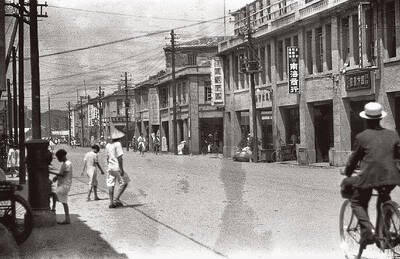
June 1 to June 7 "If all Taiwanese were as afraid of dying as you, then what would happen?” Physician Shih Chiang-nan (施江南) reportedly said this to his wife Chen Chiao-tung (陳焦桐) after she urged him to stop intervening on behalf of Taiwanese soldiers stranded overseas after serving in the Japanese Army during World War II. Shih had clashed with high-ranking officials over the issue, engaged in several heated arguments with Taiwan governor-general Chen Yi (陳儀) and allegedly shouted at general Ko Yuan-fen (柯遠芬), chief of staff of the Taiwan Garrison Command, over

“Taiwan’s Opposition Leader Comes to US With a Message Straight Out of Beijing” read a May 31 headline in the Wall Street Journal. Top US administration officials and members of Congress almost certainly read the WSJ, and if there was a bullet point takeaway that people in Washington should absorb ahead of Chinese Nationalist Party (KMT) Chair Cheng Li-wun’s (鄭麗文) arrival in DC on June 9, that headline is it. The last few columns have discussed this very topic, and the timing is not coincidental. While those top officials likely do not read the Taipei Times, judging by the number


 RSS
RSS