


Three of Li Shih-chiao's (李石樵) paintings adorn the walls of the Presidential Office, which is a testament to the respect he earned in his lifetime. To celebrate the one-hundredth anniversary of the artist's birth, the Taipei Fine Arts Museum (TFAM) will hold a retrospective of his work beginning Feb. 16.
The curators at TFAM arranged the exhibit to chart Li's development as an artist, bringing together paintings that span his long career and provide a context to show the influence he had on later generations of artists.
"You have to be determined, and willing to bear hardship," Li once remarked. "My whole life, I've seriously pursued one thing: how to paint my paintings well."
PHOTOS COURTESY OF TFAM
The exhibit, which reveals Li's interest in Western and Eastern artistic styles, is arranged chronologically in three sections titled refinement, metamorphosis and light.
Early in his career, Li studied under the Japanese masters Ishikawa Kinichiro and Yoshimura Yoshimatsu, painting the people and scenery of Taiwan with sparse brush strokes and solid, brilliant colors.
The first section includes paintings from the late 1920s and early 1930s, when Li was refining his style at the prestigious Tokyo School of Art. During this period he adhered to a form of realism and French Impressionism that found expression in portraits and landscapes from Taiwan, though a number of his works have Japanese subjects.
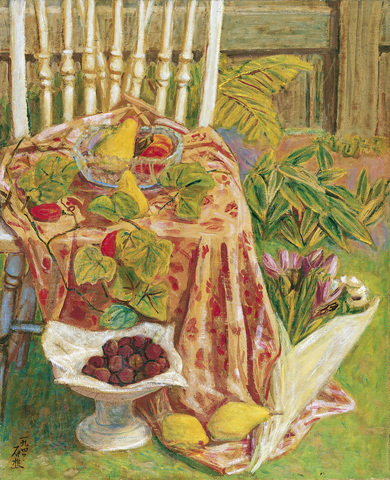
The painting Still Life, exemplifies Li's mastery of line and form, with firm brushwork and radiant colors.
At the end of World War II, earlier artistic styles went out of fashion as an influx of traditional Chinese ink painters arrived when Chiang Kai-shek (蔣介石) and the Chinese Nationalist Party forces fled China. Unperturbed by the political atmosphere, Li explored and experimented with styles from the West, discarding the realist movement of his earlier years and immersing himself in Cubism, Expressionism, Surrealism and Symbolism.
Li's adoption of these artistic styles fueled his creation of a novel series of paintings. Still Life Flowers, painted in 1961, is rich in symbolism and far removed from earlier works, which emphasized realism.
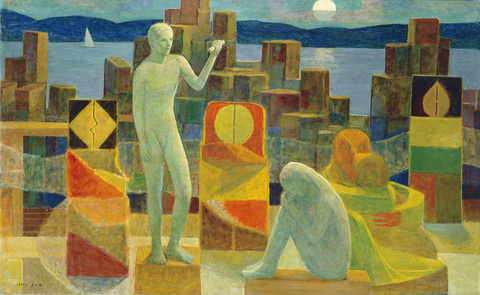
The third and final period of Li's output, from the early 1970s until he put the brush down twenty years later, is marked by a preoccupation with light, exemplified by his Three Graces.
It is also during this period that Li threw in his lot with a younger generation of painters who, due to the growing affluence of Taiwanese society and the consequent access to other parts of the world, focused on using art to represent the expression of ideas.
As part of the exhibition, TFAM is including related manuscripts and documents from each period to provide a context to Li's works.
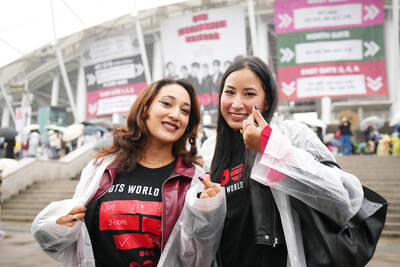
As mega K-pop group BTS returns to the stage after a hiatus of more than three years, one major market is conspicuously missing from its 12-month world tour: China. The omission of one of the group’s biggest fan bases comes as no surprise. In fact, just the opposite would have been huge news. China has blocked most South Korean entertainment since 2016 under an unofficial ban that also restricts movies and the country’s popular TV dramas. For some Chinese, that means flying to Seoul to see their favorite groups perform — as many were expected to do for three shows opening
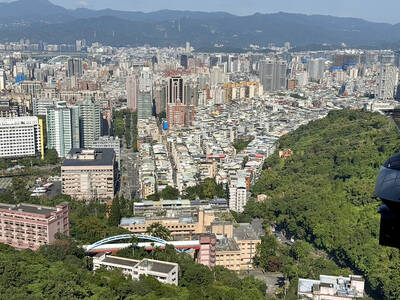
A recent report from the Environmental Management Administration of the Ministry of Environment highlights a perennial problem: illegal dumping of construction waste. In Taoyuan’s Yangmei District (楊梅) and Hsinchu’s Longtan District (龍潭) criminals leased 10,000 square meters of farmland, saying they were going to engage in horticulture. They then accepted between 40,000 and 50,000 cubic meters of construction waste from sites in northern Taiwan, charging less than the going rate for disposal, and dumped the waste concrete, tile, metal and glass onto the leased land. Taoyuan District prosecutors charged 33 individuals from seven companies with numerous violations of the law. This
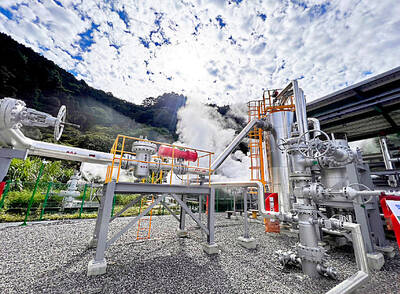
Taiwan’s semiconductor industry consumes electricity at rates that would strain most national grids. Taiwan Semiconductor Manufacturing Co (TSMC) alone accounted for more than 9 percent, or 2,590 megawatts (MW), of the nation’s power demand last year. The factories that produce chips for the world’s phones and servers run around the clock. They cannot tolerate blackouts. Yet Taiwan imports 97 percent of its energy, with liquefied natural gas reserves measured in days. Underground, Taiwan has options. Studies from National Taiwan University estimate recoverable geothermal resources at more than 33,000 MW. Current installed capacity stands below 10 MW. OBSTACLES Despite Taiwan’s significant geothermal potential, the
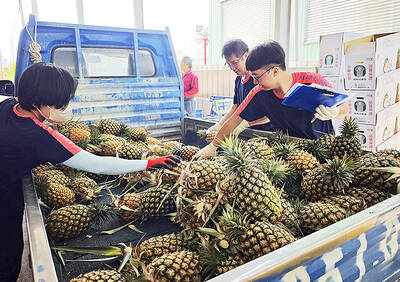
Chinese Nationalist Party (KMT) Chair Cheng Li-wun (鄭麗文) returned from her trip to meet People’s Republic of China (PRC) dictator Xi Jinping (習近平) bearing “a gift” for the people of Taiwan: 10 measures the PRC proposed to “facilitate the peaceful development of cross-strait relations.” “China on Sunday unveiled 10 new incentive measures for Taiwan,” wrote Reuters, wrongly. The PRC’s longstanding habit with Taiwan relations is to repackage already extant or once-existing policies and declare that they are “new.” The list forwarded by Cheng reflects that practice. NEW MEASURES? Note the first item: establishing regular communication mechanisms between the Chinese Communist Party


 RSS
RSS