


Pandas don't come in peace.
That was the message dark metal frontman Freddy Lim (
In April, Taiwan rejected China's "goodwill" offer of two giant pandas, calling the proposal a propaganda ploy. Lim, who also organizes the Say Yes to Taiwan music festival, is a strong advocate of an independent Taiwanese national identity.

PHOTOS: CHEN YI-CHUAN AND HUANG PO-JUNG, TAIPEI TIMES
Lim normally bellows demonic lyrics about ghosts and Taiwanese legends with his band Chthonic (
"Do you know what this means?" asked Lim, who was decked out in full dark metal regalia, with white face paint, a black mesh shirt, and an upside-down cross dangling from a chain around his neck.
Lim told his audience that a graffiti artist had painted an image of a panda along with the words "I come in peace," near the entrance to the Wall, a rock venue he owns on Roosevelt Road in Taipei. Lim said he crossed out the message and wrote "I'm a creep" next to the image.

The purpose of this song "is to tell you that pandas don't belong here," he said.
"Freddy believes Taiwan is a separate nation and he feels that China's offer to send pandas is a disingenuous goodwill gesture," TRA spokeswoman Molly Chen (陳惠婷) said in a phone interview yesterday.
Last week, the China Times reported that Lim had signed an Internet petition calling on President Chen Shui-bian (陳水扁) to resign because of corruption allegations that have dogged close advisers and family members. The document reportedly was also "signed" by Chen's mother and US President George W. Bush. Lim stated in interviews with the media before and after the article was published that he did not sign the petition.
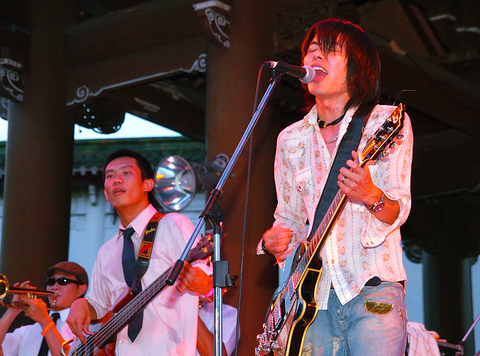
Plenty of people were on hand to hear his message on Saturday. Organizers sold more than 10,000 tickets for this year's festival, which featured 100 bands performing on eight stages at Taipei's Yuanshan Children's Recreation Center (台北市兒童育樂中心) Friday, Saturday and last night. TRA's Chen said staff had recorded roughly 50,000 entries to the festival grounds by Sunday afternoon.
The hope was that some of them would come away having had more than just a good time. This year non-governmental organizations were given booths at a Social Action Village (
"We're happy," said Dana Wu (吳佳臻) of the Taiwan Association for Human Rights (台灣人權促進會). Some 320 people on Friday and Saturday had signed a petition protesting the demolition of the Happy Life leprosarium, she said yesterday in a phone interview. "This is exposing a lot of young people to the work that NGOs do," she added.

But a volunteer with the Green Citizen's Action Alliance (
Formoz got off to a rollicking start Friday evening, with Japanese ska-punk band Kemuri and Welsh post-alternative rockers Super Furry Animals providing two of the festival's best performances.
But fans at the Wind Stage (風舞台), where the two foreign bands performed, responded more enthusiastically to a run-of-the-mill effort by popular local act Won Fu (旺福). While Kemuri inspired some crowd surfing, the Super Furry Animals' performance -- clearly the night's most memorable -- drew less of a reaction.
But guitarist Huw Bunford said after the concert that he saw the same thing the first time his band performed in Japan.
"You get that when you start playing someplace new," he said. "They're listening. They're not going to the bar and getting pissed. If you're a band member you don't normally see that."

Taiwan’s English education system is being pulled apart by three opposing forces. Bilingual Nation 2030 pulls students toward English and global communication. Artificial Intelligence (AI) readiness pulls them toward digital judgment, verification and AI-mediated work. But Taiwan’s old exam culture pulls them back toward memorization, grammar drills, timed reading and correct answers. If the education system keeps using old exams to define success, it risks producing graduates who are neither genuinely bilingual nor genuinely AI-ready, but trained for tasks machines can already perform. The first force is Bilingual Nation 2030. Launched in 2018, the policy aimed to “help Taiwan’s workforce connect
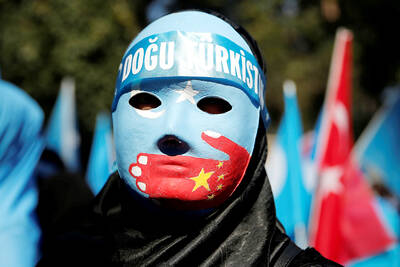
It seems every few days one bumps into one of those “real man” comments in which Taiwan is urged to “face reality” or similar, and “make a deal,” with the speaker implying that soon it will be too late. “Deal” advocates always present themselves as having a superior grip on reality, and the manly ability to make the “hard choice.” Their testosterone-laden language often echoes that of Taiwan sellout advocates. Note that such commentary always specifies a process (“make a deal, work with, make progress”), never the end state of what occupation by a violent authoritarian colonialist state will entail. In
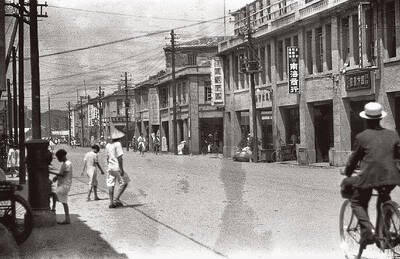
June 1 to June 7 "If all Taiwanese were as afraid of dying as you, then what would happen?” Physician Shih Chiang-nan (施江南) reportedly said this to his wife Chen Chiao-tung (陳焦桐) after she urged him to stop intervening on behalf of Taiwanese soldiers stranded overseas after serving in the Japanese Army during World War II. Shih had clashed with high-ranking officials over the issue, engaged in several heated arguments with Taiwan governor-general Chen Yi (陳儀) and allegedly shouted at general Ko Yuan-fen (柯遠芬), chief of staff of the Taiwan Garrison Command, over

“Taiwan’s Opposition Leader Comes to US With a Message Straight Out of Beijing” read a May 31 headline in the Wall Street Journal. Top US administration officials and members of Congress almost certainly read the WSJ, and if there was a bullet point takeaway that people in Washington should absorb ahead of Chinese Nationalist Party (KMT) Chair Cheng Li-wun’s (鄭麗文) arrival in DC on June 9, that headline is it. The last few columns have discussed this very topic, and the timing is not coincidental. While those top officials likely do not read the Taipei Times, judging by the number


 RSS
RSS