


Coach Fatih Kale rises most Sundays at 6am to cook lunch for the Shih-Chih Soccer Club (SCSC). The team of 10 to 12-year-old boys practices once a week, but last year won 29 games out of thirty played and in the losing game was beaten by national champion Chiao-ai Elementary School (
But his team, which plays futsal or five-a-side soccer, was not the second-ranked team in its age group in Taiwan last year. That honor went to a team from Pingtung that SCSC beat 3-0. As a club team, SCSC is not recognized by the Chinese Taipei Football Association (中華台北足球協會) and can only play in unofficial tournaments.
For Kale, the 40-year-old owner of a pet supply business who was born in Turkey and moved here in 1991, this situation symbolizes what is wrong with soccer in Taiwan. His players are not particularly athletic or physically imposing for their age, but they consistently beat teams that are because he teaches them tactics and because they love the sport.
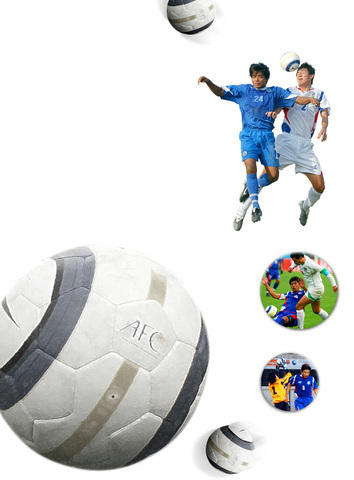
"With school teams, the sport selects the players, and these are often children that come from poor families or have troubled backgrounds," he said. "They practice six hours a day on school days, and on weekends from nine in the morning until seven, eight, or nine o'clock" at night. "When they play us, they don't want to see the ball anymore."
"Right now, they just kick the ball and run after it," he said of his competitors. "If you teach these kids a little bit of technical play, we wouldn't stand a chance because they're physically better."
Taiwan needs more teams like SCSC if it hopes to ever redeem its dismal record in international football competitions. Inter-national football's governing body FIFA ranks the current national team 156th out of 205 worldwide, below those of several microstates whose entire populations would fit inside Taipei's City Square.
Local fans like to talk about Taiwan's two Asian Games championships, but that was half a century ago and the players all came from Hong Kong. Taiwan's recent record in the "beautiful game" has been anything but. The national team yielded two-dozen goals in six recent World Cup qualifying matches. In a March qualifier for the 2007 Asian Cup, it lost 4-0 at Taipei's Zhongshan Soccer Stadium (
The men's ranking "is unacceptable, considering all the effort and money we put in," said Michael Huang (
Huang said club sports don't exist on a meaningful level in Taiwan because students don't have time and because most parents don't want their children playing sports after school. Those who compete often do so only to get into a good high school or university. "We need to change that phenomenon and it's very tough," he said. "In thousands of years of Chinese culture, studying has been the only way to be successful."
He added that his agency spends roughly one-third of its annual budget on subsidizing national teams and successful university squads. This includes the NT$260 million it pays towards the operating costs of teams that compete in the Olympic or Asian Games, including the Chinese Taipei Football Association. It also sponsors baseball programming on public television to the tune of NT$13 million each year so that people who can't afford cable can watch Taiwanese athletes play baseball overseas.
The idea is that fostering sports heroes will encourage more grassroots participation. To this end, the government expects to pass a bill later this month that would allow schools to hire professional coaches, as opposed to physical education teachers, to train their teams. It is hoped this will improve the level of play while providing more opportunities for students who choose to pursue athletics as a career.
"The ultimate goal is to encourage a true love of sports on a local level," Huang said, "and have more people like Kale, who do this because they love it."
Officials at the Chinese Taipei Football Association already see improvement. The men's team is better and is more confident, said Jong Chien-wu (
Wu said two-dozen teams played in youth leagues under his association four years ago. Last year there were 62, now there are 136. This year, the association is permitting youth teams to play seven-a-side soccer on smaller fields, which will allow schools that lack a regulation-sized pitch to field teams. But there seems to be little emphasis on club teams, which would select the best players and bring competition to a higher level.
SCSC will field seven-a-side and 11-a-side teams this year, and Kale wants to join the Chinese Taipei Football Association because it is the only body recognized by FIFA and because it will allow his club to play more games. Although Jong said there are plans to create a league for clubs, Kale was told recently that the association could not recognize his club because it lacked a regulation-sized field.
Another reason given was that if club teams competed successfully against schools teams, principals and teachers would not gain points on their resumes for fielding successful teams and would thus lose the incentive to organize teams at their schools.
Kale would love to see the association form a club league, but he would like it even more if club teams were allowed to play school teams in the Chinese Taipei Football Association's tournaments. "It would be nice if it happens," he said, "but my players are getting older." In the meantime, his club must content itself with playing a smaller schedule in tournaments run by groups that aren't recognized by FIFA.
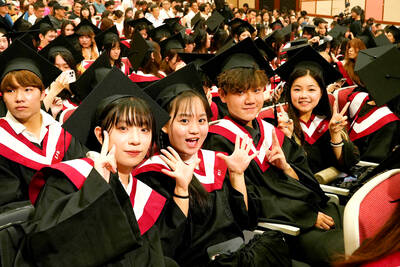
Taiwan’s English education system is being pulled apart by three opposing forces. Bilingual Nation 2030 pulls students toward English and global communication. Artificial Intelligence (AI) readiness pulls them toward digital judgment, verification and AI-mediated work. But Taiwan’s old exam culture pulls them back toward memorization, grammar drills, timed reading and correct answers. If the education system keeps using old exams to define success, it risks producing graduates who are neither genuinely bilingual nor genuinely AI-ready, but trained for tasks machines can already perform. The first force is Bilingual Nation 2030. Launched in 2018, the policy aimed to “help Taiwan’s workforce connect
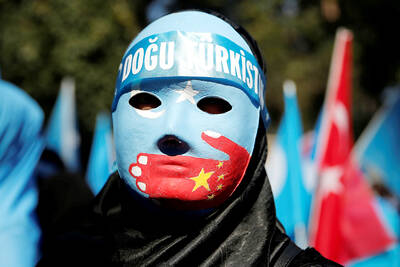
It seems every few days one bumps into one of those “real man” comments in which Taiwan is urged to “face reality” or similar, and “make a deal,” with the speaker implying that soon it will be too late. “Deal” advocates always present themselves as having a superior grip on reality, and the manly ability to make the “hard choice.” Their testosterone-laden language often echoes that of Taiwan sellout advocates. Note that such commentary always specifies a process (“make a deal, work with, make progress”), never the end state of what occupation by a violent authoritarian colonialist state will entail. In
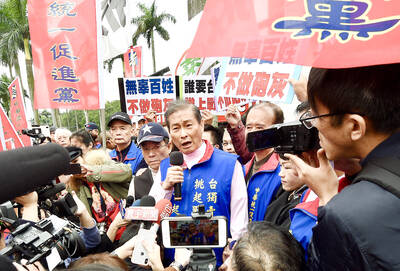
There are shadowy cabals plotting to sell out Taiwan to be annexed by China, by invasion if necessary. Fortunately, they are buffoons. In 2019, former Bamboo Union gangster and founder of the China Unification Promotion Party (CUPP), Chang An-le (張安樂, colorfully known as “White Wolf”), led a protest at the Legislative Yuan against comments made by then-premier Su Tseng-chang (蘇貞昌) that in the event of an attack by China, he would never surrender, but would protect the nation by fighting to the end, even if he only had a broom. Chang had party members bring a wooden casket that they
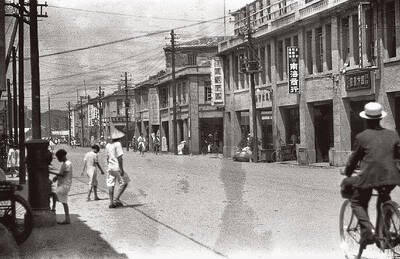
June 1 to June 7 "If all Taiwanese were as afraid of dying as you, then what would happen?” Physician Shih Chiang-nan (施江南) reportedly said this to his wife Chen Chiao-tung (陳焦桐) after she urged him to stop intervening on behalf of Taiwanese soldiers stranded overseas after serving in the Japanese Army during World War II. Shih had clashed with high-ranking officials over the issue, engaged in several heated arguments with Taiwan governor-general Chen Yi (陳儀) and allegedly shouted at general Ko Yuan-fen (柯遠芬), chief of staff of the Taiwan Garrison Command, over


 RSS
RSS