


Over the past couple of years, grime has garnered more column inches than record sales. East London's variant of rap -- with its unforgiving delivery style dished out by tough-looking kids over PlayStation beats and stolen samples -- has faltered as its practitioners try to convert cult appeal and street credibility into mainstream success. Meanwhile, the British indie scene, the staple diet of middle-class students, has proved unstoppable: gig attendance is at record levels; everybody's grandma now knows who the Arctic Monkeys are, and Pete Doherty's spotty visage sells more newspapers than Jordan's chest.
So the idea of those floppy-fringed guitar players uniting with the hoodie-clad rappers seems comical -- but that's exactly what has happened, and it's known as "grindie." The term was coined by grime producer Statik, who initially only used it as a joke, but grew to like it. The joke has taken on a life of its own: his Grindie Volume 1 compilation has recently gone from being passed around among downloaders to being distributed to the music press via the publicists used by Oasis.
It splices DaVinChe with Franz Ferdinand; Scorcher with Ladyfuzz; Ghetto and Demon with Clap Your Hands Say Yeah. The 64-track CD opens with a mumbling message from Doherty, followed by members of the Rakes and Test Icicles, all giving a shout-out to grindie and their mate Statik, whose networking powers are staggering.
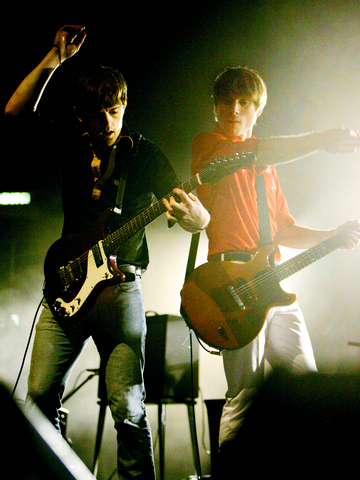
PHOTO: AP
As NME newspaper editor Conor McNicholas explains: "They find it incredibly flattering because the grime scene is perceived as a lot cooler and lot more real than the indie scene."
But why is grime looking towards indie? Is it simply that grime artists are jumping on the bandwagon to make some cash? Is this grime's last stand? Not at all, according to Statik, although he admits "things were getting kind of stale." But he had grown up listening to every kind of music, including the Rolling Stones. "I remember my mum first putting on Paint It Black when I was eight years old. I just couldn't believe how amazing it was."
As with many grime kids, he was the right age to be massively affected by Nirvana during his teens, after which rock music "went through a really poor time in the 1990s. There was only Oasis and Pulp, then just angst like Travis and Coldplay. I do think Coldplay are amazing but you can't be sad constantly. I prefer my stuff to be a bit more energetic." Which is where the current rock scene comes in -- ever since Franz Ferdinand said they wanted to make music for girls to dance to, the beat has become the centerpiece of indie, making it perfect fodder for grime remixers to get their hands on.
The lyrical content is also closer than one might expect. The mixtape leads us from rappers talking about nipple-sucking to Bloc Party singing about a girl using her breasts. Wylie -- a grime MC whose much-hyped solo LP failed to generate expected sales -- threatens violence to those who cross him, but so do indie hipsters the Kills.
The response from the crowds at indie and grime nights is surprisingly similar too, which isn't something the MC Lethal Bizzle bargained for when he started playing grime clubs. In fact, Lethal, who is now the best-known rapper on the indie scene, only crossed over as a happy accident. "There was a point last year when nobody wanted to book him," explains Nadia Khan, manager of his record label. His tune Forward Riddim had become associated with trouble in clubs, his shows had become subject to frequent cancellations from nervous promoters, and were subject to risk assessments from the police.
"We just thought, at last, a London date that won't get closed down," recalls Khan, of Lethal's invitation to play at the Barfly in Camden, the unofficial London home of indie. "And then we couldn't believe what it was like: indie kids go crazy!" Lethal was thrilled when he discovered how much easier it was to stage a show if it was billed as an indie event. "And I love performing to them kind of audiences because they really appreciate music," he says. "My part of town (the further reaches of east London) is really tense, trouble can kick off, but at these events people just have fun and take your music for what it is."
However, as one indie DJ points out: "Lethal Bizzle playing a few indie clubs and Statik mixing some songs into some other songs does not make a scene. It's not a new genre of music as such -- and mixing rap with guitars is nothing new anyway. Until they achieve a genuine level of collaboration, like Public Enemy did with Anthrax on Bring Tha Noize, I remain unconvinced."
To be fair, even Statik doesn't bill grindie as a "scene" and is aware that his mixtape is only the beginning. It's on his forthcoming album, Broadband, that he intends to really use artists from both worlds to create something new. The Rakes have recorded a track especially for it, and he's also been working with Doherty and former members of Test Icicles.
This actual fusion is something BBC Radio 1 DJ Ras Kwame can't wait to hear. "I've been really interested in all the grindie stuff, and when we had Statik on my show we had a fantastic response, but I haven't yet heard a record that is a real blend of the two. I think it'll take time, but it's definitely due to come."

Taiwan’s English education system is being pulled apart by three opposing forces. Bilingual Nation 2030 pulls students toward English and global communication. Artificial Intelligence (AI) readiness pulls them toward digital judgment, verification and AI-mediated work. But Taiwan’s old exam culture pulls them back toward memorization, grammar drills, timed reading and correct answers. If the education system keeps using old exams to define success, it risks producing graduates who are neither genuinely bilingual nor genuinely AI-ready, but trained for tasks machines can already perform. The first force is Bilingual Nation 2030. Launched in 2018, the policy aimed to “help Taiwan’s workforce connect
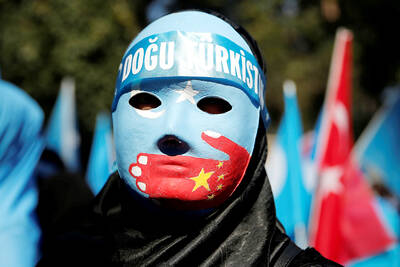
It seems every few days one bumps into one of those “real man” comments in which Taiwan is urged to “face reality” or similar, and “make a deal,” with the speaker implying that soon it will be too late. “Deal” advocates always present themselves as having a superior grip on reality, and the manly ability to make the “hard choice.” Their testosterone-laden language often echoes that of Taiwan sellout advocates. Note that such commentary always specifies a process (“make a deal, work with, make progress”), never the end state of what occupation by a violent authoritarian colonialist state will entail. In

There are shadowy cabals plotting to sell out Taiwan to be annexed by China, by invasion if necessary. Fortunately, they are buffoons. In 2019, former Bamboo Union gangster and founder of the China Unification Promotion Party (CUPP), Chang An-le (張安樂, colorfully known as “White Wolf”), led a protest at the Legislative Yuan against comments made by then-premier Su Tseng-chang (蘇貞昌) that in the event of an attack by China, he would never surrender, but would protect the nation by fighting to the end, even if he only had a broom. Chang had party members bring a wooden casket that they
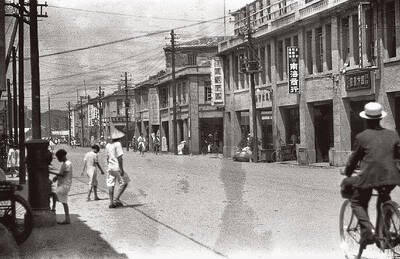
June 1 to June 7 "If all Taiwanese were as afraid of dying as you, then what would happen?” Physician Shih Chiang-nan (施江南) reportedly said this to his wife Chen Chiao-tung (陳焦桐) after she urged him to stop intervening on behalf of Taiwanese soldiers stranded overseas after serving in the Japanese Army during World War II. Shih had clashed with high-ranking officials over the issue, engaged in several heated arguments with Taiwan governor-general Chen Yi (陳儀) and allegedly shouted at general Ko Yuan-fen (柯遠芬), chief of staff of the Taiwan Garrison Command, over


 RSS
RSS