


Last February, in the marble lobby of a midtown Manhattan hotel, there was a moment that seemed to sum up the whole concept of celebrity fashion designers. As photographers shoved each other with their oversized lenses, and gossip journalists shouted out questions, the designer Todd Smith, better known as LL Cool J, stood in the center of the throng, diamond stud in ear. Bored-looking models lounged around the room, the boys in crocodile jackets, the girls in tiny dresses, ignored by everyone.
What made LL Cool J think he could be a fashion designer? "I have the sensibility -- I am sensitive to pop culture," came the answer. So he designed his collection all by himself? A momentary beat. "I didn't have total input, but I was the one inspiring it." And off he was swept by his fearsome battalion of PRs and security men.
All in all, an experience pretty much on a par with the shows held in New York by P Diddy (brown suede hotpants) and Jennifer Lopez (fur-trimmed ponchos) in previous seasons. Such is the world of celebrity fashion shows: pushy PRs, perfunctory involvement by the celebrities and very poor clothes.
But across town, a smaller, quieter show suggested this trend was being bucked. In the house of actress/model Milla Jovovich, models strolled around cheerfully wearing clothes that were -- goodness! -- really, really good.
For the second full collection of her label Jovovich-Hawk, which she designs with fellow former model Carmen Hawk, the inspiration was "strong women," meaning that it was almost certainly the only show of the season that featured the words "Gertie Stein" on its press release and cited Katharine (as opposed to the more usual, and far less interesting, Audrey) Hepburn as inspiration. There were elegant patterned blouses, vintage-style tunics and impressively well-cut trousers -- all very cool but grown-up, pretty but modest, and with nary a crocodile jacket to be seen.
Sitting in a London hotel, laughing at one another's jokes and chattering away in their endearing Bill and Ted accents ("Totally dude"), Jovovich and Hawk are still shocked that what started as an afternoon hobby in each other's bedrooms four years ago is now about to be stocked in Harvey Nichols, "which is, like, insane," Jovovich practically yelps.
But despite the girlish breathiness, both women clearly take the job very seriously, and are in charge of everything from manufacturing to distribution, and only realized that they could hire others to help them last year. For one of their first collections, they sewed the clothes themselves in their bedrooms.
Jovovich and Hawk met more than 13 years ago and are now best friends, finishing each other's sentences and stealing Marlboro Lights off each other. With two models as designers and the frequent references to "vintage inspiration," one might assume that these are clothes for a small (in both number and physical shape) coterie. But both women, who are in their early 30s, are adamant that they are for all ages and sizes, even using Jovovich's mother as a size model.
"For us, it's about strong women or making women feel strong," says Jovovich, who is very pretty with a warm face. "When I first met Carmen, what I liked about her was that she was a strong but still feminine woman, and that she didn't have to show she was strong by wearing baggy jeans or whatever, like I was doing. But also, I look around America and there are so many girls who feel they have to walk around half-naked to attract men and we're just trying to say: Do you really have to do that? And would you really want to attract those kinds of men anyway?"
To say that Jovovich-Hawk is by far the best celebrity fashion range has more than a touch of the faint praise about it. But things are changing, now that celebrities are finally realizing that putting their name to a bunch of velour tracksuits (J-Lo by Jennifer Lopez) does no one's career any good.
There's Gwen Stefani's label, L.A.M.B, which the pop star not only seems to wear every day -- a sign of faith I've never seen Paris Hilton demonstrate with the Barbie-lite clothes she puts her name to -- but named her recent album after.
But Jovovich-Hawk has been the real surprise success. It was described in the New York Times this year as a fashion label, with no deflating celebrity prefix, and the press and buyers have been almost universally supportive. "We were so on the defensive," says Hawk, "waiting for people just to go, `Yeah, right, whatever.'" Jovovich would have been accustomed to this scepticism: ever since she began her career as a child, alternating between modelling, acting and singing, she has been accused of being a celebrity dilettante. But here, the proof was in the very good product.
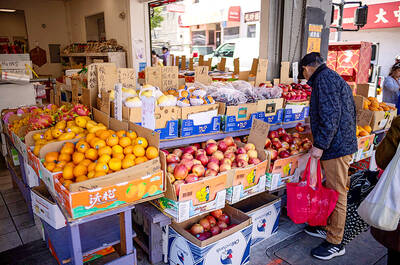
Ajay Verma, a consultant gastroenterologist at Kettering general hospital in Northamptonshire, says our gut is a “complex machine.” “It is constantly providing us with the nutrition we need, initially to grow and develop, and then for us to survive, thrive and repair from injury and illness.” How can we keep it functioning well? Put simply: “Make sure what you put into it is balanced, and that you clear out its waste products adequately,” Verma says. “In a general gastroenterology clinic, the most common conditions we see are irritable bowel syndrome (IBS), gastroesophageal reflux disease, inflammatory bowel disease and constipation,” says Nisha
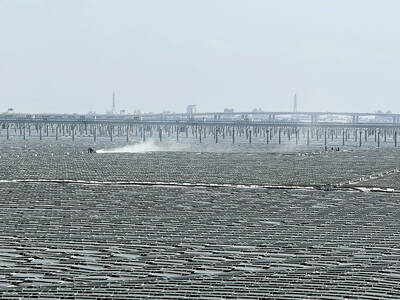
The arithmetic is straightforward and uncomfortable. By the end of 2025, Taiwan had committed itself to a 50-30-20 electricity mix — half natural gas, 30 per cent coal, 20 per cent renewables. The Ministry of Economic Affairs’s (MOEA) own monthly energy reports tell a different story. Natural gas reached 47.8 per cent of generation last year. Coal stood at 35.4 per cent, comfortably above its target ceiling. Renewables came in at 13.1 per cent, well short of the 20 per cent Taipei had pledged a decade earlier. Installed renewable capacity reached roughly half of the 12 gigawatts (GW) the government
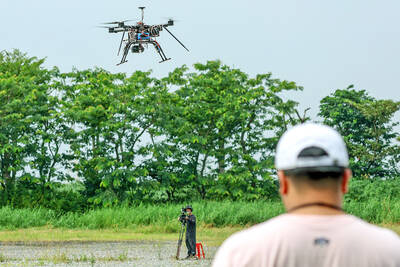
Taiwan’s drone exports are taking off, fuelled by the war in Ukraine, as Taiwanese companies seek a stake in the fast-growing global market for unmanned aerial vehicles (UAV). Low-cost drones used for reconnaissance and strikes are in high demand as governments around the world boost defense spending in the face of intensifying conflicts. A relative new player in the increasingly competitive industry, Taiwan’s pitch is to be an “Asian hub” for the production of UAVs and components free of Chinese materials, or “non-red.” That means its UAVs can be up to three times more expensive than their Chinese competitors, like the world’s biggest
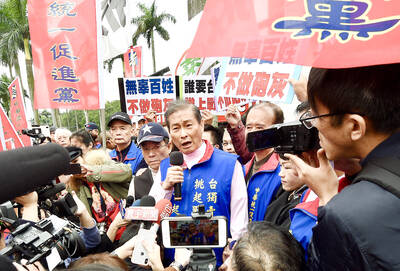
There are shadowy cabals plotting to sell out Taiwan to be annexed by China, by invasion if necessary. Fortunately, they are buffoons. In 2019, former Bamboo Union gangster and founder of the China Unification Promotion Party (CUPP), Chang An-le (張安樂, colorfully known as “White Wolf”), led a protest at the Legislative Yuan against comments made by then-premier Su Tseng-chang (蘇貞昌) that in the event of an attack by China, he would never surrender, but would protect the nation by fighting to the end, even if he only had a broom. Chang had party members bring a wooden casket that they


 RSS
RSS