


It is close to half a century since Horst Fascher was the flyweight boxing champion of Germany, a gold medal prospect in the 1960 Rome Olympics and a young man who knew his way around this wealthy, rough-and-ready port city.
Then one night, as Fascher tells the story, he got into a street fight with a sailor ("I was bloody strong," he recalled, "and quick.") The sailor shoved him and when Fascher hit back the sailor went down, hit his head and a few hours later was dead. Fascher spent six months in jail, and was banned from boxing forever.
"I thought my life was over," he said. "From one moment to the other, all my dreams were gone."
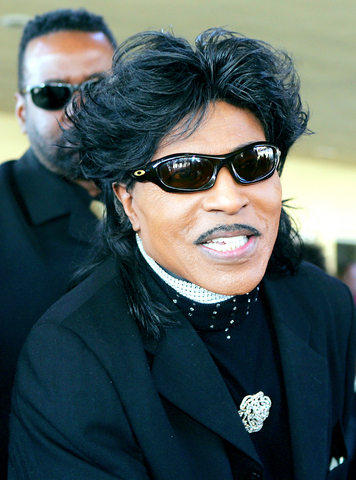
PHOTOS: AGENCIES
Leaving behind the abstemious, early-to-bed life of a boxer in training, Fascher threw himself into the city's always raucous and racy nightlife, especially the music clubs, the first in Germany to play the latest tunes from overseas.
That is what led Fascher, who is now a graying but fit 70-year-old and a kind of living artifact of this city's long history, to emerge at the center of what became Hamburg's moment of glory in the world of pop music.
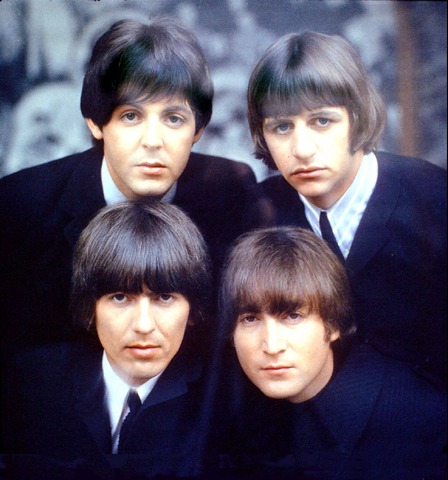
As manager of the brand new Star Club, he brought the Beatles to Hamburg in 1962, when the group was on the cusp of global fame, but the Beatles were not the only ones.
"Except for Elvis," Fascher said, "we had everybody: Ray Charles, Little Richard, the Everly Brothers, Bo Diddley, Brenda Lee, Chubby Checker, Fats Domino."
Fascher has now published a memoir in German, and a book titled Let the Good Times Roll in English, full of anecdotes about his adventures and misadventures with some of the legends of the music business.
The book has come out just at a moment when Hamburg itself, having disappeared from the pop music scene decades ago, is in a mood to commemorate the moment when it was probably the most important Continental outpost of British and American pop music, the place where, John Lennon said, he grew up.

The city will build a new Beatles Platz to mark the time when they made Hamburg their home away from home. Fascher is clearly a part of the story, one reason why his book went into three printings in just its first month of publication.
But Fascher's picaresque tale, which involves a good deal of sex and rock 'n' roll but also more than a fair dose of lacerating tragedy, seems of far more than local interest. He is a figure at the very center of the 1960s, not only in Hamburg but even in Vietnam, where, after the Star Club, he spent two years managing tours for performers entertaining American troops.
Fascher was born poor in 1936 in Hamburg. His mother was a cleaning lady, his father a seaman who fought in World War II and was held as a prisoner of war in the Soviet Union until 1951.
Luckily for Fascher, when his promising boxing career came to an end, Hamburg was well on the way to restoring itself as a lively, sinful port, a place where British and US troops provided an audience for the new music clubs springing up amid the strip clubs and brothels.
Fascher used to get the latest records from a seaman friend who traveled back and forth from New York to Hamburg. "I started listening to Elvis in 1956 or '57," he said. "I was very up to date."
The music scene was on a street called Grosse Freiheit, or Great Freedom, a place of dissenting churches in the 17th and 18th centuries. Today, it is a domain of garishly lit pornography emporiums and lap-dance joints standing shoulder to shoulder with music clubs, which have been making a comeback. The former Star Club, at 39 Grosse Freiheit, is now a nightclub called Rasputin.
After he got out of prison, Fascher started working in the district, mostly tending bar but also managing bands at a club called the Top Ten, where the Beatles had performed in 1960. But he had a fight with his boss and was fired. Soon thereafter, he persuaded a strip club owner to bankroll his idea for a new music club featuring British bands.
That was the fabled Star Club. Fascher immediately set off to Liverpool to lure the Beatles away from an earlier commitment they had made to play at the Top Ten.
"I knew if I could get the Beatles for opening night, I'd have no trouble selling out the club," he said. At first, the Beatles' manager, Brian Epstein, said no, a deal is a deal. But Fascher went out with the Beatles themselves and, apparently, they had a very good time, because the next day Fascher walked away with a contract for them to perform at the Star Club.
"I saw it as part of my assignment to provide the musicians with a good time," he said, stating a sort of general principle that he assiduously applied in Hamburg and that was one reason for his success.
The Beatles came to the Star Club a few times, providing Fascher with some of the stories he recounts in his book, like the time he caught John Lennon in the bathroom with a female fan.
Fascher ordered Lennon to go onstage right away, naked if necessary, and that's about what he did, causing an uproar when he appeared wearing only his briefs and a toilet seat around his neck.
Then came a series of misfortunes, beginning with a fight one night in which Fascher, still apparently bloody strong and quick, broke a customer's jaw. He served two years of a three-year sentence and when he got out, he was banned from the Star Club. It was then that Fascher, who clearly had a knack for meeting people who could help in hours of dire need, was hired by the USO to manage entertainment tours in Vietnam.
More recently came the worst imaginable tragedy. Fascher lost two of his three children -- one in an accident, another to a congenital heart defect -- an experience that threw him into a depression that lasted four years, and from which he has only recently emerged.
These days, he spends a good deal of time promoting his book, but he is more than just a man with a lot of memories of rock stars.
He is not only about to marry a woman he met a few years ago. He is also working with two Danish entrepreneurs who have a plan to reopen the Star Club as a music club, museum and retail store.
"At my age, to have the Star Club again in the place where it started -- that's a dream," Fascher said.
"It's a different time now and it takes more money" to attract the bigger acts, he said. "But I think some will come for fun, and some will come because that's where the Beatles played."

Taiwan’s English education system is being pulled apart by three opposing forces. Bilingual Nation 2030 pulls students toward English and global communication. Artificial Intelligence (AI) readiness pulls them toward digital judgment, verification and AI-mediated work. But Taiwan’s old exam culture pulls them back toward memorization, grammar drills, timed reading and correct answers. If the education system keeps using old exams to define success, it risks producing graduates who are neither genuinely bilingual nor genuinely AI-ready, but trained for tasks machines can already perform. The first force is Bilingual Nation 2030. Launched in 2018, the policy aimed to “help Taiwan’s workforce connect

It seems every few days one bumps into one of those “real man” comments in which Taiwan is urged to “face reality” or similar, and “make a deal,” with the speaker implying that soon it will be too late. “Deal” advocates always present themselves as having a superior grip on reality, and the manly ability to make the “hard choice.” Their testosterone-laden language often echoes that of Taiwan sellout advocates. Note that such commentary always specifies a process (“make a deal, work with, make progress”), never the end state of what occupation by a violent authoritarian colonialist state will entail. In

June 1 to June 7 "If all Taiwanese were as afraid of dying as you, then what would happen?” Physician Shih Chiang-nan (施江南) reportedly said this to his wife Chen Chiao-tung (陳焦桐) after she urged him to stop intervening on behalf of Taiwanese soldiers stranded overseas after serving in the Japanese Army during World War II. Shih had clashed with high-ranking officials over the issue, engaged in several heated arguments with Taiwan governor-general Chen Yi (陳儀) and allegedly shouted at general Ko Yuan-fen (柯遠芬), chief of staff of the Taiwan Garrison Command, over

“Taiwan’s Opposition Leader Comes to US With a Message Straight Out of Beijing” read a May 31 headline in the Wall Street Journal. Top US administration officials and members of Congress almost certainly read the WSJ, and if there was a bullet point takeaway that people in Washington should absorb ahead of Chinese Nationalist Party (KMT) Chair Cheng Li-wun’s (鄭麗文) arrival in DC on June 9, that headline is it. The last few columns have discussed this very topic, and the timing is not coincidental. While those top officials likely do not read the Taipei Times, judging by the number


 RSS
RSS