


After studying French cuisine for nine years and living in France for six, chef Alain Zhong (
Ten set dinners are between NT$390 and NT$990. Each includes a main course, herbal bread (fresh-made daily), soup of the day, salad, and coffee or tea.
The roast spring chicken (NT$490) serves up four chicken legs, with white and dark meat. It's exceptionally tender -- the chicken is massaged with olive oil and marinated for three-days. The skin is crispy and sprinkled with rosemary.
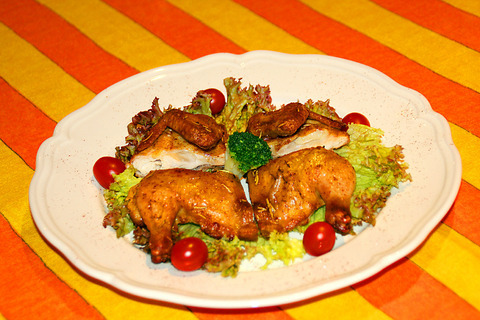
PHOTO: EMILY DREW, TAIPEI TIMES
The salmon dish (NT$490) hails from the Dijon region of France and is more filling, with its covering of thick, rich mustard sauce. It is served on a bed of soft mushrooms and other vegetables.
The baked fish fillet with mushrooms (NT$390) is based on a Normandy dish. Its white wine sauce is smooth and blankets the fillet. The sauce is more subtle than that used in the salmon dish, and that makes for a less filling meal.
The rib-eye steak dinners -- one with a hot sauce and one with green peppercorn sauce -- are the most expensive options at NT$990, and the rack of lamb with herb and mint jelly follows close behind at NT$890.
Like the other options, these dishes are done right and leave nothing to be desired except maybe a few more bites. Each meal is crafted with the diner's requests in mind, and you can talk to Alain about how you want your main course done or which of his many wines should go with it. He spends most of his time working artfully in the kitchen, but he's happy to relax with guests in the cozy, authentically French-styled eatery, where the only thing not France-inspired is the order of the meal: The soup of the day and salad is served first unless otherwise requested.
Dessert is, of course, served last and varies with the main-course meals, but a regular offer is crepes folded over layers of melted chocolate and drizzled in chocolate syrup. The crepes are made to be especially moist and chewy thanks to tricks Zhong picked up in Normandy.
The place is small, so reservations are recommended even at lunch, when there are also sandwich-set options -- tuna, cheese, vegetable or smoked salmon -- that come with a dessert and drink for NT$250.

Taiwan’s English education system is being pulled apart by three opposing forces. Bilingual Nation 2030 pulls students toward English and global communication. Artificial Intelligence (AI) readiness pulls them toward digital judgment, verification and AI-mediated work. But Taiwan’s old exam culture pulls them back toward memorization, grammar drills, timed reading and correct answers. If the education system keeps using old exams to define success, it risks producing graduates who are neither genuinely bilingual nor genuinely AI-ready, but trained for tasks machines can already perform. The first force is Bilingual Nation 2030. Launched in 2018, the policy aimed to “help Taiwan’s workforce connect
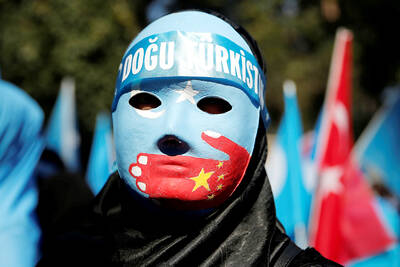
It seems every few days one bumps into one of those “real man” comments in which Taiwan is urged to “face reality” or similar, and “make a deal,” with the speaker implying that soon it will be too late. “Deal” advocates always present themselves as having a superior grip on reality, and the manly ability to make the “hard choice.” Their testosterone-laden language often echoes that of Taiwan sellout advocates. Note that such commentary always specifies a process (“make a deal, work with, make progress”), never the end state of what occupation by a violent authoritarian colonialist state will entail. In

There are shadowy cabals plotting to sell out Taiwan to be annexed by China, by invasion if necessary. Fortunately, they are buffoons. In 2019, former Bamboo Union gangster and founder of the China Unification Promotion Party (CUPP), Chang An-le (張安樂, colorfully known as “White Wolf”), led a protest at the Legislative Yuan against comments made by then-premier Su Tseng-chang (蘇貞昌) that in the event of an attack by China, he would never surrender, but would protect the nation by fighting to the end, even if he only had a broom. Chang had party members bring a wooden casket that they
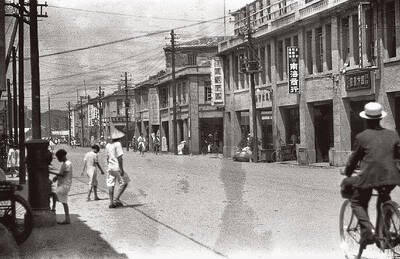
June 1 to June 7 "If all Taiwanese were as afraid of dying as you, then what would happen?” Physician Shih Chiang-nan (施江南) reportedly said this to his wife Chen Chiao-tung (陳焦桐) after she urged him to stop intervening on behalf of Taiwanese soldiers stranded overseas after serving in the Japanese Army during World War II. Shih had clashed with high-ranking officials over the issue, engaged in several heated arguments with Taiwan governor-general Chen Yi (陳儀) and allegedly shouted at general Ko Yuan-fen (柯遠芬), chief of staff of the Taiwan Garrison Command, over


 RSS
RSS