


The first time I met Pete Doherty was in a grungy, grungy nightclub in Leicester. I'm not a pop man, I'm a documentaries man. I helped produce an Emmy and Bafta-award-winning television series about the Royal Opera House. But I had seen a photo of Pete in a newspaper pretending to smoke crack and had read about his genuine addiction, and he fascinated me.
I was intrigued by him. Perhaps part of it was because I'm a former crack addict myself. There was a man daring damnation, I thought.
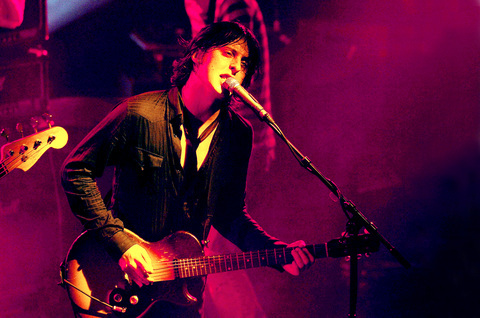
PHOTO: AFPN
Anyway, a friend of mine, Nathan McGough, who managed the Happy Mondays, took me along to this gig where his new band Towers of London were supporting Pete, who was doing a warm-up for his Babyshambles tour. This was last June, soon after he'd been kicked out of the Libertines.
That night I watched him and thought: what an amazing pop star. What a beautiful, cool, gorgeous guy. If I was gay, I'd have a crush on him.
I thought he was a bit of white trash, a street urchin. It turned out he has a posh background -- his dad was a major in the army and has an MBE. Pete was an army brat who grew up in Birmingham, Leicester -- wherever the army took his dad. He dropped out of education after getting 11 A GCSEs and four A-levels.
I wouldn't have believed it unless I'd seen it with my own eyes. Hundreds of gorgeous, smart, trendy young women abasing themselves at the shrine of Le Doherty alongside awestruck male fans who claim that Pete has made it all right for boys to be vulnerable and weepy again. These are all extremely intelligent, discriminating people, with very few heroin addicts among them.
Pete is so many people rolled into one. He's the Clash, he's the Kinks, he's punk, he's Sid and Nancy, he's Oscar and he's Bosey, he's a working-class hero. I think he's just a bit embarrassed about the fact that he was born into a nice, middle-class family.
I'll make you famous
The moment I saw that picture of him in the paper, I thought I had to make a film about Pete. I didn't think I'd get access to him, but I did easily -- nobody cared that much about him then because he wasn't going out with Kate Moss.
That first night I met him I told him I was going to make him rich and famous. He was impressed with the Bafta for the film about the Royal Opera House. But the truth was, I'd not done any high-profile work for a long time.
All in all, we spent five months filming, from June to October 2004. I shot him at nine gigs over that period of time, and would usually interview him afterwards. I was shamelessly sycophantic, always telling him that he looked like a natural-born icon -- but then it was true.
At first, he kept me at a distance, throwing me the occasional post-gig scrap of interview. But by August we had become close. In fact, in early July in Sheffield, Pete adopted me as his court jester and invited me to join the stage act. I was Mr Nobody from Nowhere, and that appealed to him.
I was filming him on stage, but he said, "No, Max, put the camera down and dance, because you're more use to me that way."
Suddenly I was incorporated into the band as some kind of demented, posh Bez figure. I fulfilled a role briefly on and off stage as a kind of idiot savant to Pete and his familiars.
I referred to myself as a fat, four-eyed Brummie Jew, which they all found very funny. So long as I found new ways of humiliating myself, they let me penetrate their inner sanctum with my Sony camera.
On Aug. 17 we spent the evening and night together in a studio in north London. Pete had spent most of the day asleep in a car. He woke up, went into the studio and recorded the only music that Babyshambles has yet released.
That night was so intimate and magical. He was pretending he was Tommy Steele (I think he'd rather be a vaudeville act than a pop star), doing little dances for me, chatting to me about life, love and death, smoking heroin all night long. I think I became passively addicted to heroin that night.
He also allowed me to help him with the lyrics for a song that became the B-side of the first Babyshambles hit, Killamangiro. It was then that I realized just how smart he was -- he rhymed green with spleen and even understood the medieval meaning of the word spleen.
Sometimes I wondered what I was doing there. I suppose I wanted to make a film about a man with phenomenal talent who was blowing it by the day. I wanted to show what drug addiction does to you. That night I felt I finally understood him.
Pete insisted on taking heroin while I was filming. I think he thought it was cool, that it added to the mythology. He thought he was Thomas deQuincy, author of Confessions of an Opium Eater. Heroin was a fashion accessory, like a supermodel girlfriend. He thinks he's stronger than his habit, and that his hits will outlive his habit, but I'm not so sure.
Pete is in a horrible place with a thousand-quid-a-week habit. He's got a massive self-destruct button, but he's convinced he's just playing games with death.
His fans were, and still are, in love with both the music and the image. The last time this happened was with Kurt Cobain. But you don't have to kill yourself or die of an overdose to be cool. Pete is aware of that, but he's distracted by the tabloids loving his addiction. It would be a great story for them if he died.
Pete and the Libertines started off with such a great philosophy -- that the fans were an extension of the band and they would play anywhere for them. It was all about love, peace and happiness, sprinkled with punk and anarchy. All those things eventually came to an end. It was partly the drugs talking, but it was also fame.
Good times end
The last time I did my Bez impression was in Southampton. He told the audience that I was making a documentary about him, and they all started throwing bottles at me. Pete thought that wasn't cool, so he dumped me from the stage act. Things began to get messy and complicated.
I continued to film gigs, but by October interest appeared to be waning in my documentary. I hadn't been paid a penny by anyone for my work and was broke. I went into a depressive spiral. I took to my bed for two months.
Everything seemed so sordid. The band seemed to be falling apart. I was actually invited to accompany them on their mad New Year's Eve gig-fest -- four gigs in one night. But I felt too low. I didn't want to be their court jester anymore. Then came new year, a new girlfriend (for Pete), and everything changed around again.
It was 2005, and the junkie rocker was going out with Kate Moss. Newspapers were interested in him, and people were once again keen on my documentary. I got out of bed, remade contact with Pete's manager, James Mullord, and talked about completing the film. I wanted Pete to sign a contract to commit him to completing film. But it never happened. Nothing happened.
Weeks passed. Eventually a friend of mine saw the footage of him taking heroin and thought I could sell them and recoup my losses. He called a friend at the Sun, and before I knew it I was in the middle of a bidding war.
I didn't want to sell the pictures, but I did want to use them as leverage to meet up with Pete again and complete the film. I phoned up James and told him what was happening with the newspapers and offered to hold back on the footage -- so that we could complete the documentary.
I waited and waited and heard nothing. Meanwhile, the Sunday Mirror was getting more and more desperate to buy the pictures from me. Friends were telling me take the money and run. I wanted Pete to get back to me, but he never did. And so I succumbed.
After selling the photos I heard from Pete for the first time in four months. He sounded very fed up. "I hear you've made loads of cash from selling my photos."
"Yes," I said. "You know I didn't want to sell the pics, but what I want is for us to get together to complete the film."
I told him he was welcome to some of the money for the film if he would use it for drug rehabilitation and get back into the studio.
Then I thought: what if we could actually film him going into rehab? What a film we would have there! I thought we could still save the situation. Now it seems he thinks we're beyond that stage.
Unhappily, it seems the next time we will see each other will be in court. I hope he gets back into a recording studio as quickly as possible, so we can download more of his genius before it's too late.
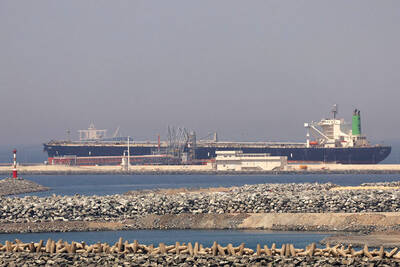
The breakwater stretches out to sea from the sprawling Kaohsiung port in southern Taiwan. Normally, it’s crowded with massive tankers ferrying liquefied natural gas from Qatar to be stored in the bulbous white tanks that dot the shoreline. These are not normal times, though, and not a single shipment from Qatar has docked at the Yongan terminal since early March after the Strait of Hormuz was shuttered. The suspension has provided a realistic preview of a potential Chinese blockade, a move that would throttle an economy anchored by the world’s most advanced and power-hungry semiconductor industry. It is a stark reminder of
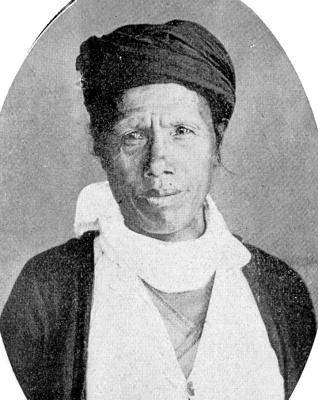
May 11 to May 17 Traversing the southern slopes of the Yushan Range in 1931, Japanese naturalist Tadao Kano knew he was approaching the last swath of Taiwan still beyond colonial control. The “vast, unknown territory,” protected by the “fierce” Bunun headman Dahu Ali, was “filled with an utterly endless jungle that choked the mountains and valleys,” Kano wrote. He noted how the group had “refused to submit to the measures of our authorities and entrenched themselves deep in these mountains … living a free existence spent chasing deer in the morning and seeking serow in the evening,” even describing them as
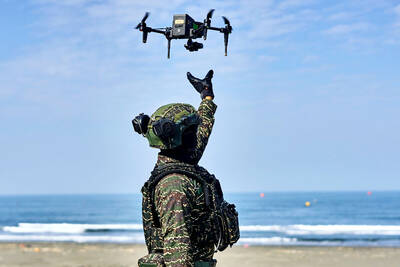
The last couple of weeks spectators in Taiwan and abroad have been treated to a remarkable display of infighting in the Chinese Nationalist Party (KMT) over the supplementary defense budget. The party has split into two camps, one supporting an NT$800 billion special defense budget and one supporting an NT$380 billion budget with additional funding contingent on receiving letters of acceptance (LOA) from the US. Recent media reports have said that the Taiwan People’s Party (TPP) is leaning toward the latter position. President William Lai (賴清德) has proposed NT$1.25 trillion for purchases of US arms and for development of domestic weapons

As a different column was being written, the big news dropped that Chinese Nationalist Party (KMT) caucus whip Fu Kun-chi (傅?萁) announced that negotiations within his caucus, with legislative speaker Han Kuo-yu (韓國瑜) of the KMT, party Chair Cheng Li-wun (鄭麗文), Taichung Mayor Lu Shiow-yen (盧秀燕) and Taiwan People’s Party (TPP) Chair Huang Kuo-chang (黃國昌) had produced a compromise special military budget proposal. On Thursday morning, prior to meeting with Cheng over a lunch of beef noodles, Lu reiterated her support for a budget of NT$800 or NT$900 billion — but refused to comment after the meeting. Right after Fu’s


 RSS
RSS