


World-renowned philosopher Jacques Derrida, founder of the school of thought known as deconstructionism, has died at age 74, the French president's office said.
Derrida died Friday at a Paris hospital of pancreatic cancer, French media reported, quoting his entourage.
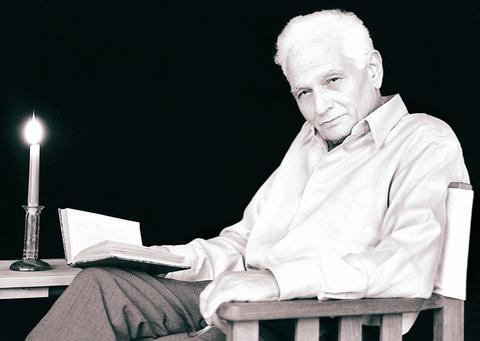
PHOTO: AP
The snowy-haired French intellectual taught on both sides of the Atlantic and his works were translated around the world.
Provocative and as difficult to define as his favorite subject -- deconstruction -- the charismatic Derrida has been a leading intellectual for decades. He is considered the modern-day French thinker best known internationally.
"With him, France has given the world one of its greatest contemporary philosophers, one of the major figures of intellectual life of our time," President Jacques Chirac said Saturday in a statement, calling Derrida a "citizen of the world."
Derrida wrote hundreds of books and essays. His reputation was launched with two 1967 publications in which he laid out basic ideas, Writing and Difference and Of Grammatology. Among other works were the 1972 Margins of Philosophy or, more recently, Specters of Marx, in 1993.
Derrida was known as the father of deconstructionism, a kind of critical thinking or mode of analysis developed in the late 1960s and applied to literature, linguistics, philosophy, law and architecture.
Derrida focused his work on language, showing that it has multiple layers and thus multiple meanings or ways of being interpreted. This challenges the notion that speech is a direct form of communication or even that the author of a text is the author of its meaning.
He applied this approach to Western values as well.
The deconstructionist approach has remained controversial, with detractors even proclaiming the movement dead. So divisive were Derrida's ideas that Cambridge University's plan to award him an honorary degree in 1992 was forced to a vote. He won.
Critics accused Derrida of nihilism, the belief that existence is senseless, which he adamantly denied.
"Deconstruction is on the side of `yes,' an affirmation of life," Derrida said in an August interview with the daily Le Monde.
Former Culture Minister Jack Lang, who knew Derrida, praised his "absolute originality" as well as his combative spirit.
"I knew he was ill, and at the same time, I saw him as so combative, so creative, so present, that I thought he would surmount his illness," Lang said on France-Info radio.
Derrida was often named -- but never chosen -- for a Nobel Prize in Literature.
He was born July 15, 1930, into a Jewish family in El Biar, Algeria, then part of France, In 1949, Derrida left Algeria for Paris to further his education, receiving an advanced degree in philosophy from the prestigious Ecole Normale Superieure in 1956. He later taught philosophy at the Sorbonne University from 1960 to 1964 and at the Ecole des Hautes Etude en Sciences Sociales from 1984 to 1999.
He also taught in the US, at the University of California at Irvine and at Johns Hopkins and Yale universities.
Despite his esoteric path, Derrida was also a down-to-earth man, saying in various interviews that he really wanted to be a soccer player but wasn't good enough to do so.
He refused to confine himself to an intellectual ivory tower. He also took up causes dear to his heart, fighting for such things as the rights of Algerian immigrants in France and against apartheid. He wrote two essays following the Sept. 11, 2001, terror attacks, The "Concept" of Sept. 11 and Hoodlum.
"Profoundly humanist," Derrida spent his final years working for the "values of hospitality," particularly between Europe and the Mediterranean, said current Culture Minister Renaud Donnedieu de Vabres.
"He wanted to build an open idea of Europe," a ministry statement said.
Derrida remained productive despite advancing years and, eventually his illness, writing, attending conferences around the world and, in 2002, playing himself in a documentary of the philosopher, Derrida, by Amy Kofman and Kirby Dick.
But death haunted him.
"Since Plato, it is the old philosophical injunction: to learn to live is to learn to die," he said in the Le Monde interview in August.
"Less and less have I learned to accept death," he was quoted as saying. "I remain uneducable about the wisdom of learning to die."

For many people, Bilingual Nation 2030 begins and ends in the classroom. Since the policy was launched in 2018, the debate has centered on students, teachers and the pressure placed on schools. Yet the policy was never solely about English education. The government’s official plan also calls for bilingualization in Taiwan’s government services, laws and regulations, and living environment. The goal is to make Taiwan more inclusive and accessible to international enterprises and talent and better prepared for global economic and trade conditions. After eight years, that grand vision is due for a pulse check. RULES THAT CAN BE READ For Harper Chen (陳虹宇), an adviser
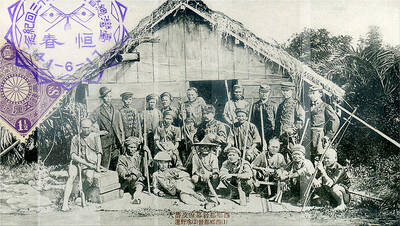
Traditionally, indigenous people in Taiwan’s mountains practice swidden cultivation, or “slash and burn” agriculture, a practice common in human history. According to a 2016 research article in the International Journal of Environmental Sustainability, among the Atayal people, this began with a search for suitable forested slopeland. The trees are burnt for fertilizer and the land cleared of stones. The stones and wood are then piled up to make fences, while both dead and standing trees are retained on the plot. The fences are used to grow climbing crops like squash and beans. The plot itself supports farming for three years.

President William Lai (賴清德) on Nov. 25 last year announced in a Washington Post op-ed that “my government will introduce a historic US$40 billion supplementary defense budget, an investment that underscores our commitment to defending Taiwan’s democracy.” Lai promised “significant new arms acquisitions from the United States” and to “invest in cutting-edge technologies and expand Taiwan’s defense industrial base,” to “bolster deterrence by inserting greater costs and uncertainties into Beijing’s decision-making on the use of force.” Announcing it in the Washington Post was a strategic gamble, both geopolitically and domestically, with Taiwan’s international credibility at stake. But Lai’s message was exactly

May 4 to May 10 It was once said that if you hadn’t performed at the Sapphire Grand Cabaret (藍寶石大歌廳), you couldn’t truly be considered a star. Taking the stage at the legendary Kaohsiung club was more than just a concert. Performers were expected to entertain in every sense, wearing outlandish or revealing costumes and staying quick on their feet as sharp-tongued, over-the-top hosts asked questions and delivered jokes that would be seen as vulgar, even offensive, by today’s standards. Opening in May 1967 during a period of strict political and social control, Sapphire offered a rare outlet for audiences in


 RSS
RSS