


If Formula 17 (
Chiang Wei (Chen Yu-ming, 陳煜明) is the lead singer in the Splendid Float cabaret. He has an exotic, androgynous look that attracts both men and women, including Ayang (Chung Yi-ching, 鍾以慶), who is from a fishing village.
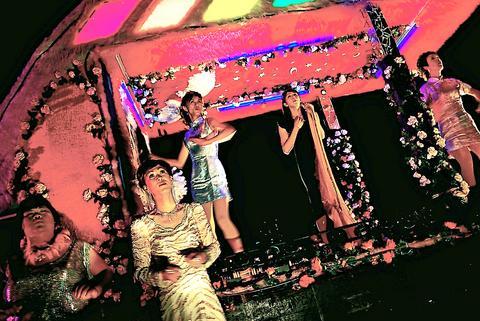
PHOTO COURTESY OF ZERO AND HOHO FILM
Chiang is also a Daoist priest who presides over funerals. It's a family business. A spiritual guide is one of the most traditional jobs and one of the oldest variety show formats in Taiwan local culture.
One day Chiang is called to preside over a service but realizes that it is his lover's funeral. Ayang has drowned at sea in an accident. Chiang leads Ayang's soul to its final resting place while mourning ladies do energetic hip-swaying dances.
Chiang's daytime job is, director Zero Chou (周美玲) seems to infer, not much different from his nighttime work at the Splendid Float Cabaret.
The images of the film are bright, with high-contrast colors, but the plot and characters are weak.
A lot of the sentiment of the movie is delivered through songs in the cabaret, which are old Taiwanese songs, mainly cheesy laments about past love. The songs are interesting enough as concepts but not expressive enough as a means to guide spirits or to connect the living and the dead.
Screening Theaters: Spring Cinema, Spot -- Taipei Film House, Cinemark Taipei and Cinemark Kaohsiung from Oct. 15.
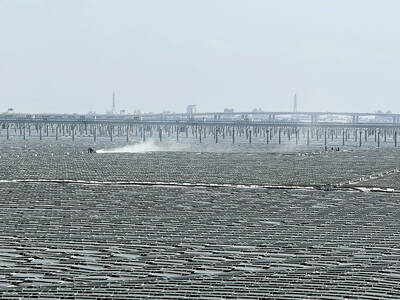
The arithmetic is straightforward and uncomfortable. By the end of 2025, Taiwan had committed itself to a 50-30-20 electricity mix — half natural gas, 30 per cent coal, 20 per cent renewables. The Ministry of Economic Affairs’s (MOEA) own monthly energy reports tell a different story. Natural gas reached 47.8 per cent of generation last year. Coal stood at 35.4 per cent, comfortably above its target ceiling. Renewables came in at 13.1 per cent, well short of the 20 per cent Taipei had pledged a decade earlier. Installed renewable capacity reached roughly half of the 12 gigawatts (GW) the government
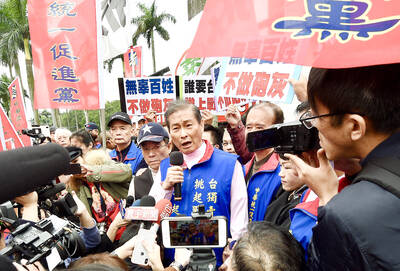
There are shadowy cabals plotting to sell out Taiwan to be annexed by China, by invasion if necessary. Fortunately, they are buffoons. In 2019, former Bamboo Union gangster and founder of the China Unification Promotion Party (CUPP), Chang An-le (張安樂, colorfully known as “White Wolf”), led a protest at the Legislative Yuan against comments made by then-premier Su Tseng-chang (蘇貞昌) that in the event of an attack by China, he would never surrender, but would protect the nation by fighting to the end, even if he only had a broom. Chang had party members bring a wooden casket that they
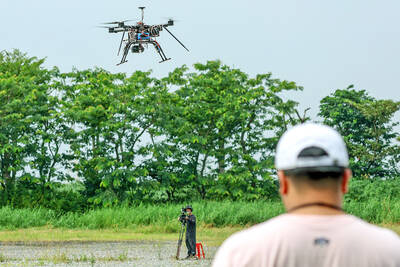
Taiwan’s drone exports are taking off, fuelled by the war in Ukraine, as Taiwanese companies seek a stake in the fast-growing global market for unmanned aerial vehicles (UAV). Low-cost drones used for reconnaissance and strikes are in high demand as governments around the world boost defense spending in the face of intensifying conflicts. A relative new player in the increasingly competitive industry, Taiwan’s pitch is to be an “Asian hub” for the production of UAVs and components free of Chinese materials, or “non-red.” That means its UAVs can be up to three times more expensive than their Chinese competitors, like the world’s biggest
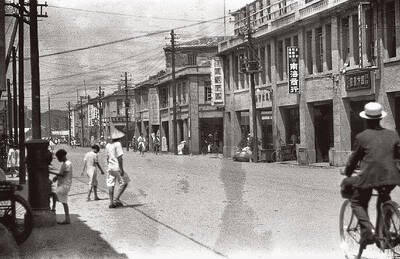
June 1 to June 7 "If all Taiwanese were as afraid of dying as you, then what would happen?” Physician Shih Chiang-nan (施江南) reportedly said this to his wife Chen Chiao-tung (陳焦桐) after she urged him to stop intervening on behalf of Taiwanese soldiers stranded overseas after serving in the Japanese Army during World War II. Shih had clashed with high-ranking officials over the issue, engaged in several heated arguments with Taiwan governor-general Chen Yi (陳儀) and allegedly shouted at general Ko Yuan-fen (柯遠芬), chief of staff of the Taiwan Garrison Command, over


 RSS
RSS