


The Michael Moore documentary the Walt Disney Co deemed too partisan to distribute offers few new revelations about the connections between President George W. Bush and prominent Saudi Arabian families, including that of Osama bin Laden.
But this film, Fahrenheit 9/11, contains stark images of civilian casualties and disillusioned soldiers from the Iraq war zone that have rarely, if ever, been shown on US television. And the muckraking craft evident in this nearly two-hour attack on Bush's tenure in the White House is likely to have a galvanizing effect among both conservatives and liberals should the film be widely distributed this summer.
A reporter for The New York Times was invited to a screening of the film last week. Fahrenheit 9/11 focuses on long-standing ties among the Bush family, its associates and prominent Saudis and on whether those ties clouded the president's judgment in recognizing warning signs before the Sept. 11 attacks and hampered his response afterward.
PHOTO:AFP
Moore extends his critique of the president to his conduct of the war in Iraq, arguing that the war is victimizing not only Iraqis but also the lower-income enlisted Americans who are fighting in it. In addition he attempts to make a case that the government's terrorism alerts at home are being used to repeal some civil liberties.
Hot potatos
These are the subjects that have made Fahrenheit 9/11 such a political hot potato. Icon Productions, Mel Gibson's company and the original primary investor in the film, backed out last spring, and Miramax Films, a Disney division run by Harvey and Bob Weinstein, stepped in.
PHOTO: REUTERS
Although Disney executives said they made clear last May that Disney would not allow Miramax to distribute the film, it was only recently that the Weinsteins became convinced they would not be able to budge their corporate masters. Two weeks ago Moore, who won an Oscar for his documentary Bowling for Columbine, went public to protest Disney's actions. "Some people may be afraid of this movie because of what it will show," he said at the time. (Last week Disney sold the movie to the Weinsteins, who can arrange for its distribution in North America, though not under the Miramax name.)
Republicans predict that many viewers will discount the film as an anti-Bush screed, and that it will ultimately have no effect on the election. Democrats say they hope it will feed what they describe as growing discontent in the US with Bush's Iraq policy and help the campaign of Senator John Kerry, his presumptive Democratic challenger.
Moore is confident it will sway votes against Bush, though he notes that the film, into which he also has tried to inject a good dose of humor, is likewise critical of Democrats for not posing any significant opposition to Bush after Sept. 11. Moore said he was considering making at least one sequence from the film available to the news media yesterday after he presents it at the Cannes film festival: that of American soldiers laughing and taking pictures as they place hoods over Iraqi detainees, with one of them touching a prisoner's genitals through a blanket.

PHOTO:AFP
Moore and his production team said they also believed the film would get attention for showing that a name excised from one of Bush's National Guard records was that of an investment counselor for one of bin Laden's brothers, Salem.
In a copy of the record, released by the National Guard in 2000, the man in question, James Bath, was listed as being suspended from flying for the National Guard in 1972 for failing to take a medical exam next to a similar listing for Bush. It has been widely reported that the two were friends and that Bath invested in Bush's first major business venture, Arbusto Energy, in the late 1970s after Bath began working for Salem bin Laden.
Bath and the White House have said that the money he invested in Bush's company was his, not that of bin Laden. The White House said Friday that Bath's name was expunged from the record it released in February only to protect his privacy and should have been in 2000, as well.
PHOTO: EPA
In the film Moore highlights several connections among Bush, his family and associates and Saudi Arabia. Fifteen of the 19 Sept. 11 hijackers were Saudis, as is Osama bin Laden. As White House officials noted last week, however, many of these connections have been made elsewhere, most recently in House of Bush, House of Saud, by Craig Unger.
Like father, like son
But writ large on the big screen with Moore's narration and set to music, the connections could still prove revelatory to those who have not paid close attention to reports about Saudi Arabia's connections to Bush and his associates. At the screening last week audience members -- including people featured in the film like the mother of a serviceman killed in Iraq and a soldier unwilling to return -- exclaimed loudly when Moore's narration spelled them out.
In one connection the film notes that Bush's father, George H.W. Bush, worked as a senior adviser to the Carlyle Group, a private investment company with various ties to Saudi Arabia and even, for some years, to bin Laden's family.
"My point is first of all that the Bushes were so close to the Saudis that they essentially had turned a blind eye to what was really going on before 9/11," Moore said in an interview. "And after 9/11 they were in denial."
More specifically the movie implies that the Saudi connections explain why the US facilitated the departure of dozens of Saudi nationals from the country -- including relatives of bin Laden -- shortly after the Sept. 11 attacks, and charges they were not properly questioned. But like other points in the film, critics will certainly argue with that assertion, and may not have to go far to seek ammunition. The independent panel investigating the Sept. 11 attacks recently reported its conclusion that the evacuation was handled properly. And bin Laden's family disowned him in the 1990s and says it has no relationship with him anymore.
All the same
Adel al-Jubeir, foreign policy adviser to Crown Prince Abdullah of Saudi Arabia, said that any ties between Bush and his associates and prominent Saudi Arabians should not be considered odd. "Look at any Texas family that's involved in the oil or oil services, and you will find they have a lot of connections to Saudi Arabia and the Gulf," he said, referring to assertions that the connections add up to anything more than that as nonsense.
After hearing a description of some of the connections made in the film, Dan Bartlett, the White House communications director, said, "It's so outrageously false, it's not even worth comment."
Bartlett also said he had no comment on the sections of the film that address the war in Iraq, which include gruesome images of violence, like a man angrily holding up an infant's charred corpse after an American attack and the exposed bone of a soldier's shrapnel-infused leg.
Jim Dyke, a spokesman for the Republican National Committee, said he believed there was no need to prepare a public challenge to the film. "People are smart enough to know that this is someone who is very angry, who has for some time had a clearly partisan agenda," he said.
Just the same, Democratic operatives said they believed viewers' opinions of Moore would not matter if his film raised new or even old questions about Bush.
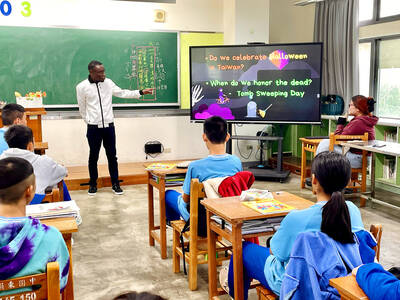
For many people, Bilingual Nation 2030 begins and ends in the classroom. Since the policy was launched in 2018, the debate has centered on students, teachers and the pressure placed on schools. Yet the policy was never solely about English education. The government’s official plan also calls for bilingualization in Taiwan’s government services, laws and regulations, and living environment. The goal is to make Taiwan more inclusive and accessible to international enterprises and talent and better prepared for global economic and trade conditions. After eight years, that grand vision is due for a pulse check. RULES THAT CAN BE READ For Harper Chen (陳虹宇), an adviser
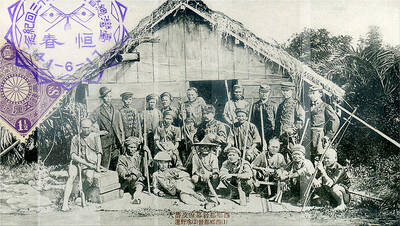
Traditionally, indigenous people in Taiwan’s mountains practice swidden cultivation, or “slash and burn” agriculture, a practice common in human history. According to a 2016 research article in the International Journal of Environmental Sustainability, among the Atayal people, this began with a search for suitable forested slopeland. The trees are burnt for fertilizer and the land cleared of stones. The stones and wood are then piled up to make fences, while both dead and standing trees are retained on the plot. The fences are used to grow climbing crops like squash and beans. The plot itself supports farming for three years.
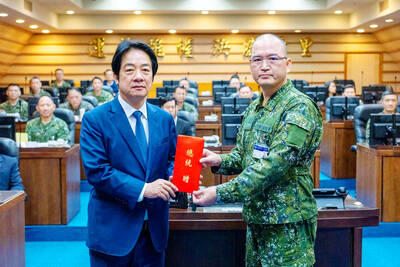
President William Lai (賴清德) on Nov. 25 last year announced in a Washington Post op-ed that “my government will introduce a historic US$40 billion supplementary defense budget, an investment that underscores our commitment to defending Taiwan’s democracy.” Lai promised “significant new arms acquisitions from the United States” and to “invest in cutting-edge technologies and expand Taiwan’s defense industrial base,” to “bolster deterrence by inserting greater costs and uncertainties into Beijing’s decision-making on the use of force.” Announcing it in the Washington Post was a strategic gamble, both geopolitically and domestically, with Taiwan’s international credibility at stake. But Lai’s message was exactly

May 4 to May 10 It was once said that if you hadn’t performed at the Sapphire Grand Cabaret (藍寶石大歌廳), you couldn’t truly be considered a star. Taking the stage at the legendary Kaohsiung club was more than just a concert. Performers were expected to entertain in every sense, wearing outlandish or revealing costumes and staying quick on their feet as sharp-tongued, over-the-top hosts asked questions and delivered jokes that would be seen as vulgar, even offensive, by today’s standards. Opening in May 1967 during a period of strict political and social control, Sapphire offered a rare outlet for audiences in


 RSS
RSS