


Conductor Chien Wen-pin (
Lai promises "a sort of elegant Asian Sex in the City and will approach Mozart's classic through its main women characters who he says represent three very different approaches to love, romance and sexuality.
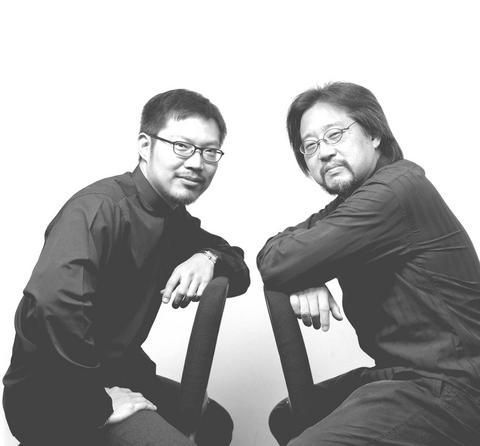
PHOTO COURTESY OF NATIONAL SYMPHONY ORCHESTRA
Anna will be sung by Chen Yen-ling (陳妍陵) who was so persuasive in the role ofTosca two years ago, and Giovanni by Bei Yu-hsi (白玉璽), Sharpless in the TSO's Madama Butterfly. Tsai Wen-hao (蔡文浩) (Brander in the NSO The Damnation of Faust) will sing Leporello, and in a
surprising move the roles of the Commendatore and Masetto will be doubled and sung by Lee Ta-jen (
There are high expectations, too, for Sandra Woodall's costumes and decor -- timeless and placeless, according to Lai, but at the same time reflecting contemporary Taipei.
San Francisco-based Woodall worked with Performance Workshop on both Welcome to Shangrila and Lai's eight-hour epic Dream Like a Dream.
This looks all set to be a major event and shouldn't be missed. Seventy percent of the tickets are already sold, but seats were still available at press time at NT$600, NT$800, NT$1000, NT$1,200, NT$1,500 and NT$2,000 for both performances.

Taiwan’s English education system is being pulled apart by three opposing forces. Bilingual Nation 2030 pulls students toward English and global communication. Artificial Intelligence (AI) readiness pulls them toward digital judgment, verification and AI-mediated work. But Taiwan’s old exam culture pulls them back toward memorization, grammar drills, timed reading and correct answers. If the education system keeps using old exams to define success, it risks producing graduates who are neither genuinely bilingual nor genuinely AI-ready, but trained for tasks machines can already perform. The first force is Bilingual Nation 2030. Launched in 2018, the policy aimed to “help Taiwan’s workforce connect

It seems every few days one bumps into one of those “real man” comments in which Taiwan is urged to “face reality” or similar, and “make a deal,” with the speaker implying that soon it will be too late. “Deal” advocates always present themselves as having a superior grip on reality, and the manly ability to make the “hard choice.” Their testosterone-laden language often echoes that of Taiwan sellout advocates. Note that such commentary always specifies a process (“make a deal, work with, make progress”), never the end state of what occupation by a violent authoritarian colonialist state will entail. In
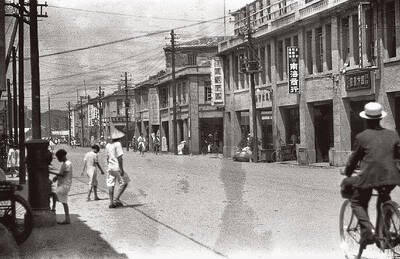
June 1 to June 7 "If all Taiwanese were as afraid of dying as you, then what would happen?” Physician Shih Chiang-nan (施江南) reportedly said this to his wife Chen Chiao-tung (陳焦桐) after she urged him to stop intervening on behalf of Taiwanese soldiers stranded overseas after serving in the Japanese Army during World War II. Shih had clashed with high-ranking officials over the issue, engaged in several heated arguments with Taiwan governor-general Chen Yi (陳儀) and allegedly shouted at general Ko Yuan-fen (柯遠芬), chief of staff of the Taiwan Garrison Command, over

“Taiwan’s Opposition Leader Comes to US With a Message Straight Out of Beijing” read a May 31 headline in the Wall Street Journal. Top US administration officials and members of Congress almost certainly read the WSJ, and if there was a bullet point takeaway that people in Washington should absorb ahead of Chinese Nationalist Party (KMT) Chair Cheng Li-wun’s (鄭麗文) arrival in DC on June 9, that headline is it. The last few columns have discussed this very topic, and the timing is not coincidental. While those top officials likely do not read the Taipei Times, judging by the number


 RSS
RSS