


On Tuesday, the world of Chinese-language film, TV and music lost one of its most charismatic and admired figures, Ke Shou-liang (柯受良). According to reports, the world-famous stuntman, actor, singer and TV host was pronounced dead upon arrival at hospital in Shanghai, where he had been filming an advertisement. The cause of death was unclear, though initial reports attributed his death to severe asthma aggravated by excessive alcohol consumption. News of Ke's death hit like a bombshell in Taiwan, Hong Kong and China, where he is a household name known for the dozens of films he worked on and -- most spectacularly -- jumping cars over the Yellow River, the Yangtze River and the Potala Palace in Tibet.
Born in 1953 in Ningbo, Zhejiang Province, Ke was brought by his family to Taitung at the age of two. By 16, he had left home, guitar in hand, to try his luck at being a music star in Taipei, but when that plan didn't pan out, he found himself behind the camera working on action films, which in turn introduced him on to his future profession as a stuntman. It wasn't long before the fearless budding actor was given the nickname Big Balls Ke (柯大膽), though the nickname that eventually stuck was simply Little Black (小黑).
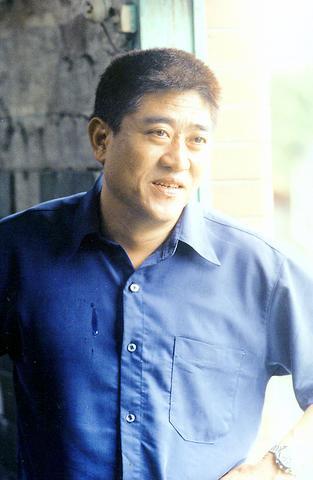
PHOTO COURTESY OF CMPC
His work with Jackie Chan (成龍) and Zhu Yan-ping (朱延平) in the 1980s and 1990s as stunt and effects coordinator propelled Little Black to the highest levels of Chinese pop stardom earning top credits with classic films like Wheels on Meals (快餐車) and Requital (五湖四海). Through his non-stop movie productions, TV hosting gigs with Jacky Wu (吳宗憲) and Zhang Fei (張菲) and solo stunts, Ke remained one of the indispensable and seemingly omnipresent figures in Chinese pop culture. Ke's talents were handed down to his son Alan (柯友倫), who appeared in the TV series Sonic Youth last year and provided backup vocals for Karen Mok (莫文蔚) on her latest album's rough-edged track Love you to Death (愛死你). Alan has a solo album currently awaiting release on Sony Records.

PHOTO: MAX WOODWORTH, TAIPEI TIMES
The 40th Golden Horse Awards set to take place tomorrow in Tainan will honor Ke with the screening of highlights from his career. It's sure to be an emotional moment, especially with a number of his closest associates and friends present at the show.
Also billed to attend the awards will be Taiwan-born, US-based director Ang Lee (李安), who told local media on Wednesday that he plans to direct a gay cowboy drama in the US called Brokeback Mountain, a story by Pulitzer-winning author E. Annie Proulx. The story is, in Lee's words, "A small-sized project for him to go back to independent filmmaking." Fans in Taiwan hoping for a sequel to Crouching Tiger, Hidden Dragon (臥虎藏龍) or some other Chinese-language film that would signal Lee's return to his roots (and maybe boost the morale of the moribund local film industry) are sure to be sorely disappointed.
On Monday, to commemorate John Lennon, local band Mayday (五月天) took a page out of the Beatles' songbook and played a short set on the roof of EMI's studio in downtown Taipei in imitation of the Fab Four's famous set on the roof of Apple Studios on Jan 30, 1969. As fate would have it, Monday was a cold, stormy day, just like that day in London over 30 years ago, but Mayday wore all black Mafioso suits instead of the enormous fur coats worn by the Beatles -- and they didn't play Don't Let Me Down.

Taiwan’s English education system is being pulled apart by three opposing forces. Bilingual Nation 2030 pulls students toward English and global communication. Artificial Intelligence (AI) readiness pulls them toward digital judgment, verification and AI-mediated work. But Taiwan’s old exam culture pulls them back toward memorization, grammar drills, timed reading and correct answers. If the education system keeps using old exams to define success, it risks producing graduates who are neither genuinely bilingual nor genuinely AI-ready, but trained for tasks machines can already perform. The first force is Bilingual Nation 2030. Launched in 2018, the policy aimed to “help Taiwan’s workforce connect
It seems every few days one bumps into one of those “real man” comments in which Taiwan is urged to “face reality” or similar, and “make a deal,” with the speaker implying that soon it will be too late. “Deal” advocates always present themselves as having a superior grip on reality, and the manly ability to make the “hard choice.” Their testosterone-laden language often echoes that of Taiwan sellout advocates. Note that such commentary always specifies a process (“make a deal, work with, make progress”), never the end state of what occupation by a violent authoritarian colonialist state will entail. In

There are shadowy cabals plotting to sell out Taiwan to be annexed by China, by invasion if necessary. Fortunately, they are buffoons. In 2019, former Bamboo Union gangster and founder of the China Unification Promotion Party (CUPP), Chang An-le (張安樂, colorfully known as “White Wolf”), led a protest at the Legislative Yuan against comments made by then-premier Su Tseng-chang (蘇貞昌) that in the event of an attack by China, he would never surrender, but would protect the nation by fighting to the end, even if he only had a broom. Chang had party members bring a wooden casket that they
June 1 to June 7 "If all Taiwanese were as afraid of dying as you, then what would happen?” Physician Shih Chiang-nan (施江南) reportedly said this to his wife Chen Chiao-tung (陳焦桐) after she urged him to stop intervening on behalf of Taiwanese soldiers stranded overseas after serving in the Japanese Army during World War II. Shih had clashed with high-ranking officials over the issue, engaged in several heated arguments with Taiwan governor-general Chen Yi (陳儀) and allegedly shouted at general Ko Yuan-fen (柯遠芬), chief of staff of the Taiwan Garrison Command, over


 RSS
RSS