


In the Tinghao shopping district, where hundreds of restaurants compete tooth-and-nail for diners, one way to lure customers is to post newspaper and magazine reviews of the restaurant on the front window.
It's probably not wise to gauge the quality of a restaurant's food by the number of posted reviews, but it's nearly impossible to not want to know what all the hype's about at Mekong Curry, where the storefront has effectively been pasted over with clippings from every major publication, with one notable exception: the Taipei Times.
Once inside and finally able to see the interior of Mekong Curry one begins to suspect that covering the front window in clippings may have served an ulterior purpose, which was to obscure the view from outside of the restaurant's drab interior. Metal-frame chairs, clear plastic-covered tables and stickers of cartoon likenesses of Hollywood and Mando-pop stars along the wall don't create what one would call an intimate setting.
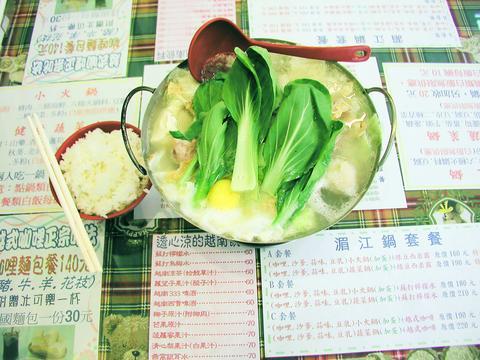
PHOTO: MAX WOODWORTH, TAIPEI TIMES
During the lunch hours, the restaurant's quirky and jovial boss also likes to watch the TV news, so that reports of the day's car crashes, murders and robberies can see you through your meal. He'll turn the TV off, though, if you just want to enjoy your lunch. Luckily Mekong Curry compensates for the slightly abrasive ambiance with its food -- provided that you select the right items.
As the name indicates, the restaurant specializes in Vietnamese-style curries, which at this eatery tend more toward the creamy Japanese variety than the fire-hot Thai kind. The curry sauce is the highlight of the establishment and it offers a gentle spice and a delightful hint of sweetness. Each curry can be served with rice or with several slices of decent French bread. As for meats to accompany your curry, the best choice is the chicken, which is juicy and served in generous portions. The pork, on the other hand, is a tad stringy and tough.
The big surprise at Mekong Curry, though, has nothing to do either with Vietnam or curry. The restaurant has come up with its own mini hot pots that are astonishingly tasty, especially the garlic soup hot pot. Thrown into the biting broth are plenty of fresh greens and glass noodles with seafood hot pot staples, such as fish balls and shrimp.
The curry base hot pot has much the same ingredients with a similar curry to that which is served over the meats.
Mekong Curry comes up short for its selection, but its narrow focus has allowed it to concentrate on making some unique flavors that stand out from most of the chain-store restaurants in the Tinghao area.

Taiwan’s English education system is being pulled apart by three opposing forces. Bilingual Nation 2030 pulls students toward English and global communication. Artificial Intelligence (AI) readiness pulls them toward digital judgment, verification and AI-mediated work. But Taiwan’s old exam culture pulls them back toward memorization, grammar drills, timed reading and correct answers. If the education system keeps using old exams to define success, it risks producing graduates who are neither genuinely bilingual nor genuinely AI-ready, but trained for tasks machines can already perform. The first force is Bilingual Nation 2030. Launched in 2018, the policy aimed to “help Taiwan’s workforce connect
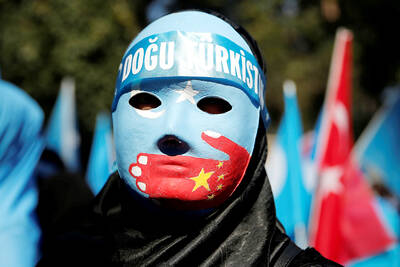
It seems every few days one bumps into one of those “real man” comments in which Taiwan is urged to “face reality” or similar, and “make a deal,” with the speaker implying that soon it will be too late. “Deal” advocates always present themselves as having a superior grip on reality, and the manly ability to make the “hard choice.” Their testosterone-laden language often echoes that of Taiwan sellout advocates. Note that such commentary always specifies a process (“make a deal, work with, make progress”), never the end state of what occupation by a violent authoritarian colonialist state will entail. In
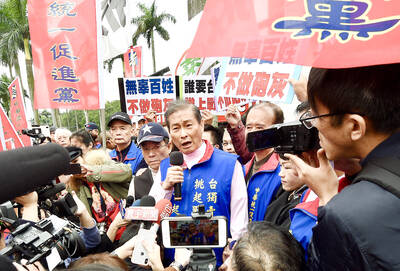
There are shadowy cabals plotting to sell out Taiwan to be annexed by China, by invasion if necessary. Fortunately, they are buffoons. In 2019, former Bamboo Union gangster and founder of the China Unification Promotion Party (CUPP), Chang An-le (張安樂, colorfully known as “White Wolf”), led a protest at the Legislative Yuan against comments made by then-premier Su Tseng-chang (蘇貞昌) that in the event of an attack by China, he would never surrender, but would protect the nation by fighting to the end, even if he only had a broom. Chang had party members bring a wooden casket that they
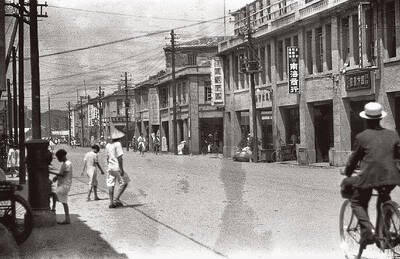
June 1 to June 7 "If all Taiwanese were as afraid of dying as you, then what would happen?” Physician Shih Chiang-nan (施江南) reportedly said this to his wife Chen Chiao-tung (陳焦桐) after she urged him to stop intervening on behalf of Taiwanese soldiers stranded overseas after serving in the Japanese Army during World War II. Shih had clashed with high-ranking officials over the issue, engaged in several heated arguments with Taiwan governor-general Chen Yi (陳儀) and allegedly shouted at general Ko Yuan-fen (柯遠芬), chief of staff of the Taiwan Garrison Command, over


 RSS
RSS