


In what country did Chiang Kai-shek (
That doesn't seem like the kind of question you'd expect someone to ask at a sports bar. But The Brass Monkey, which opened at the end of February, isn't what you'd expect from a sports bar. That's because it's more of a sporting restaurant and the Pub Quiz in which that question was asked is only one of the events that sets The Brass Monkey apart from the many dining establishments along Fuhsing North Road and makes it Taipei's most exciting new restaurant for the Commonwealth crowd.
Of course, most of the Monkey's off-menu fare consists of rugby, football and hockey matches shown on a theater-sized screen at the rear of the restaurant, but this is also a cultured establishment that last Saturday held its own dragon boat "races" and gave the proceeds from the evening to charity.
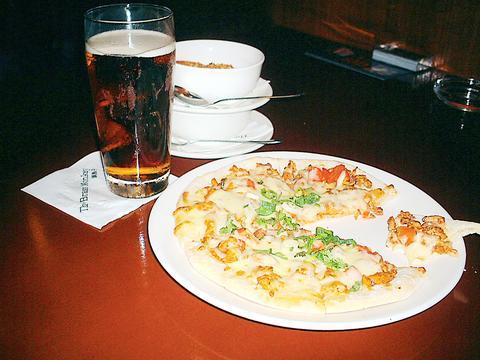
PHOTO: DAVID MOMPHARD, TAIPEI TIMES
The Wednesday prior to that was the Monkey's first Pub Quiz, which had contestants drumming their knowledge of classical music (Who composed the Carmina Burana?) and popular culture (What were the names of the lead actors in the television show CHiPs?
Last night was the first of the Monkey's Thursday night Ladies Nights. There's no possessive apostrophe at the end of "ladies" because, while ladies get free vodka drinks until midnight, the men get to watch go-go dancers "bring it LA style" to hip-hop, R&B and old-school. This last event might not fall into the culture category but you get the idea: There's more to The Brass Monkey than beer and "footie."
There's also food: pizzas, pastas, sandwiches, Chinese cuisine and "drinking partners" for those who just want something to munch while the game is on. Most everything I've tried in the half-dozen times I've been has been good, but it hasn't always been consistent.
After falling in love with the Monkey's steak sandwich (diced prime rib between toasted foccacia bread!), I went back for it only to find the bread wasn't toasted and the prime rib wasn't diced.
Afterward I met one of Brass Monkey's shareholders, Richard Harnetty, who had a good piece of advice: "This is a Western place. If you don't like it, send it back." Other items I've tried are the southwest chicken sandwich, satay sticks and the South African meatloaf -- none of which would I have dreamed of sending back.
A pull of Carlsberg will cost you NT$160 and one of Guinness costs NT$220. Bottled beers start from NT$140, spirits average NT$150 and most of the Scotch is NT$200 per glass.
Best of all, despite the fact that there's no service charge, the service is among the best -- and friendliest -- to be found in town.
ANSWERS:
Chiang Kai-shek (

Taiwan’s English education system is being pulled apart by three opposing forces. Bilingual Nation 2030 pulls students toward English and global communication. Artificial Intelligence (AI) readiness pulls them toward digital judgment, verification and AI-mediated work. But Taiwan’s old exam culture pulls them back toward memorization, grammar drills, timed reading and correct answers. If the education system keeps using old exams to define success, it risks producing graduates who are neither genuinely bilingual nor genuinely AI-ready, but trained for tasks machines can already perform. The first force is Bilingual Nation 2030. Launched in 2018, the policy aimed to “help Taiwan’s workforce connect
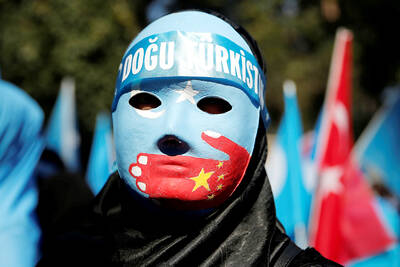
It seems every few days one bumps into one of those “real man” comments in which Taiwan is urged to “face reality” or similar, and “make a deal,” with the speaker implying that soon it will be too late. “Deal” advocates always present themselves as having a superior grip on reality, and the manly ability to make the “hard choice.” Their testosterone-laden language often echoes that of Taiwan sellout advocates. Note that such commentary always specifies a process (“make a deal, work with, make progress”), never the end state of what occupation by a violent authoritarian colonialist state will entail. In
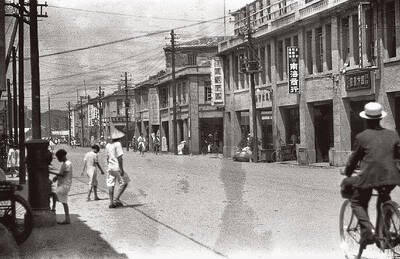
June 1 to June 7 "If all Taiwanese were as afraid of dying as you, then what would happen?” Physician Shih Chiang-nan (施江南) reportedly said this to his wife Chen Chiao-tung (陳焦桐) after she urged him to stop intervening on behalf of Taiwanese soldiers stranded overseas after serving in the Japanese Army during World War II. Shih had clashed with high-ranking officials over the issue, engaged in several heated arguments with Taiwan governor-general Chen Yi (陳儀) and allegedly shouted at general Ko Yuan-fen (柯遠芬), chief of staff of the Taiwan Garrison Command, over

“Taiwan’s Opposition Leader Comes to US With a Message Straight Out of Beijing” read a May 31 headline in the Wall Street Journal. Top US administration officials and members of Congress almost certainly read the WSJ, and if there was a bullet point takeaway that people in Washington should absorb ahead of Chinese Nationalist Party (KMT) Chair Cheng Li-wun’s (鄭麗文) arrival in DC on June 9, that headline is it. The last few columns have discussed this very topic, and the timing is not coincidental. While those top officials likely do not read the Taipei Times, judging by the number


 RSS
RSS