


On Chungshan N Rd and Chungcheng Rd in Taipei's Tienmu district, big and popular restaurants are everywhere, a sign that this foreigners' enclave has become more commercialized. But if you prefer the older look of Tienmu -- a place where you can find small, cozy houses with exotic food -- many would recommend a place like Lanka Restaurant.
Fourteen years ago, Lanka Restaurant was the first restaurant in the area to serve authentic curries. Other curry houses have come and gone, but Lanka remains, on quiet Chungyi street, near Yangming Hospital. It is still Taipei's only Sri Lankan restaurant.
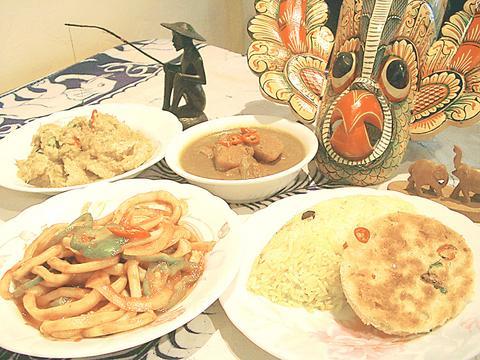
PHOTO: YU SEN-LUN, TAIPEI TIMES
Owner Damian Chee (齊興盛), an overseas Chinese from Sri Lanka, settled in Tienmu with his Korean wife, Clarissa Kim (金福順). Finding it hard to find a decent curry house, Chee decided to bring Sri Lanka's home-style cuisine to Taipei.
Pumpkin curry, mutton curry and seafood curry are the most popular dishes in the house. The pumpkins have a tender and sweet taste despite being steeped in spicy gravy. It's a tasty vegetarian dish.
Apart from stew curry, Lanka also offers sauteed curry dishes. Here, the meat is sauteed with curry flavor spices and coconut meat. Dishes in this category include sauteed chicken with coconut and curry fried rice with beef. For those who are used to Chinese-style fried rice, the coconut curry flavored fried rice can offer a new taste sensation for the palate to savor.
One major feature of Sri Lankan curry cuisine is its use of coconut milk. This usually adds a smooth and sweet flavor. But it does not mean that Lanka's curries are less hot and spicy than Indian food. In fact, Lanka's "devil dishes" can give you more spice than Sichuan spicy hot pot. One peek at the red color of the dishes should give you enough warning as to the heat you are about to experience.
Chee insists on using spices brought in by his brothers from Sri Lanka and he also grows curry leaves at his Taipei home, making sure Lanka's authentic tastes are maintained.
Lanka's reasonable prices are another plus. Sharing with four, having a few different curry dishes, a few coconut roti (coconut-flavored bread, also a must-try) and yellow rice, and maybe a glass of wine, will set you back around NT$ 300 -- much cheaper than any Indian restaurant in Taipei.
Finally, don't forget the side dishes of the house. Fried eggplant is sauteed pre-fried eggplant, with spices and coconut milk. Okra Fried is a cold dish, mixing lemon juice and tomatoes with pre-fried okra. These two are favorite dishes among foreigners. A cup of Ceylon milk tea and a pumpkin pudding can make for a nice ending to the meal.

Taiwan’s English education system is being pulled apart by three opposing forces. Bilingual Nation 2030 pulls students toward English and global communication. Artificial Intelligence (AI) readiness pulls them toward digital judgment, verification and AI-mediated work. But Taiwan’s old exam culture pulls them back toward memorization, grammar drills, timed reading and correct answers. If the education system keeps using old exams to define success, it risks producing graduates who are neither genuinely bilingual nor genuinely AI-ready, but trained for tasks machines can already perform. The first force is Bilingual Nation 2030. Launched in 2018, the policy aimed to “help Taiwan’s workforce connect
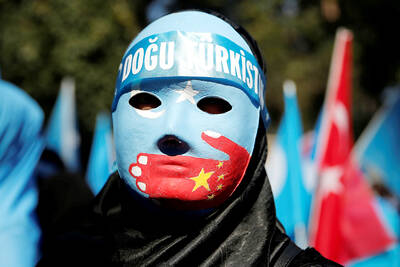
It seems every few days one bumps into one of those “real man” comments in which Taiwan is urged to “face reality” or similar, and “make a deal,” with the speaker implying that soon it will be too late. “Deal” advocates always present themselves as having a superior grip on reality, and the manly ability to make the “hard choice.” Their testosterone-laden language often echoes that of Taiwan sellout advocates. Note that such commentary always specifies a process (“make a deal, work with, make progress”), never the end state of what occupation by a violent authoritarian colonialist state will entail. In
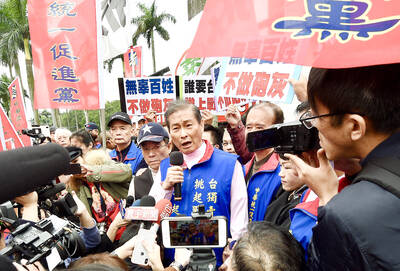
There are shadowy cabals plotting to sell out Taiwan to be annexed by China, by invasion if necessary. Fortunately, they are buffoons. In 2019, former Bamboo Union gangster and founder of the China Unification Promotion Party (CUPP), Chang An-le (張安樂, colorfully known as “White Wolf”), led a protest at the Legislative Yuan against comments made by then-premier Su Tseng-chang (蘇貞昌) that in the event of an attack by China, he would never surrender, but would protect the nation by fighting to the end, even if he only had a broom. Chang had party members bring a wooden casket that they
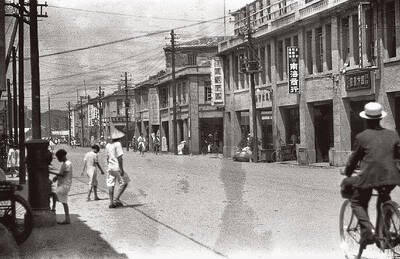
June 1 to June 7 "If all Taiwanese were as afraid of dying as you, then what would happen?” Physician Shih Chiang-nan (施江南) reportedly said this to his wife Chen Chiao-tung (陳焦桐) after she urged him to stop intervening on behalf of Taiwanese soldiers stranded overseas after serving in the Japanese Army during World War II. Shih had clashed with high-ranking officials over the issue, engaged in several heated arguments with Taiwan governor-general Chen Yi (陳儀) and allegedly shouted at general Ko Yuan-fen (柯遠芬), chief of staff of the Taiwan Garrison Command, over


 RSS
RSS