


The 56th Cannes Film Festival last week announced its screening showcase and the much-anticipated list of films in competition, where Lars Von Trier's Dogville, starring Nicole Kidman, is widely seen as a front runner for the Palme d'Or.
As usual, the Cannes competition line-up is filled with celebrity filmmakers and familiar art-house faces, such as Gus Van Sant and Clint Eastwood from the US, Peter Greenaway from the UK and Alexander Sokurov from Russia.
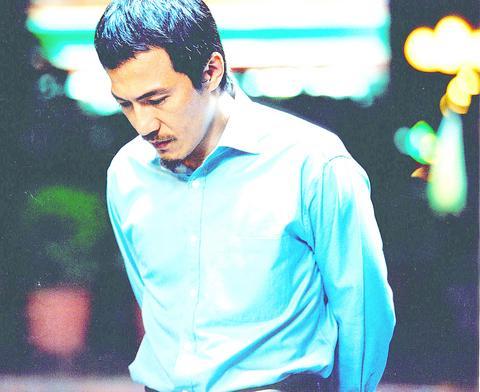
PHOTO COURTESY OF CMPC
Taiwanese filmmaker Lin Cheng-sheng (林正盛) has landed a spot in the Un Certain Regard section, with his latest film Robinson's Cruise (魯賓遜漂流記). Chinese filmmaker Lou Ye's (婁燁) Purple Butterfly (紫蝴蝶) will be the only Chinese-language film in competition.
There are only 20 films in competition this year at Cannes. One of the main reasons for this is that many famous auteurs didn't have their projects ready for submission.
Films that couldn't make it include: Quentin Tarantino's Kill Bill, Emir Kusturica's Hungry Heart, Jane Campion's In the Cut (starring Meg Ryan and Kevin Bacon) and Wong Kar-wai's 2046. Filling the gap, five French films have been selected this year, up from three last year. Most of them are works of filmmakers in mid-career, including Swimming Pool, by Francois Ozon, and Les Egares, by Andre Techine.
In the highly anticipated Dogville, recent Oscar winner Kidman plays a mysterious woman in the 1930s. Trailed by the sounds of gunfire, she enters a quiet Los Angeles suburb, causing considerable turmoil. The film features a star-studded cast, including Stellan Skarsgard, Chloe Sevigny, James Caan and Lauren Bacall, and is intended to be the first part of a new trilogy about American life. (His last trilogy consisted of Breaking the Waves, The Idiots and Dancer in the Dark.)
As with Bjork in Dancer in the Dark, leading actress Kidman was nearly driven mad by the demanding Danish director. Tabloids reported that Kidman had severe arguments with von Trier over a rape scene, fueling curiosity over whether or not Kidman will appear on the Riviera side by side with the peculiar filmmaker.
English director Peter Greenaway presents The Moab Story -- the Tulse Luper Suitcases, a drama mixing conversations and stunning visual cut-ins, starring Vincent Gallo, Kathy Bates, William Hurt and Madonna. Clint Eastwood returns to Cannes as a director with Mystic River, a film inspired by Hollywood classicism.
As for the three Asian films in competition, two are from young Japanese directors, while the other is from China. Kiyoski Kurosawa presents Bright Future and Kawase Naomi offers Shara, while China's Lou Ye (婁燁) debuts at Cannes with Purple Butterfly.
Purple Butterfly, starring Zhang Ziyi (章子怡), is a spy/love story set in 1920s China. Zhang plays the secret assassin of an underground anti-Japanese guerilla movement. She meets an ordinary office worker, played by Liu Ye ((劉燁), Balzac and the Little Chinese Seamstress), and has a love affair with him while hiding her real identity. But this ordinary love is eventually threatened by the turbulence of war and Zhang's dangerous job.
Zhang Ziyi will be appearing for the second time at Cannes. The last time was for the film Crouching Tiger, Hidden Dragon.
Lin Cheng-sheng's Robinson's Cruise is the only Taiwanese entry at Cannes this year. Starring Leon Dai (戴立忍), Chen Hsiang-chi (陳湘琪) and Lee Sin-jie (李心潔), the film is about a 40-something man and the four women he continues to distance himself from, which reflects his own escapist approach to the chaos of life in Taipei.
Attending Cannes for the fourth time, Lin said he was not aiming to win awards. "I just hope to open up the market for Taiwanese films," he said.
The festival will open on May 14 with a remake of Fanfan la Tulipe, starring Penelope Cruz and Vincent Perez. Perez plays a young 18th century French man who follows a false prediction about his fate and joins the army dreaming of marrying a general's daughter.
The two-week event will close with a screening of the newly restored 1936 movie, Charlie Chaplin's Modern Times.

Taiwan’s English education system is being pulled apart by three opposing forces. Bilingual Nation 2030 pulls students toward English and global communication. Artificial Intelligence (AI) readiness pulls them toward digital judgment, verification and AI-mediated work. But Taiwan’s old exam culture pulls them back toward memorization, grammar drills, timed reading and correct answers. If the education system keeps using old exams to define success, it risks producing graduates who are neither genuinely bilingual nor genuinely AI-ready, but trained for tasks machines can already perform. The first force is Bilingual Nation 2030. Launched in 2018, the policy aimed to “help Taiwan’s workforce connect
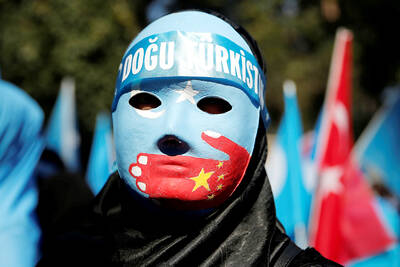
It seems every few days one bumps into one of those “real man” comments in which Taiwan is urged to “face reality” or similar, and “make a deal,” with the speaker implying that soon it will be too late. “Deal” advocates always present themselves as having a superior grip on reality, and the manly ability to make the “hard choice.” Their testosterone-laden language often echoes that of Taiwan sellout advocates. Note that such commentary always specifies a process (“make a deal, work with, make progress”), never the end state of what occupation by a violent authoritarian colonialist state will entail. In

There are shadowy cabals plotting to sell out Taiwan to be annexed by China, by invasion if necessary. Fortunately, they are buffoons. In 2019, former Bamboo Union gangster and founder of the China Unification Promotion Party (CUPP), Chang An-le (張安樂, colorfully known as “White Wolf”), led a protest at the Legislative Yuan against comments made by then-premier Su Tseng-chang (蘇貞昌) that in the event of an attack by China, he would never surrender, but would protect the nation by fighting to the end, even if he only had a broom. Chang had party members bring a wooden casket that they
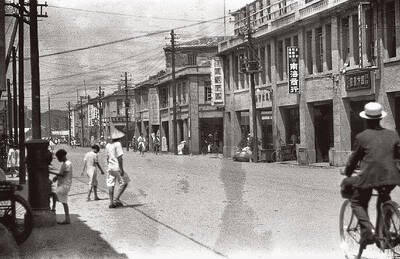
June 1 to June 7 "If all Taiwanese were as afraid of dying as you, then what would happen?” Physician Shih Chiang-nan (施江南) reportedly said this to his wife Chen Chiao-tung (陳焦桐) after she urged him to stop intervening on behalf of Taiwanese soldiers stranded overseas after serving in the Japanese Army during World War II. Shih had clashed with high-ranking officials over the issue, engaged in several heated arguments with Taiwan governor-general Chen Yi (陳儀) and allegedly shouted at general Ko Yuan-fen (柯遠芬), chief of staff of the Taiwan Garrison Command, over


 RSS
RSS