


Dinner and a movie? Not at The 6th Avenue. The restaurant that sits on the second floor of Spot (光點), the city government's new repertoire cinema-cum-cafe-cum-bookstore doesn't yet serve dinner. Instead, you'll have to make do with lunch and a movie, or maybe a movie and late-night snack.
Spot is the former US ambassador's residence on Chungshan North Road. The elegant building sat derelict for years before the city government decided to turn it into a cinema showcasing Chinese-language films and culture.
They've succeeded by large measure (you know it's high culture if there's an Eslite Bookstore on the premises.)
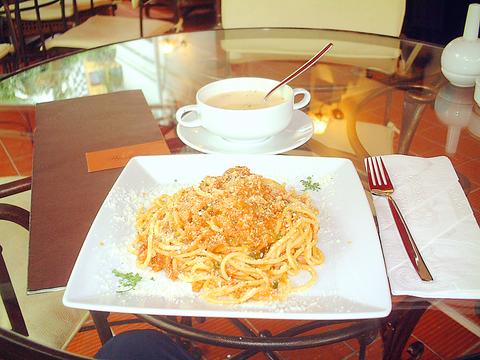
PHOTO: DAVID MOMPARD, TAIPEI TIMES
A cafe sits on the ground floor adjacent the bookstore and upstairs, on the same veranda where Chiang Kai-shek (蔣介石) and Dwight Eisenhower talked shop, is The 6th Avenue -- a little known name for Chungshan North Road.
Just inside the veranda is a living room appointed with leather sofas and dark woods. You start to understand why they haven't started serving dinner as soon as you step inside; it's rather small and there are more sofas to sink into than tables to eat at. It's a pretentious place to enjoy a drink after sitting through a pretentious Tsai Ming-liang (蔡明亮) movie ? excuse me, I mean "film."
For the lunchtime crowd, however, the menu selection is kept slim and the prices reasonable. Entrees include two spaghettis, a bolognese and one with mushroom sauce (NT$180 and NT$220); a soup and salad of the day and some six or seven appetizers ranging between NT$160 for "3 Butter Bread" and NT$220 for sashimi, a Japanese-style sausage, minced salmon bread or clams with white wine sauce.
The prices may look steep, but the portions that come to the table are filling and there's absolutely no skimping on the ingredients. The spaghetti bolognese is as much bolognese as spaghetti. There are also a small selection of sandwiches: tuna salad, tuna fillet (NT$180) and a very tasty smoked salmon sandwich (NT$220).
The 6th Avenue carries a huge variety of teas and coffees that are the perfect way to enjoy the veranda. Verreine, Marakesh mint, cumquat and organic Darjeeling are only a few of the hot teas that are available. Both the teas and coffees are priced between NT$180 and NT$250.
Also, be aware as you order that a 10 percent service charge will be added to your order, although this doesn't necessarily translate into 10 percent better service.

Taiwan’s English education system is being pulled apart by three opposing forces. Bilingual Nation 2030 pulls students toward English and global communication. Artificial Intelligence (AI) readiness pulls them toward digital judgment, verification and AI-mediated work. But Taiwan’s old exam culture pulls them back toward memorization, grammar drills, timed reading and correct answers. If the education system keeps using old exams to define success, it risks producing graduates who are neither genuinely bilingual nor genuinely AI-ready, but trained for tasks machines can already perform. The first force is Bilingual Nation 2030. Launched in 2018, the policy aimed to “help Taiwan’s workforce connect
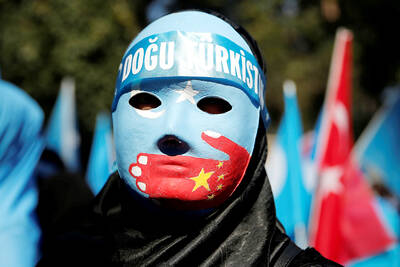
It seems every few days one bumps into one of those “real man” comments in which Taiwan is urged to “face reality” or similar, and “make a deal,” with the speaker implying that soon it will be too late. “Deal” advocates always present themselves as having a superior grip on reality, and the manly ability to make the “hard choice.” Their testosterone-laden language often echoes that of Taiwan sellout advocates. Note that such commentary always specifies a process (“make a deal, work with, make progress”), never the end state of what occupation by a violent authoritarian colonialist state will entail. In
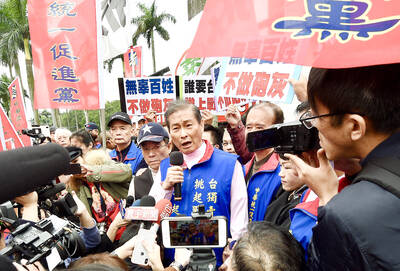
There are shadowy cabals plotting to sell out Taiwan to be annexed by China, by invasion if necessary. Fortunately, they are buffoons. In 2019, former Bamboo Union gangster and founder of the China Unification Promotion Party (CUPP), Chang An-le (張安樂, colorfully known as “White Wolf”), led a protest at the Legislative Yuan against comments made by then-premier Su Tseng-chang (蘇貞昌) that in the event of an attack by China, he would never surrender, but would protect the nation by fighting to the end, even if he only had a broom. Chang had party members bring a wooden casket that they
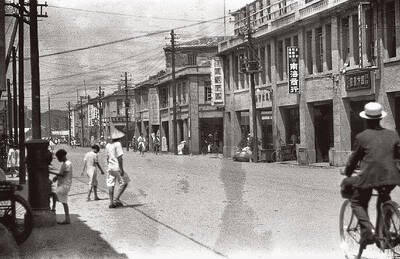
June 1 to June 7 "If all Taiwanese were as afraid of dying as you, then what would happen?” Physician Shih Chiang-nan (施江南) reportedly said this to his wife Chen Chiao-tung (陳焦桐) after she urged him to stop intervening on behalf of Taiwanese soldiers stranded overseas after serving in the Japanese Army during World War II. Shih had clashed with high-ranking officials over the issue, engaged in several heated arguments with Taiwan governor-general Chen Yi (陳儀) and allegedly shouted at general Ko Yuan-fen (柯遠芬), chief of staff of the Taiwan Garrison Command, over


 RSS
RSS